





Deploying and aggregating distributed batteries and other customer resources is widely seen as a promising strategy for stabilizing electric rates, and virtual power plants represent one potentially rapid means of doing so.
But two nonprofit groups, the Open Markets Institute and the Mission:data Coalition, have claimed in a statement that utilities are engaging in “monopolistic practices” that exclude other firms from offering a VPP to utility customers, thereby “stifling” the growth of VPPs and “denying customers more affordable and reliable electricity.”
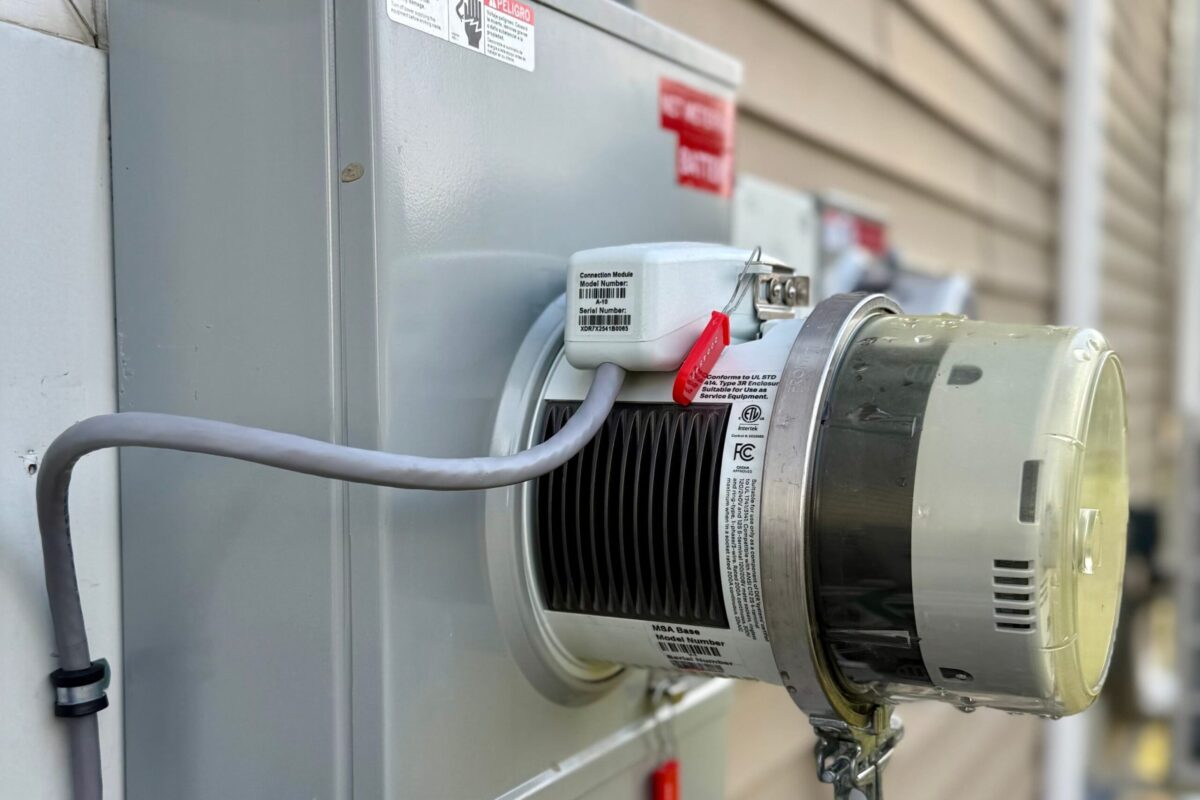
The groups said that utilities are “leveraging their exclusive control” over electric meter data to “block” independent VPPs from operating.
In many states, the groups said, utilities reserve the right to terminate access to data from customers participating in a VPP “at any time, without notice, for any reason whatsoever,” making it “effectively impossible” for a non-utility VPP to operate.
Other reported utility practices that “tilt the playing field” toward utility-owned VPP programs include exclusive contracts, discriminatory technical standards, and burdensome commission fees on apps that rely on smart-meter platforms.
The groups documented their concerns in a report titled “Fair and Open Markets for Virtual Power Plants.”
Smart meters
The report notes that VPPs are enabled in part by smart meters, also known as advanced metering infrastructure, which record electric usage in short time intervals and can substantiate an individual home’s demand reduction.
Measuring the reduction in power demand from each VPP participant is essential to being paid as a VPP.
Antitrust law
Open Markets Institute Legal Director Sandeep Vaheesan said that “many of these practices” described in the report “are arguably illegal” under federal antitrust law.
The utilities’ behavior, he said, “mirrors long-recognized forms of monopolistic exclusion—tying, exclusive dealing, and refusals to deal—that courts have repeatedly found unlawful.”
The report says that public and private enforcers can use antitrust law to “obtain damages for injured customers and rivals, secure injunctive relief to stop these unfair practices, and open up” VPP markets.
The report discusses two “judge-made” legal doctrines that could be barriers to antitrust enforcement, known as the state action doctrine and the filed rate doctrine, arguing that those barriers are “not insurmountable.”
Michael Murray, president of Mission:data, said “It’s not surprising that utilities are fighting virtual power plants, because they threaten utilities’ profits. As people across the country see their electric bills rise by 10% or more, it’s time for antitrust enforcers at the state and federal levels to take on this fight.”
This content is protected by copyright and may not be reused. If you want to cooperate with us and would like to reuse some of our content, please contact: editors@pv-magazine.com.



By submitting this form you agree to pv magazine using your data for the purposes of publishing your comment.
Your personal data will only be disclosed or otherwise transmitted to third parties for the purposes of spam filtering or if this is necessary for technical maintenance of the website. Any other transfer to third parties will not take place unless this is justified on the basis of applicable data protection regulations or if pv magazine is legally obliged to do so.
You may revoke this consent at any time with effect for the future, in which case your personal data will be deleted immediately. Otherwise, your data will be deleted if pv magazine has processed your request or the purpose of data storage is fulfilled.
Further information on data privacy can be found in our Data Protection Policy.