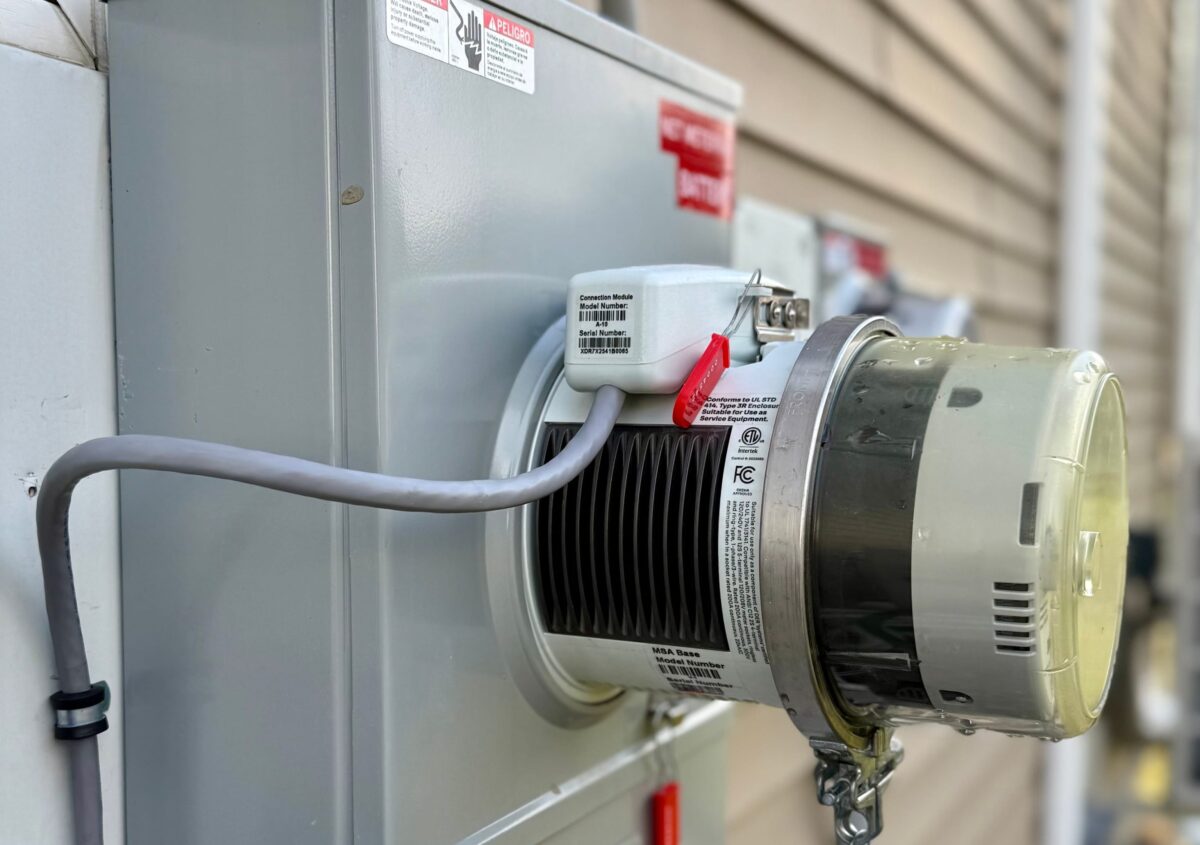





Meter Socket Adapters (MSAs) are a customer-owned device used to install residential solar, battery energy storage systems, or other Distributed Energy Resources (DERs). Compared to traditional installation methods, an MSA can save customers hundreds to thousands of dollars.
The New York Public Service Commission (PSC) docket on Meter Socket Adapters (Case 24-E-0526) is currently open for public comment. The rules supported by MSA manufacturers and the residential solar industry would create consistency among the NY utilities, establishing a process for UL-listed MSAs to be reviewed by utilities and approved for customer use.
Unfortunately, the rules currently proposed by New York’s Joint Utilities introduce more red tape, ambiguous requirements, and slow timelines. Their proposed plans would allow a year or longer for utilities to unnecessarily replicate tests performed as part of the UL listing process, and allow them to reject devices on the basis of undefined “cost concerns” or “compatibility differences.”
Rather than fostering innovation and expanding access, these proposed plans would do very little to improve customer access to the safe, cost-effective technologies that have already become standard elsewhere.
In a state where many families are already stretched to afford their energy bills, we cannot afford to settle for incremental changes that preserve the status quo for utilities while leaving consumers behind.
Following the leaders
Nearby states like New Jersey, Maryland, and Connecticut, along with many others across the country, have already successfully adopted rules that create clear processes for the evaluation and approval of energy technologies.
These frameworks are built on relevant national standards, ensuring that when a device is proven safe and effective in one state, it can be deployed in another without unnecessary, redundant hurdles.
According to Jon Knauer, VP of Policy and Market Strategy for ConnectDER, “National standards exist for a reason: they provide a baseline of safety and interoperability that works regardless of state lines. Our pilot program with Con Edison and NYSERDA proved this. It also proved devices can be tested and approved in months, not years. We already know there’s no reason why MSAs that function perfectly in Maryland or New Jersey should be treated as a science experiment in New York. The Joint Utilities’ proposals are needlessly slow rolling the adoption of a technology that improves affordability for customers.”
The cost of delay
New York needs solutions to address the energy affordability crisis now — not on the multi-year timeline preferred by the utilities. Every month we wait is another month that New York electricians are blocked from using modern tools.
Anthony Sicari, CEO of New York State Solar Farm, says that MSAs are essential to keeping residential solar affordable: “We need to get costs down, and the only way to do that is by using meter socket adapters.” Sicari’s team installs solar, batteries, and more in Upstate NY, with most customers located in the Central Hudson Electric service territory. “We will start using MSAs as soon as the utilities allow them. The industry needs this to happen.”
Scott Maskin, Founder and CEO of SUNation Energy, argues that prohibiting MSAs undermines New York’s energy affordability goals and leaves local companies at a competitive disadvantage compared to neighboring states: “If NY state wants to get serious about affordability, we need to be allowed to use the most cost-effective equipment. There’s no reason we shouldn’t be able to use the same products that are being installed today in New Jersey and throughout the US. MSAs are simply a safer, better way to do installations, and we need to bring them to New Yorkers now.”
Continuing to wait, or worse, adopting the restrictive rules proposed by the Joint Utilities, only serves to put New York’s businesses and citizens one step behind. We have the opportunity to implement a transparent, standards-based approval process that prioritizes the needs of the people over the convenience of the utilities.
A call to action
The PSC needs to hear from those on the front lines of this transition. If you are a solar installer, an electrician, or a homeowner who believes in the right to access safe and affordable energy technology, now is the time to make your voice heard.
By filing public comments in support of a robust, national-standard-based MSA rule, we can ensure that New York finally catches up with its neighbors and builds a more resilient, affordable energy future for everyone.

Ivo Steklac is President and Chief Executive Officer of ConnectDER, the industry leading manufacturer of meter socket adapters for residential solar, battery, and EV charging installations. Previously, Ivo served as Chief Technology Officer of EVgo, helping lead the company through a successful IPO. Prior to that, he was the GM of Residential and Commercial Solar at SunPower. His career spans over three decades in the clean energy and climate tech space driving industry innovation, market adoption, and commercialization.
The views and opinions expressed in this article are the author’s own, and do not necessarily reflect those held by pv magazine.
This content is protected by copyright and may not be reused. If you want to cooperate with us and would like to reuse some of our content, please contact: editors@pv-magazine.com.




By submitting this form you agree to pv magazine using your data for the purposes of publishing your comment.
Your personal data will only be disclosed or otherwise transmitted to third parties for the purposes of spam filtering or if this is necessary for technical maintenance of the website. Any other transfer to third parties will not take place unless this is justified on the basis of applicable data protection regulations or if pv magazine is legally obliged to do so.
You may revoke this consent at any time with effect for the future, in which case your personal data will be deleted immediately. Otherwise, your data will be deleted if pv magazine has processed your request or the purpose of data storage is fulfilled.
Further information on data privacy can be found in our Data Protection Policy.