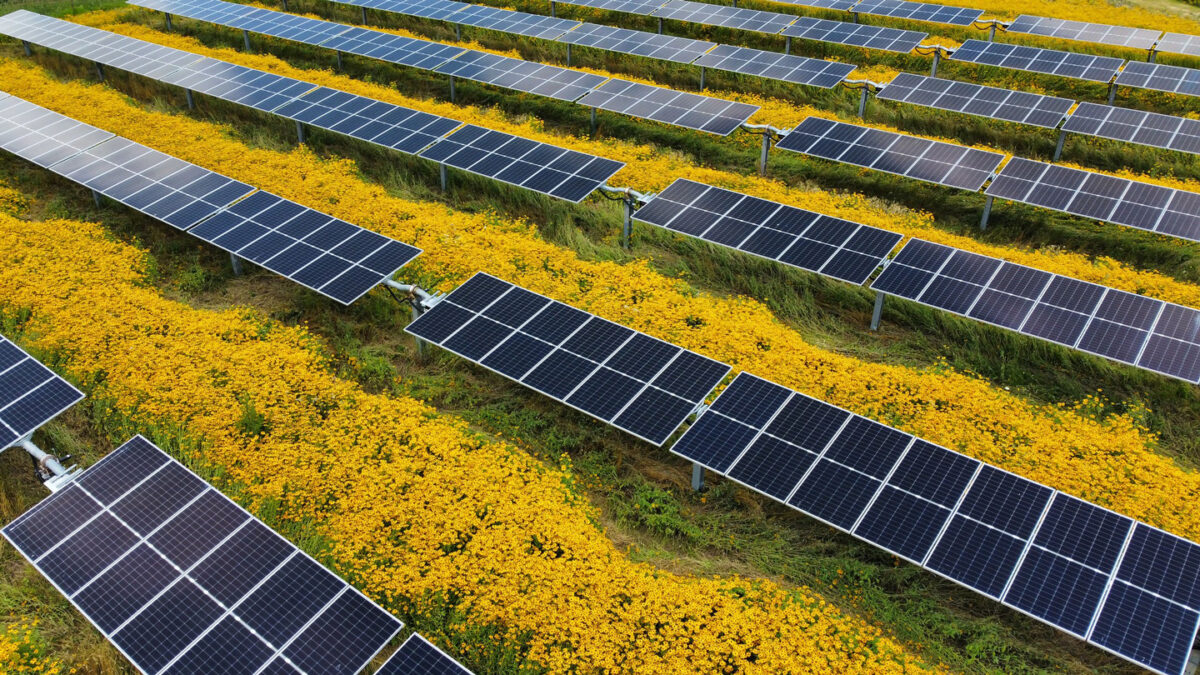





Atlanta-based community solar developer Dimension Energy has announced its largest-ever project financing package, with $650 million in new funding to support a portfolio of 25 community solar projects totaling 132 MW in capacity across sites in Illinois, New Jersey, New York and Pennsylvania.
The announcement includes $415 in debt financing from four of Dimension’s existing partners: First Citizens Bank, Mitsubishi UFJ Financial Group, Inc. (MUFG), ING Capital LLC and National Bank of Canada, along with $235 million in tax equity from first-time partner Franklin Park.
The latter company, best known for its work in conventional energy, fuel cells and renewable natural gas, has previously worked with solar industry partners such as New Columbia Solar and Sammons Infrastructure.
“Franklin Park is proud to partner with Dimension Energy on this portfolio of community solar projects,” said Neil McQueen, vice president of Franklin Park Infrastructure. “Dimension is a leader in solar development and operations, and their proven platform makes them an ideal partner for us as we increase our investments in distributed clean energy assets.”
The financing package represents a new milestone for Dimension, which previously announced $412 million in funding for its development activities in October, 2025, which also included financing from First Citizens, ING, National Bank of Canada, and MUFG.
Since its founding in 2018, Dimension Energy says it has executed more than 1 gigawatt (GW) of projects serving over 35,000 customers, with an additional 3.5 GW under development across 14 markets.
The company says the new financing will advance its mission to deliver affordable, locally generated clean energy and provide subscribers with immediate utility bill savings.
Three of the four states in which the current financing package will fund projects have existing community solar rules. Programs in Illinois, New Jersey and New York all offer some form of guaranteed bill savings to at least some subscribers.
Pennsylvania is the exception, although advocates have made many attempts to get a community solar program working. In 2025, the Pennsylvania state House passed a community solar bill, but the bill never made it to a floor vote in the state Senate.
This content is protected by copyright and may not be reused. If you want to cooperate with us and would like to reuse some of our content, please contact: editors@pv-magazine.com.



By submitting this form you agree to pv magazine using your data for the purposes of publishing your comment.
Your personal data will only be disclosed or otherwise transmitted to third parties for the purposes of spam filtering or if this is necessary for technical maintenance of the website. Any other transfer to third parties will not take place unless this is justified on the basis of applicable data protection regulations or if pv magazine is legally obliged to do so.
You may revoke this consent at any time with effect for the future, in which case your personal data will be deleted immediately. Otherwise, your data will be deleted if pv magazine has processed your request or the purpose of data storage is fulfilled.
Further information on data privacy can be found in our Data Protection Policy.