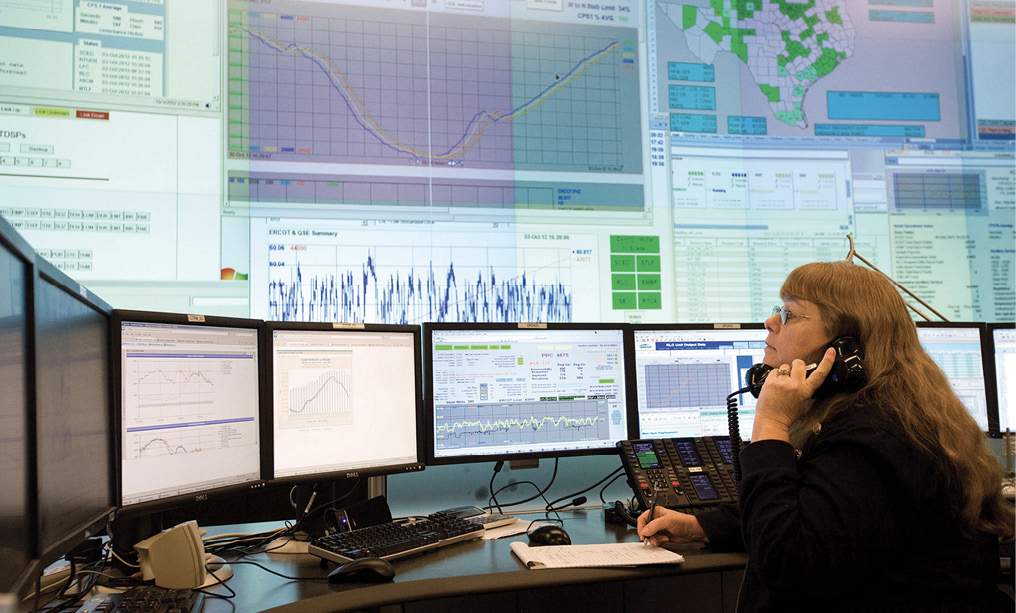





Generative AI can make solar and battery storage microgrids more resilient during extreme weather events. Recent data from the United States Energy Information Administration (EIA) indicate electricity customers experienced an average of 11 hours of power outages in 2024, nearly double the annual average over the last decade. Extreme weather events account for 80% of these disruptions, and the industry has increased focus on building resilient energy systems as a result.
Two major hurricanes in late 2024 left millions in the southeastern United States without power. The destruction caused by hurricanes Helene and Milton forced utilities to replace an unprecedented number of electric power transformers, showing how fragile centralized grids can be. Solar and battery-storage microgrids can bolster resilience, but in a crisis, their effectiveness depends on intelligent, rapid decision-making. Efforts to improve resilience should focus on generating solutions in real time – a capability emerging from the application of generative AI.
Forecasting limits
The energy sector already uses predictive AI, primarily recurrent neural networks (RNNs), for tasks such as load and generation forecasting. These models excel at using patterns in historical data to predict future outcomes, but are less effective when faced with novel or extreme events not found in their training data. Unexpected load profiles and diverse building types degrade RNN performance, while renewables and distributed energy resources (DERs) add complexity, pushing predictive models past their limits. RNNS can tell us what is likely to happen based on past events, but they cannot form new strategies for novel crises.
Next generation
Things are changing. Research from the US National Laboratory of the Rockies – formerly the National Renewable Energy Laboratory – shows that generative AI models can be trained on large datasets of grid operations to provide decision support. They can process real-time data from sensors, weather feeds, and asset management systems. Unlike their predictive counterparts, these advanced models can create new data and scenarios.
During a microgrid outage, generative models can simulate thousands of potential restoration pathways, identifying optimal strategies for rerouting power, managing DERs, and dispatching assets in minutes. This gives the grid operator a playbook of solutions tailored to their circumstances. Actions might include identifying non-obvious switching sequences to isolate faults, or creating novel combinations of DER dispatch to stabilize frequency in an islanded microgrid. Trialing these capabilities on microgrids provides a controlled environment for validating, before deploying at scale.
The goal is not to replace experts, but to support them. The AI acts as a decision-support system that empowers operators to maintain control while navigating complex restoration scenarios.
Self-healing grid
The ultimate vision is to build a self-healing grid – one that can detect, analyze, and respond to disruptions. By continuously running simulations and generating contingency plans, generative AI can identify vulnerabilities and suggest mitigation strategies before an event occurs.
When a fault does occur, the system can act instantly. AI-driven controllers isolate the affected section of the grid, reroute power from available sources, and dispatch DERs to maintain service to critical loads. This automated response occurs in milliseconds and can prevent a localized fault from cascading into a widespread blackout.
Research into AI-enabled self-healing grid technologies is already showing promise in automatically repairing electrical grids. Recent pilots using fault location, isolation, and service restoration (FLISR) technologies demonstrate this capability.
Utilities such as Duke Energy in North Carolina have successfully deployed self-healing systems that automatically isolate faults and restore power to unaffected segments, reducing outage durations by nearly 25%. Research from the University of Texas at Dallas indicates AI models can identify alternative power routes and execute transfers in milliseconds, far faster than human operators.
Barriers to adoption
There are challenges to widespread adoption. The first hurdle is data. Generative models need large volumes of high-quality, granular data across the grid, requiring robust sensor networks, secure data pipelines, and standardized data formats. Many utilities are still building this data infrastructure, but deploying sensor networks is not cheap – mid-sized systems cost hundreds of thousands of dollars and utility-scale rollouts cost millions.
Training and running large models also requires vast amounts of electricity, potentially adding stress to the grid. Utilities must weigh resilience benefits against the additional load.
Trust and explainability present another challenge. Grid operators must be able to trust AI recommendations, especially in high-stakes situations. AI must be developed that can articulate the reasoning behind its decisions in a way operators can understand and verify. Black-box solutions will face resistance no matter how accurate.
Integration with legacy systems presents a significant technical challenge. New AI platforms must communicate with existing supervisory control and data acquisition (SCADA) systems, distribution management systems, and DER management systems. This requires careful planning, standardized communication protocols, and a phased implementation approach. Ensuring compatibility with aging infrastructure is costly.
Integrating generative AI with microgrid control systems is the start of a shift toward a proactive and ultimately autonomous grid. The challenges of data, trust, and integration are significant, but the potential rewards are even greater. We can expect to see intelligent energy systems that predict and respond to outages and design and implement restoration strategies in real time.
About the author
 Rudrendu Paul has more than 15 years of experience building and scaling applied AI and machine-learning products for leading Fortune 50 companies. After several years with one of the world’s largest power planning, grid management, and energy utility companies, he now specializes in using generative AI to drive growth and advertising monetization in retail media networks and e-commerce.
The views and opinions expressed in this article are the author’s own, and do not necessarily reflect those held by pv magazine.
This content is protected by copyright and may not be reused. If you want to cooperate with us and would like to reuse some of our content, please contact: editors@pv-magazine.com.





By submitting this form you agree to pv magazine using your data for the purposes of publishing your comment.
Your personal data will only be disclosed or otherwise transmitted to third parties for the purposes of spam filtering or if this is necessary for technical maintenance of the website. Any other transfer to third parties will not take place unless this is justified on the basis of applicable data protection regulations or if pv magazine is legally obliged to do so.
You may revoke this consent at any time with effect for the future, in which case your personal data will be deleted immediately. Otherwise, your data will be deleted if pv magazine has processed your request or the purpose of data storage is fulfilled.
Further information on data privacy can be found in our Data Protection Policy.