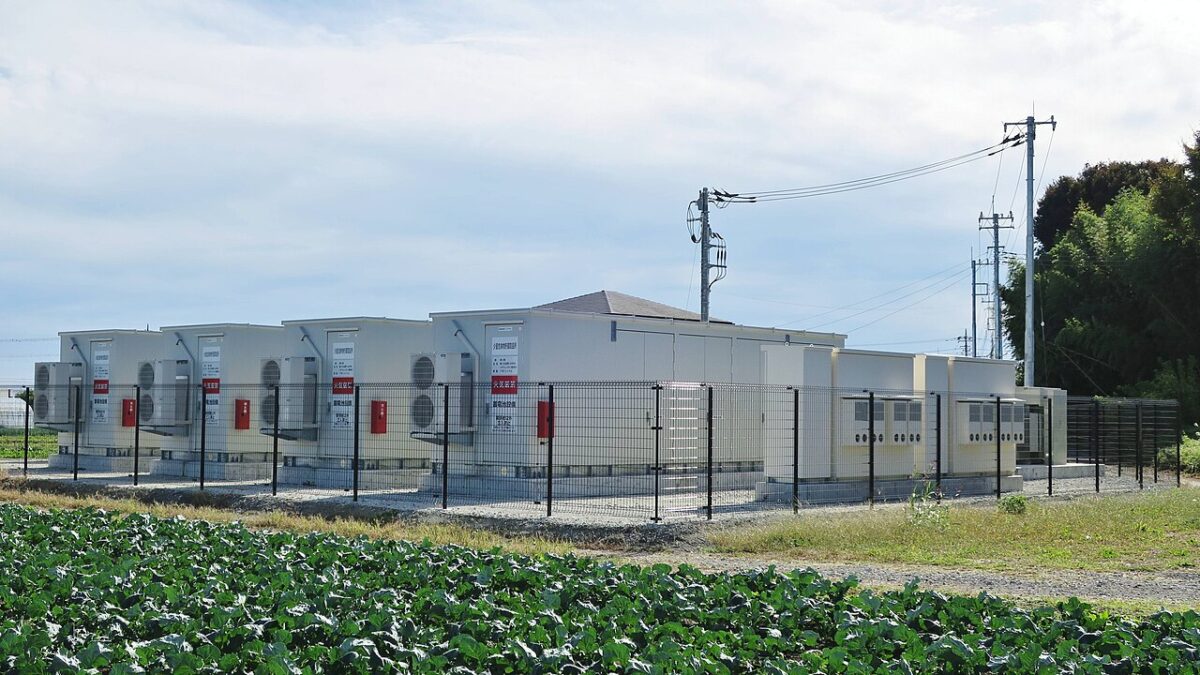





For years, battery energy storage systems (BESS) were largely a niche offering in the solar industry, primarily valued for their ability to provide backup power during outages. While resilience remains a critical benefit, the revenue potential of storage assets is reshaping strategies in energy markets.
This shift in perspective is driven by advancements in battery technology, falling system prices, and increasingly sophisticated energy markets that recognize and reward grid flexibility. New financing arrangements are also available that transform energy storage from a product to be purchased to a service to be consumed. By turning BESS into a subscription service and eliminating upfront investment, energy storage becomes accessible to a broader range of end users. BESS-as-a-service models enable solar integrators, developers, and asset owners to unlock the full economic potential of solar deployments and secure a competitive edge.
Multiple revenue opportunities
The financial viability of BESS depends on diversified revenue streams. These revenue opportunities are highly dependent on location. Wholesale electricity market structures, local and national policies, and regional grid needs vary significantly across the United States and Europe. The financial opportunities of energy storage can be broadly divided into four categories.
1: Demand response programs
For commercial and industrial power customers, demand response programs are often the most accessible financial benefit of BESS. Through these programs, utilities or grid operators pay large electricity users to temporarily reduce the amount of power drawn from the grid during peak electricity demand.
But end users are wary of load management programs. Without another power source, demand response programs can disrupt operations. For retailers, for example, it means turning off a portion of sales floor lighting and curtailing air conditioning. That affects customers and employees.
But with a storage system, business operations can continue as normal for participants in demand response programs. The loss of power from the grid can be made up for by BESS. In essence, customers are returning energy to the grid when it needs it most. Participating in demand response programs not only provides extra revenue but also enhances a user’s image as a responsible grid participant contributing to system reliability.
2: Energy arbitrage
It is often said that batteries move energy through time the way poles and wires move energy through space. By decoupling the moment electricity is produced from the moment it is consumed, the battery effectively turns into a financial market player, buying low and selling high.
Energy arbitrage is a popular market for BESS operators because the strategy is straightforward: Charge when prices are low and discharge when prices are high. There are arbitrage opportunities in wholesale electricity markets known for price volatility. There are also spot market opportunities, as many utilities employ time-of-use rates, in which electricity prices vary throughout the day based on demand. Demand typically peaks during the late afternoon and early evening and plummets overnight.
Arbitrage can maximize the value of solar power because batteries can charge during sunny afternoons, usually times of low demand and high production, and discharge during high demand and low production in the evenings. With increasing renewable energy integration, price volatility in day-ahead markets has increased, creating more opportunities for profitable arbitrage. These price swings are driven by the variable nature of wind and solar generation.
3: Ancillary services
In wholesale electricity markets, grid operators pay for services that maintain grid stability. Services, such as frequency regulation, voltage control, and spinning reserves, become increasingly valuable as power systems accommodate greater amounts of renewable energy. The intermittency of solar and wind power is a significant challenge for grid operators.
Battery storage is ideally suited for this safety net role, especially larger-scale BESS or aggregated smaller systems. It can respond rapidly and generate and consume electricity to counter frequency fluctuations or voltage spikes on the grid. These ancillary services are vital because, as we saw in 2025 in Spain and Portugal, grid disturbances can quickly cascade into a massive blackout. Ancillary services can generate passive income year-round, making them a core pillar of many monetization strategies.
4: Capacity payments
A single user’s solar or storage capacity may be limited, but can create a coordinated power unit when working together with other small energy resources. Utilities and grid operators are increasingly recognizing the value of distributed energy resources like batteries and rooftop solar that are aggregated and operated as a virtual power plant (VPP).
A VPP can make money by guaranteeing power availability during periods of peak demand or grid stress. This long-term revenue stream is highly attractive for securing financing but comes with strict performance obligations. Some markets also offer government incentives or subsidies for energy storage deployment, adding another potential revenue source.
In 2023, the Electric Reliability Council of Texas (ERCOT) launched a pilot project with two VPPs to provide dispatchable power to the state’s electric grid. The pilot continues to expand, demonstrating that small energy resources in homes and businesses have incredible potential to participate in wholesale electricity and reliability markets by selling excess power.
Making batteries work smarter
The key to getting the most out of energy storage assets is balancing revenue generation with battery wear and tear. With BESS, every charge-and-discharge cycle contributes to its degradation, impacting long-term profitability. Battery degradation is a natural process influenced by usage patterns, temperature, and charge cycles.
Finding the optimal balance between short-term gains and long-term revenue from a battery system involves a strong understanding of discharge regulations and energy price forecasting. With advances in artificial intelligence and battery health monitoring, it is possible to track actual system performance and predict and mitigate degradation, ensuring batteries remain efficient and cost-effective over time. At the same time, accurate forecasting enables strategic charging and discharging that align with market dynamics and prolongs battery life.
Key to achieving this is accurate energy price forecasting and real-time optimization using artificial intelligence and advanced battery management technologies. Forecasting is a critical aspect of energy storage optimization since it can be used to adjust battery operations in real time.
Innovations in BESS technologies and new subscription business models have brought new energy to the battery storage market. While short-term protection from outages remains a foundational benefit, the true power of BESS for the solar industry now lies in its capacity as a dynamic, revenue-generating asset. For solar professionals, this means opportunities to deliver value to clients, enhance project economics, and be at the forefront of the clean energy transition.
Lee Todd is the global business leader for Sustainability Advisory Services at ABB Electrification Service. Bringing over 30 years of electrical distribution and systems expertise to ABB, Lee is responsible for leading this new segment of the business, driving global advisory engagements and guiding customers through the complexities of their path to net zero, beginning with data collection and baselining.
The views and opinions expressed in this article are the author’s own, and do not necessarily reflect those held by pv magazine.
This content is protected by copyright and may not be reused. If you want to cooperate with us and would like to reuse some of our content, please contact: editors@pv-magazine.com.





By submitting this form you agree to pv magazine using your data for the purposes of publishing your comment.
Your personal data will only be disclosed or otherwise transmitted to third parties for the purposes of spam filtering or if this is necessary for technical maintenance of the website. Any other transfer to third parties will not take place unless this is justified on the basis of applicable data protection regulations or if pv magazine is legally obliged to do so.
You may revoke this consent at any time with effect for the future, in which case your personal data will be deleted immediately. Otherwise, your data will be deleted if pv magazine has processed your request or the purpose of data storage is fulfilled.
Further information on data privacy can be found in our Data Protection Policy.