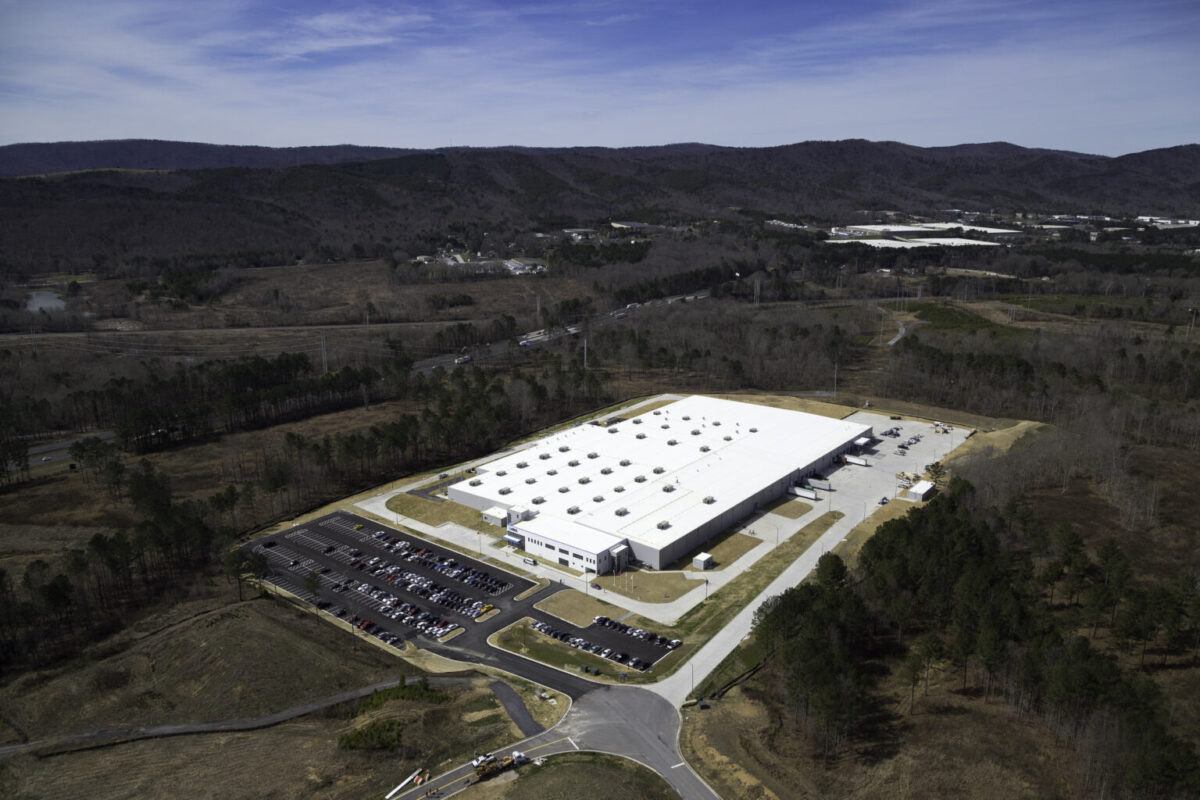





Qcells, the U.S. solar manufacturing arm of South Korea’s Hanwha Solutions, announced it has officially returned to normal solar panel production at its manufacturing facilities in Georgia.
The increased volume of production closes a chapter for the manufacturer’s U.S. operations. In November, the company announced a furlough of 1,000 of its workers due to a temporary pause in production caused by a lengthy customs clearance process.
“We are proud to be back to work manufacturing the American-made energy the country needs right now,” said Marta Stoepker, head of communications at Qcells. “Like any company, hurdles have and will occur, which requires us to adapt and be nimble, but our overall goal remains the same — to build a complete American solar supply chain.”
At the time of the furlough, the company cited significant delays at U.S. ports, which held up seven shipments of solar cells from South Korea. The supply chain bottlenecks began earlier in the year when U.S. Customs and Border Protection (CBP) initiated detentions of Qcells’ solar cell imports under the Uyghur Forced Labor Prevention Act (UFLPA).
In August 2025, Qcells confirmed the detentions but issued statements of its certainty that its supply chain was free from material originating from the Xinjiang Region that is the subject of the UFLPA.
At the time of the furloughs, Qcells noted that most of its shipments were clearing customs, but the compounding delays had already forced the temporary reduction in production capacity.
Now, with the supply chain flowing and employees back to work, Qcells is pushing forward with the $2.5 billion expansion of its Cartesville plant, which is projected to allow for 3.3 GW of capacity for manufacturing ingots, wafers, and cells by the end of 2026.
At full capacity, the two Georgia facilities will produce a combined 8.4 GW of solar panels and components annually. To meet these targets, the company plans to continue expanding its newly returned workforce. By the end of 2026, Qcells said it expects to employ a combined workforce of nearly 4,000 people across the two sites.
This content is protected by copyright and may not be reused. If you want to cooperate with us and would like to reuse some of our content, please contact: editors@pv-magazine.com.





By submitting this form you agree to pv magazine using your data for the purposes of publishing your comment.
Your personal data will only be disclosed or otherwise transmitted to third parties for the purposes of spam filtering or if this is necessary for technical maintenance of the website. Any other transfer to third parties will not take place unless this is justified on the basis of applicable data protection regulations or if pv magazine is legally obliged to do so.
You may revoke this consent at any time with effect for the future, in which case your personal data will be deleted immediately. Otherwise, your data will be deleted if pv magazine has processed your request or the purpose of data storage is fulfilled.
Further information on data privacy can be found in our Data Protection Policy.