





According to an interview with Politico, U.S. Representative Brian Fitzpatrick (R-PA.) has begun a push to reinstate the wind and solar tax credits that were cut when the One Big Beautiful Bill (OBBB) was signed.
Regarding Trump’s disdain for renewables, Fitzpatrick commented:
“We need to change that position. Because I think he’s getting bad advice on this.”
Fitzpatrick is a member of the influential Ways and Means Committee, which is responsible for writing tax laws.
Politico also noted that Rep. Andrew Garbarino (R-NY) was also pushing for the tax credits, though the article didn’t interview him. Garbarino was one of 21 House members that signed a letter urging Congress to retain the long-term Investment Tax Credit (ITC) set forth in the Inflation Reduction Act (IRA).
Not long after, a separate letter from 38 Republicans called for eliminating what they referred to as the “Green New Scam”.
Before the OBBB was signed — but after uncertainty over the ITC had begun — Roth Capital Partners reported that the credit could potentially become permanent. Those comments came from Nick Iacovella, executive vice president and head of public affairs and communications for the Coalition for a Prosperous America.
During a May webinar, Iacovella said that if Democrats retake at least one chamber of Congress in the upcoming midterms, reinstating the tax credits may be one of the first things they do. He suggested these changes could even occur under a Trump administration. Other analysts speaking with Roth in subsequent weeks expressed skepticism that changes would occur during a second Trump term.
In 2020, Trump signed an extension of the ITC.
Solar power is generally supported across the aisle and annual polling continually shows that solar is the most popular energy source in the United States.
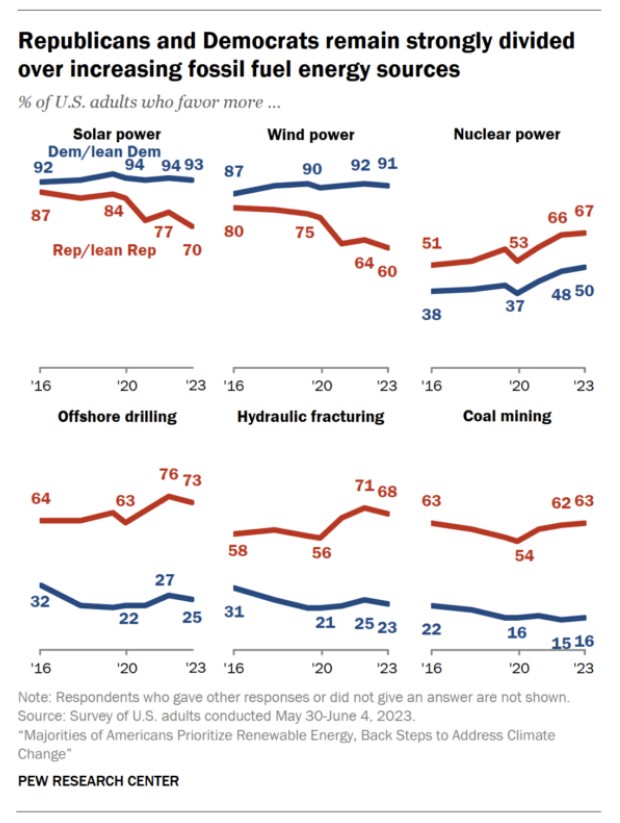
Source: Pew Research Center
This popularity holds even in recent years as coal funded groups have attacked utility scale solar in rural areas. Pushback from rural communities is nuanced though, with many in support of individual land owner rights though many are also worried about the integrity of their rural communities.
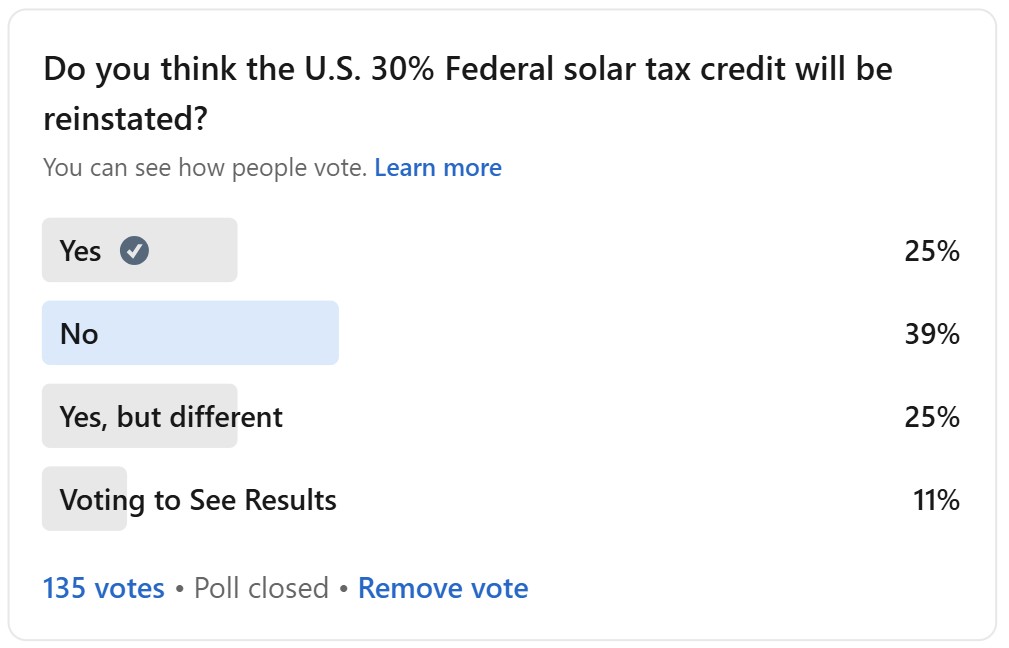
In a LinkedIn poll conducted by this author — whose followers are largely from the solar and clean energy industries — 56% of respondents said they believed a return of the ITC was possible.
Of those respondents, about half said the credit’s structure could change. Forty-four percent said they did not expect the ITC to return. Several industry stakeholders interviewed said that while they strongly support solar deployment, they are concerned about the administrative complexity the ITC adds to project development.
As of December 31, 2025, the residential solar tax credit expired. The commercial version is scheduled to end Dec. 31, 2027; however, developers may continue deploying projects through 2030 using safe-harbor provisions and other compliance mechanisms under the OBBB.
This content is protected by copyright and may not be reused. If you want to cooperate with us and would like to reuse some of our content, please contact: editors@pv-magazine.com.




By submitting this form you agree to pv magazine using your data for the purposes of publishing your comment.
Your personal data will only be disclosed or otherwise transmitted to third parties for the purposes of spam filtering or if this is necessary for technical maintenance of the website. Any other transfer to third parties will not take place unless this is justified on the basis of applicable data protection regulations or if pv magazine is legally obliged to do so.
You may revoke this consent at any time with effect for the future, in which case your personal data will be deleted immediately. Otherwise, your data will be deleted if pv magazine has processed your request or the purpose of data storage is fulfilled.
Further information on data privacy can be found in our Data Protection Policy.