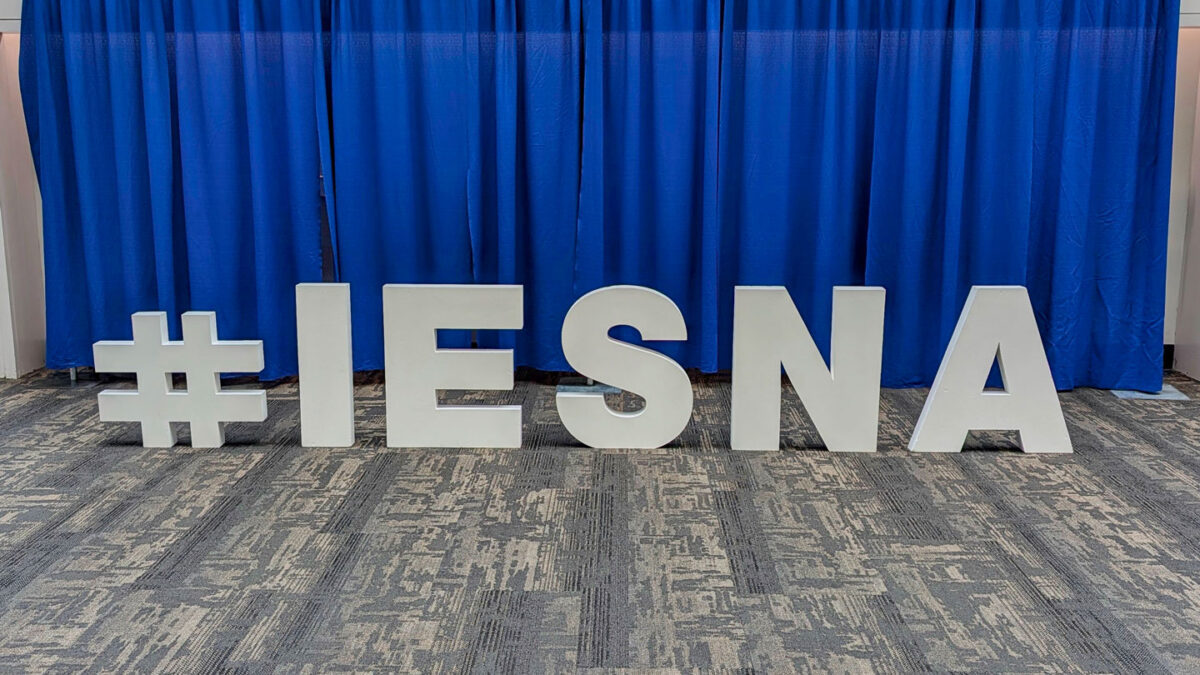





This year’s Intersolar and Energy Storage North America (IESNA) Flagship Event in San Diego, California featured many of the things the conference is well known for.
The conference floor held hundreds of exhibitor booths, workshops and conference sessions delivered technical knowledge and policy insights, the Solar Games brought up-to-the-minute action as installers scrambled over mock rooftops to complete their work quickly and precisely (congratulations to winners Power Northwest) and the Solar Battle of the Bands combined a love of music with an industry-wide unity of purpose (congratulations to winners Northerner).
But there was also something else.
At the end of Thursday’s second keynote, “Power by Association: Mobilizing Collective Action for Clean Energy,” moderator Amy Harder invited the audience to weigh in on a question: “What’s one word that best describes clean energy coalition dynamics right now?”
The resulting word cloud prominently featured words like: “Unstable,” “Uncertainty,” “Stuck,” “Difficult” and “Fight.”
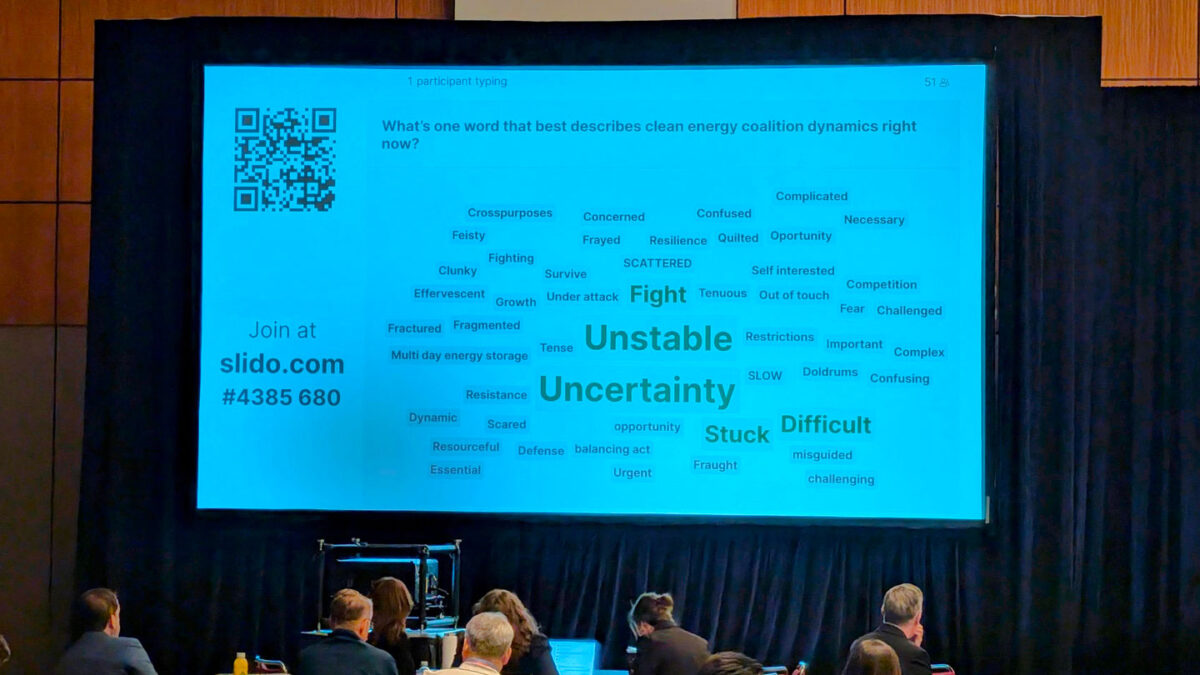
Members of the keynote panel, representing some of the largest advocacy groups in clean energy, were audibly wowed.
The panelists had spent the foregoing hour discussing the ways their groups were working at all levels of government and with the American public to spread the clean energy industry’s message and advocate for policy decisions that recognize the advantages brought to the market by solar, wind, long-duration energy storage and advanced energy technologies.
The speakers described affordability as the primary concern across all the audiences they address, and panelists JC Sandburg and Heather O’Neil separately called affordability “a watchword.”
All of the panelists expressed certainty that solar plus storage installations are the best way to bring new energy resources to the grid affordably. Sean Gallagher, senior vice president of policy at the Solar Energy Industries Association (SEIA), saying “storage is the key to affordability,” while panelist Anna Siefkin from the international Long Duration Energy Storage (LDES) Council says costs for batteries designed to serve electricity over 8 or more hours are expected to decrease by 47% in the coming years.
Sandburg said solar and storage are “a big solution to affordability,” and added that his conversations with grid operators reveal their preference for the technology over other forms of new power generation.
Affordability also played a key role in the previous day’s keynote address, “State-Level Blueprints for a Clean and Resilient Energy Economy.”
Panelist Michael Judge, of the Massachusetts Executive Office of Energy and Environmental Affairs, said it has become the most pressing concern of the state’s constituents, and his organization had performed “a major pivot” in 2025 to address it. “There’s no silver bullet here,” he said of solving the affordability problem, but added that “clean energy is the solution.”
Affordability featured on the show floor
The message about the importance of affordability was not exclusive to the policy wonks on the second-floor stages, but also palpable at many of the booths on the show floor, and representatives of many companies spoke with pv magazine USA about their value-based offerings.
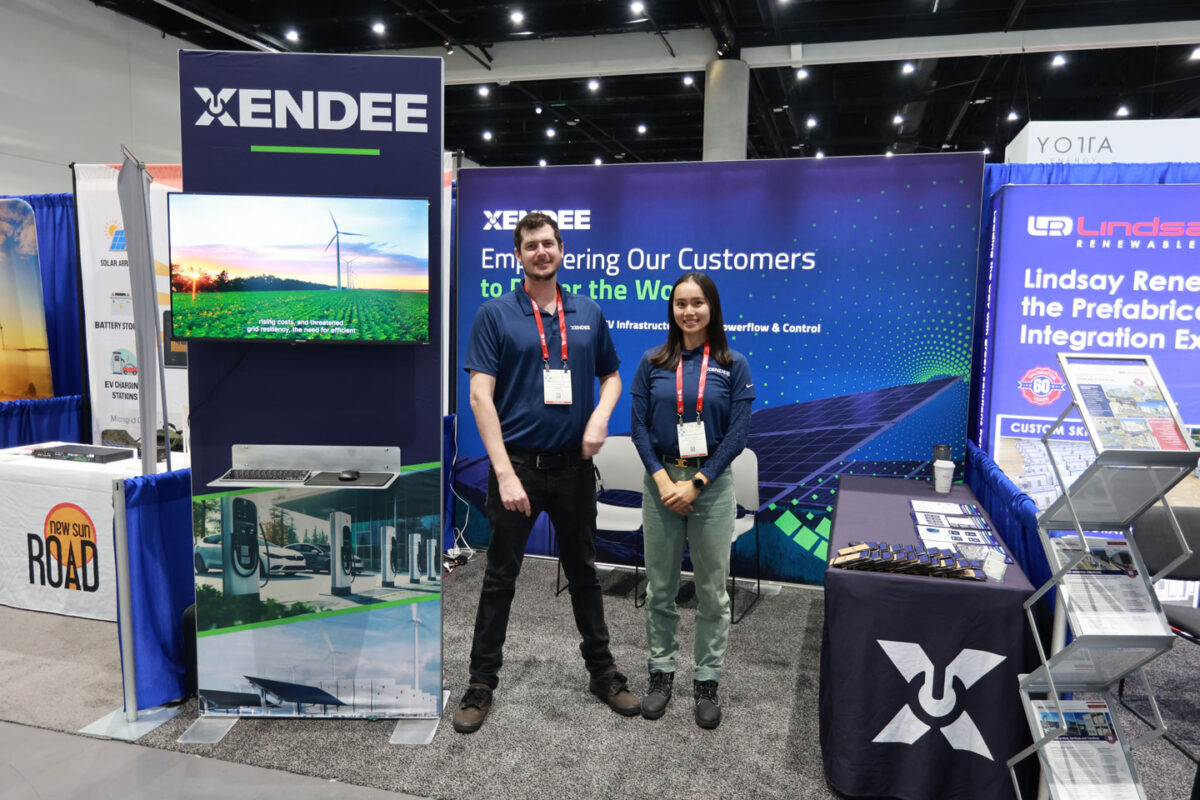
All-in-one microgrid and DER management company Xendee aims to prove it can save its customers money from the get-go. Jay Gadbois, the company’s senior digital marketing manager, said the company’s engineers create a “digital twin” of microgrid sites to show how the suggestions for control of local energy storage, EV charging, HVAC and more made by its OPERATE software would save site operators money.
Representatives at Lunar Energy explained how their distributed energy platform saves homeowners money by automating control of each home’s energy assets in half-hour increments on a personalized basis. The company’s solutions parlay knowledge it has gained from operating millions of distributed home energy resources under its Moixa GridShare software platform in overseas markets. The company says it can deliver an average of $450 in savings per year through its optimizations.

Solar distributor and direct-to-consumer company Signature Solar touted its transparent pricing, plans for retail outlets and free training provided to its customers. Company representatives also discussed their new Sun Atlas Power EPC services, which pair the company’s customers with local installers who have already proven to be successful and reliable Signature Solar partners.
Signature Solar’s sister company, EG4, offered what may have been the highlight of the show from a distributed battery perspective: The XR60, an all-in-one 60 kWh battery and hybrid inverter built using domestic battery cells from LG Energy Solution into a NEMA 3R enclosure made from roll-formed domestic steel.
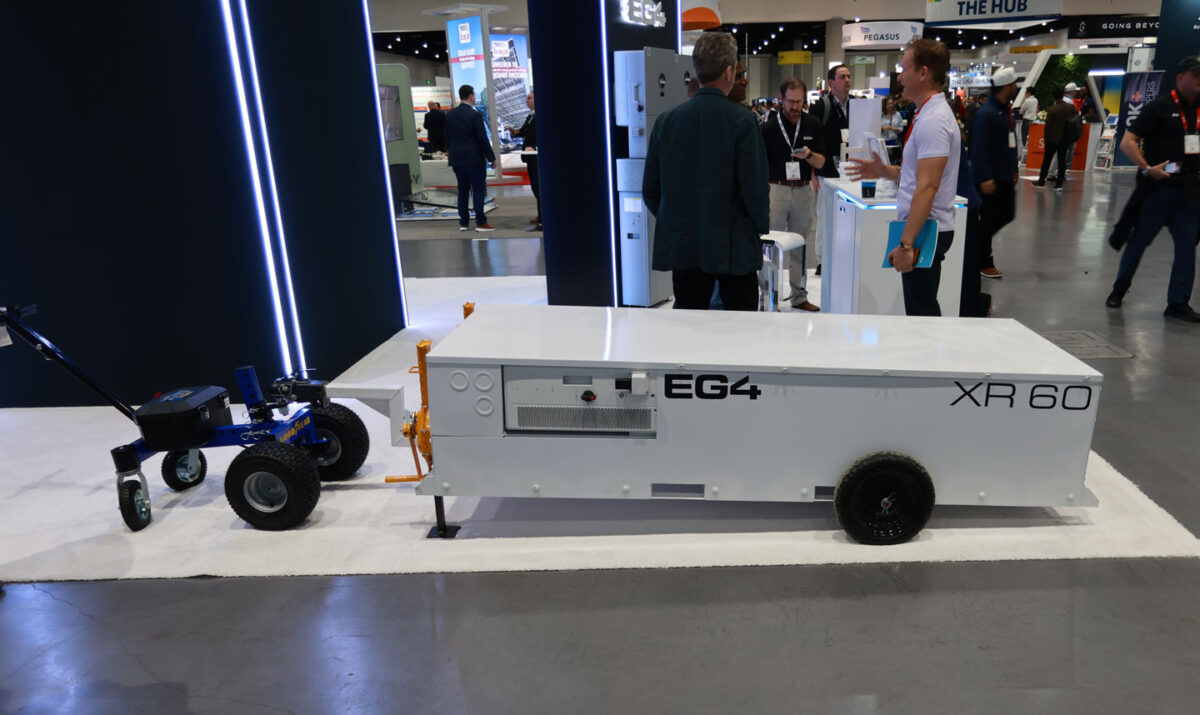
EG4 says the battery’s domestic content will qualify it for bonus tax credits and adheres to non-FEOC requirements. A spokesperson told pv magazine USA the battery can be unloaded from a truck by a forklift, pulled into place by installers (on removable wheels) using a $1,000 electrified hand cart and, once in place, installed within 10 minutes.
Uncertainty creeps in
Despite the certainty that clean energy is the answer to the affordability problem facing ratepayers around the country, experts on the two keynote panels also acknowledged that uncertainty around federal policies is likely to cause a great deal of problems.
When speaking as part of the “State-Level Blueprints” panel, Lynnae Willette, the director of regulatory & legislative affairs for independent power produce EDF Power Solutions, described a “180-degree shift” in strategy her organization undertook in January, 2025 as President Trump took office for his second term and enacted wholesale changes in federal energy policy around renewables.
Willette described Washington D.C. as a place where federal staffers don’t always know what’s happening at the state level and said the inverse is true in state houses, where people don’t always know the latest on federal energy policy. She stressed that her group has stayed engaged in talks with the Trump Administration, hoping the President will change his mind, but also recognizes that litigation is also a necessary way to push for change.
Panelist Doreen Harris, president and CEO at NYSERDA, echoed the shift in strategy and described how the changes in federal policy have affected New York’s state energy plan. Harris said 2025 was “a crash course in litigation,” later adding “uncertainty equals risk, and risk equals cost,” and that increased cost makes it difficult to deliver on the promise of affordability.
The uncertainty extends to many corners of the clean energy industry. Over the course of the conference, people who spoke with pv magazine USA described their fears about tariffs (especially under Section 232), what has been left unsaid about about who is responsible for infractions of FEOC restrictions, whether and how project developers can trust supplier certifications and whether the executive branch will continue in (or even expand) its unilateral efforts to block clean energy project development.
On the final morning of the conference, the Supreme Court issued its opinion in Learning Resources, Inc., et al. V. Trump, in which it declared the president’s unilateral tariffs under the International Emergency Economic Powers Act (IEEPA) to be unconstitutional. Rapid reactions across industry social media were mixed, especially as Trump declared he would enact blanket tariffs on all imports to the U.S. under other authority.
Uncertainty over the future was once again front and center.
“We’re always a prisoner of the moment, and the moment right now is not great.” said Arnab Pal, executive director of Deploy Action (and former advisor at the U.S. Department of Energy’s Loan Programs Office), during his time speaking on the day one panel.
However, he added that “in a few months there’s highly likely to be a new moment. We need to have smart solutions and aggressive tactics ready.”
This content is protected by copyright and may not be reused. If you want to cooperate with us and would like to reuse some of our content, please contact: editors@pv-magazine.com.



By submitting this form you agree to pv magazine using your data for the purposes of publishing your comment.
Your personal data will only be disclosed or otherwise transmitted to third parties for the purposes of spam filtering or if this is necessary for technical maintenance of the website. Any other transfer to third parties will not take place unless this is justified on the basis of applicable data protection regulations or if pv magazine is legally obliged to do so.
You may revoke this consent at any time with effect for the future, in which case your personal data will be deleted immediately. Otherwise, your data will be deleted if pv magazine has processed your request or the purpose of data storage is fulfilled.
Further information on data privacy can be found in our Data Protection Policy.