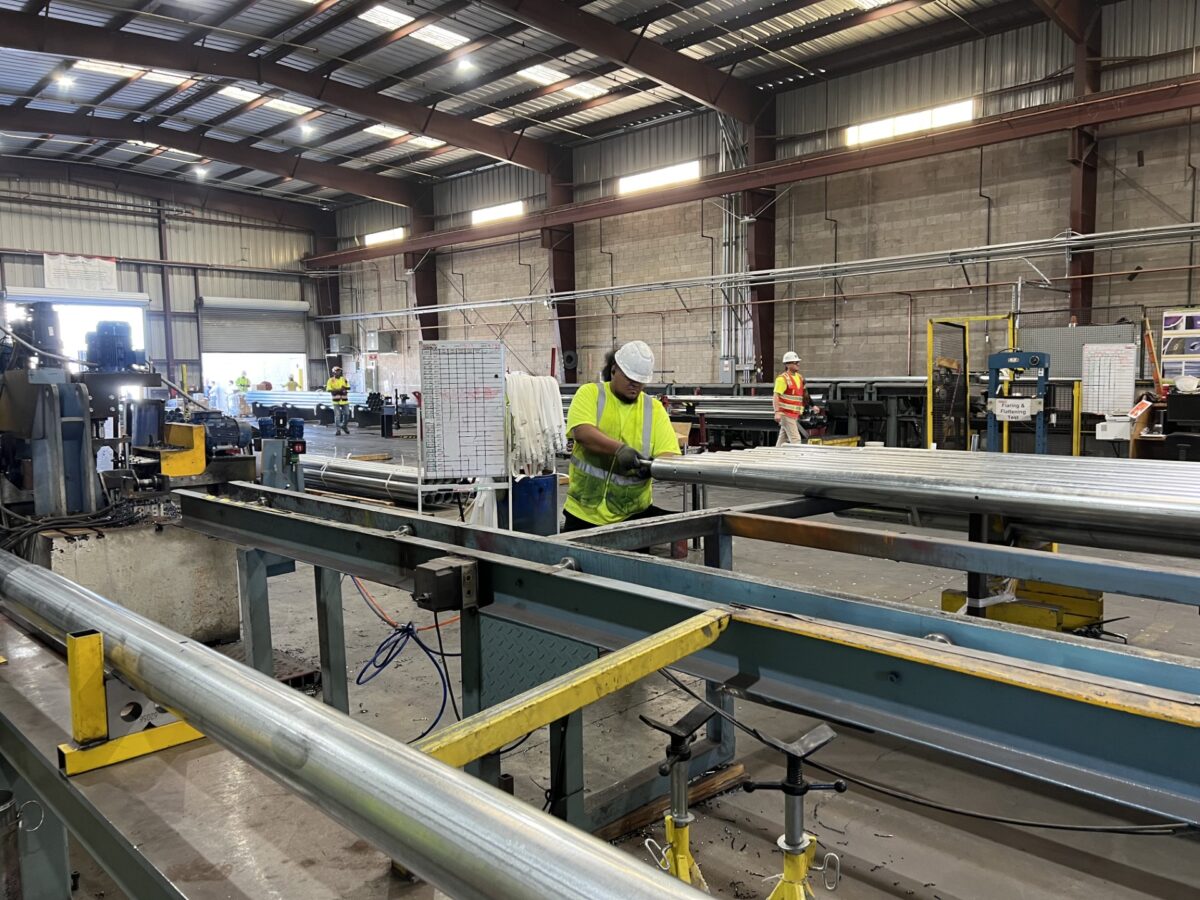





The Trump administration is reportedly preparing to scale back the up to 50% tariffs on imported steel and aluminum as it moves to address an “affordability crisis” weighing on the U.S. economy.
While the White House is framing the shift as relief for household goods like food cans and appliances, the implications for the U.S. solar supply chain are far more significant, potentially cooling a market where raw metal costs have become the primary bottleneck for decarbonization.
Aluminum has moved from a supporting role to center stage in the solar industry’s cost-reduction battle. Historically, solar-grade polysilicon was the dominant cost driver for a photovoltaic module. However, as silicon prices bottomed out over the last year and metal prices surged, the aluminum frame has become the most expensive part of the panel.
Data from SinoLink Securities indicates that as of late 2024, aluminum frames became the single costliest component in solar panel production, representing 14% of total manufacturing costs. For a domestic industry already operating on razor-thin margins, a 50% tariff made an impact.
The proposed rollback could offer even more significant relief to utility-scale developers and residential installers dealing with Balance of System (BOS) costs.
Steel Trackers: For utility-scale projects, galvanized steel typically accounts for 60% to 70% of the total cost of a solar tracking system.
Aluminum Racking: In the residential sector, aluminum remains the preferred material for its strength-to-weight ratio, capturing roughly 71.5% of the solar PV mounting market in 2024.
(Read: “The steel supply crunch threatening U.S. solar ambitions”)
The administration’s pivot involves moving away from broad, industry-wide duties in favor of “targeted national security probes.”
This approach suggests that while the U.S. will continue to guard against “dumping” from foreign adversaries, it may exempt the specific aluminum extrusions and steel piles that the clean energy sector requires to meet domestic demand.
Even with the Inflation Reduction Act’s 45X manufacturing tax credits providing a “carrot,” the “stick” of broad metals tariffs has effectively neutralized much of that benefit for domestic assemblers who still rely on global raw material chains.
Analysts previously noted that cumulative metal and cell tariffs added roughly $0.10 per W to $0.15 per W to solar hardware costs in 2025, according to an industry note from Phil Shen, managing director, Roth Capital Partners.
This content is protected by copyright and may not be reused. If you want to cooperate with us and would like to reuse some of our content, please contact: editors@pv-magazine.com.



By submitting this form you agree to pv magazine using your data for the purposes of publishing your comment.
Your personal data will only be disclosed or otherwise transmitted to third parties for the purposes of spam filtering or if this is necessary for technical maintenance of the website. Any other transfer to third parties will not take place unless this is justified on the basis of applicable data protection regulations or if pv magazine is legally obliged to do so.
You may revoke this consent at any time with effect for the future, in which case your personal data will be deleted immediately. Otherwise, your data will be deleted if pv magazine has processed your request or the purpose of data storage is fulfilled.
Further information on data privacy can be found in our Data Protection Policy.