





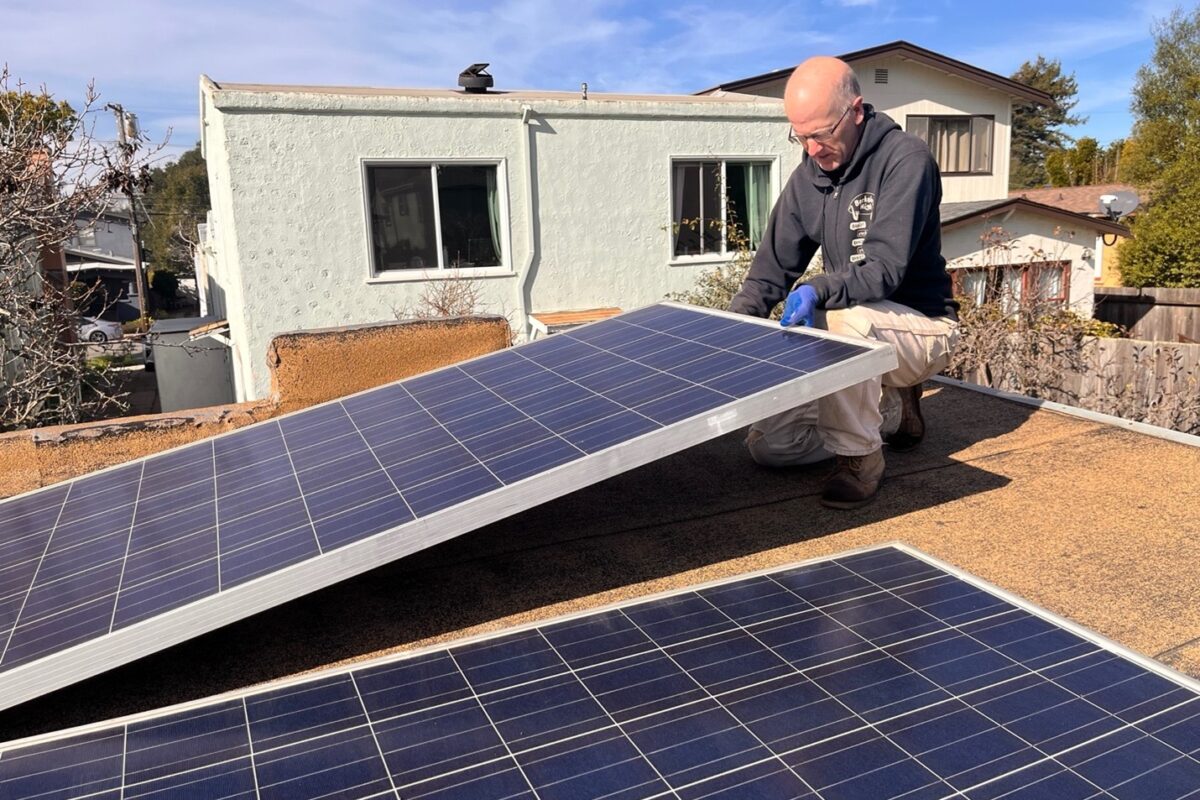
Rules requiring rapid shutdown of photovoltaic (PV) systems installed on buildings in the United States have been part of the National Electrical Code since 2014, and exist primarily to protect firefighters and first responders from harm when they must work around rooftop PV arrays.
Industry compliance with these rules, which govern the requirement to reduce the voltage in the wires both inside and outside the boundary of an array within a certain amount of time after the system is shut down, has largely been maintained through the use of module-level rapid shutdown devices that mount under each solar panel in an array.
However, as thinking has evolved around the safety and simplicity of PV systems, so have the rules surrounding rapid shutdown. New requirements for “PV Hazard Control Systems” allow compliance with the rules as long as components within the array have been certified under the UL 3741 standard.
This evolution was the subject of a recent webinar hosted by Ryan Mayfield of Mayfield Renewables, a technical consulting and engineering firm that also hosts education and training seminars approved for continuing education credits by the North American Board of Certified Energy Practitioners (NABCEP).
Mayfield was joined on the call by three experts on PV rapid shutdown requirements:
- Yann Schwarz, VP of Systems Engineering and Compliance at Enstall and a member of the UL 3741 technical committee
- Glenn Woodruff, Product Marketing Manager with Iron Ridge
- Derek Mast, a solar technician and creator of the UL 3741 knowledge base at pvhazardcontrol.com
The full webinar is now available on YouTube and embedded below:
The importance of UL 3741
With the establishment of PV rapid shutdown requirements in 2014, module-level rapid shutdown became the norm for residential rooftop solar installations, while many builders of commercial PV arrays turned to placing string inverters within 10 feet of the array boundary to comply with the rules.
Following adjustments to the rules in the 2017 NEC, module-level rapid shutdown became the dominant method of compliance across the industry.
Some in the solar industry— including panelist Derek Mast — argue that employing these module-level shutdown devices results in PV systems with too many potential points of failure. The PV Hazard Control System rules exist to provide an alternative method of compliance with the shutdown requirements.
“UL 3741 represents hope that we can avoid using too many components to satisfy safety regulations,” writes Mast on his website. However, he points out, it is essential to understand that “everything in a UL-3741-listed array needs to be specifically listed with everything else” for the most common path to certification.
Therefore, complying with PV Hazard Control System standards requires its own complex understanding of how components in a system work together to meet the NEC safety requirements. Growing this understanding among a diverse mix of solar industry colleagues, code officers, and local inspectors was the reason behind hosting the AMA webinar.
Building awareness of changes to UL 3741 and PV Hazard Control System rules in the NEC
The Mayfield panel of experts opened the webinar by discussing the facts behind rapid shutdown requirements and tracing the historical evolution of the UL 3741 standard over time.
The conversation then turned to significant changes introduced in the latest revision of UL 3741 approved by ANSI on October 20, 2025. These include more specific requirements for components like wire management devices, barriers, and polymeric materials pulled from other UL standards, along with improved testing methods.
The panel also addressed the three paths to UL 3741 compliance for rapid shutdown components:
- Path 1: The 165V Component Listing is a simplified, equipment-agnostic path. As long as the PV string voltage under fault conditions does not exceed 165 volts, any compatible modules and racking can be used without a specific system-level listing. The panelists stressed the importance of this threshold. The 165V figure is based on analysis of whether a firefighter wearing PPE would see leakage current that does not exceed a safe 40mA level even under worst-case fault scenarios.
- Path 2: The 1000V System Listing is a more complex but common path where a specific combination of components including modules, racking systems, inverters and even wire management hardware are tested and listed to work together, never allowing leakage current to exceed the safe threshold. Listing under this path allows PV strings within the system to get to higher voltages (1000V for commercial and 600V for residential). Most mounting system manufacturers have adopted this approach, creating what panelist Yann Schwarz described as “a complicated set of Legos” that must be assembled exactly as specified to be compliant. Mast pointed out that path 2 is the reason his website exists, as he strives to provide a full accounting for all the various components that are certified to work together in systems under UL 3741.
- Path 3: Enhanced Fault Protection was introduced in the latest revision of UL 3741, and allows for a full system listing that may avoid firefighter interaction testing by designing out the possibility of faults from the start. Schwarz explained this path was created because system-level testing of every possible component combination can be incredibly “costly and time consuming.” This new path emphasizes the use of inherently safe materials as a more efficient route to compliance.
For now, path 2 still provides the most common route to UL 3741 compliance. Schwarz gave viewers a peek behind the curtain of the standard development, asserting that changes to UL 3741 compliance testing “simplify the process and make it closer to the original intent.”
He outlined three tests performed on PV arrays in UL 3741 compliance testing that closely resemble the kinds of “accidental interactions” firefighters may have with a PV array:
- Falling onto the array
- Stepping on the array
- Falling with a firefighter tool
Schwarz highlighted the importance of consistency in these testing methods, pointing out that only by including all the components of a PV array (racking, mounts, wire management, etc.) can these tests be made repeatable, and therefore valid.
Other panelists expanded upon this view, with Mast pointing out that the path to compliance runs through racking manufacturers, whose installation guides will specify which other components must be used to maintain compliance. He cautioned installation managers to “make sure you’re training the installers to actually look at the installation manual. It’s not just ‘install it and use whatever wire management technique you would like.’”
Mayfield agreed, saying “Understanding the means and methods of installing is really the critical piece here. If you’re never read (the full UL 3741 standard), I’m not going to blame you. But if you never read the manual, I will absolutely blame you.”
Final thoughts: expanding UL 3741 adoption
Transitioning the commercial and residential solar industry away from the methods of rapid shutdown compliance to which they have become accustomed is a long-term endeavor, but despite the complicated nature of UL 3741 compliance, adoption is growing among installers.
Panelist Glenn Woodruff says his team is focusing on simplifying and streamlining installation instructions for installers and bringing more interchangeability of compliant products. He explained that he sees a willingness to become educated about UL 3741 among local inspectors at authorities having jurisdiction (AHJs), but says that financing companies may want a higher level of diligence regarding compliance before being willing to back projects.
Woodruff and Mayfield agreed they see between 20 and 30 percent of installations now including 3741-complaint systems, and are hopeful that number will grow over time.
The full UL 3741 AMA webinar will be published to the Mayfield Renewables YouTube channel, and Mayfield also offers a full-length class on the UL 3741 standard.
This content is protected by copyright and may not be reused. If you want to cooperate with us and would like to reuse some of our content, please contact: editors@pv-magazine.com.




By submitting this form you agree to pv magazine using your data for the purposes of publishing your comment.
Your personal data will only be disclosed or otherwise transmitted to third parties for the purposes of spam filtering or if this is necessary for technical maintenance of the website. Any other transfer to third parties will not take place unless this is justified on the basis of applicable data protection regulations or if pv magazine is legally obliged to do so.
You may revoke this consent at any time with effect for the future, in which case your personal data will be deleted immediately. Otherwise, your data will be deleted if pv magazine has processed your request or the purpose of data storage is fulfilled.
Further information on data privacy can be found in our Data Protection Policy.