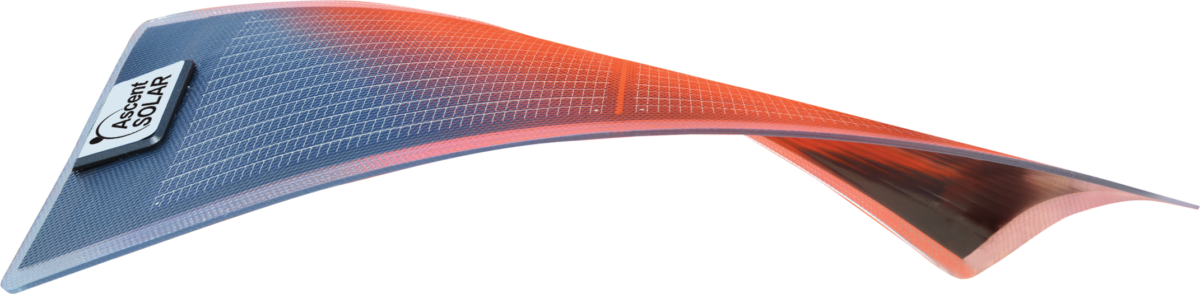





Photovoltaic solar power has long been a foundational technology for space operations, particularly for those focused on Earth. Depending on the orbit, energy from the sun is dependable: unobscured by weather and constant outside of Earth’s shadow. Solar has powered satellites and other space vehicles long before it was commercially viable.
The flip side is getting solar into orbit and beyond are the weight and deployment restrictions attending the launch of essentially anything into space, particularly for fully automated systems. These constraints have granted thin-film PV modules that can be packed tight and yet unfold or unroll on lightweight structures a virtual monopoly on solar in space.
In general, solar PV deposited on glass is significantly more efficient than thin film, but this is the price you pay for off-world deployments. Paul Warley, CEO of Colorado-based Ascent Solar, told pv magazine USA that thin-film efficiencies and overall performance can be increased through the use of certain materials and manufacturing processes.
For example, Warley said Ascent uses molybdenum as a backstop for its copper indium gallium selenide (CIGS) thin-film solar cells to disburse heat and improve performance. Moreover, the dispersed heat can be used to produce more electricity for spacecraft by running thermoelectric generators.
Paired with research and development to bring its thin-film solar cell efficiencies up to nearly 16% for commercial runs is Ascent’s work on manufacturing processes. The company is working to deliver module sheets for a wider number of applications than just being a supplier for bespoke spacecraft designs.
“We are developing certain modules that will be standard,” Warley said. “But we can still take those modules and design something for custom applications.”
Lowering launch costs is increasing opportunities for companies, governments and research institutions to get spacecraft into orbit and beyond. Ascent wants to produce thin-film CIGS modules in standard sizes and voltages in hardware development kits that could be plugged into spacecraft designs. Essentially, spacecraft designers could specify Ascent kits rather than requiring custom solar panels for a particular design.
“The issue with space is that I’m still working with 18- to 30-month sales cycles,” Warley said. “So, we’re just starting to see some of the results of our hard work.”
While the company has deals with space companies and agencies to test its modules, and some of these have flown, space as an industry is still saddled with long lead-times and inevitable delays, making it a difficult sector to make bank on as a supplier. Warley said Ascent is focused on making its products as useful and cost-effective for spaceflight as possible, but at the same time it is exploring other industries, namely atmospheric flight, defense and agrivoltaics.
According to Warley, the same characteristics of lightness and flexibility are also garnering interest for new generations of long-endurance airships and high-altitude unmanned aerial vehicles (UAVs). Ascent is working with New Mexico-based airship developer Sceye and Virginia-based UAV developer Silent Falcon to put its solar modules of their aircraft as a means of generating electricity in flight and thereby expand range and time aloft.
On the defense front, Ascent is developing versions of its modules into fabric-mounted formats to power solar chargers for forward operating bases and individual soldiers. Naval applications are also being explored. For agrivoltaics deployments, Warley envisions lightweight solar canopies erected 20 or so feet above fields that enable the passage of farm vehicles without obstructing light and rain.
This content is protected by copyright and may not be reused. If you want to cooperate with us and would like to reuse some of our content, please contact: editors@pv-magazine.com.




Stock should do extremely well if it is publicly traded.