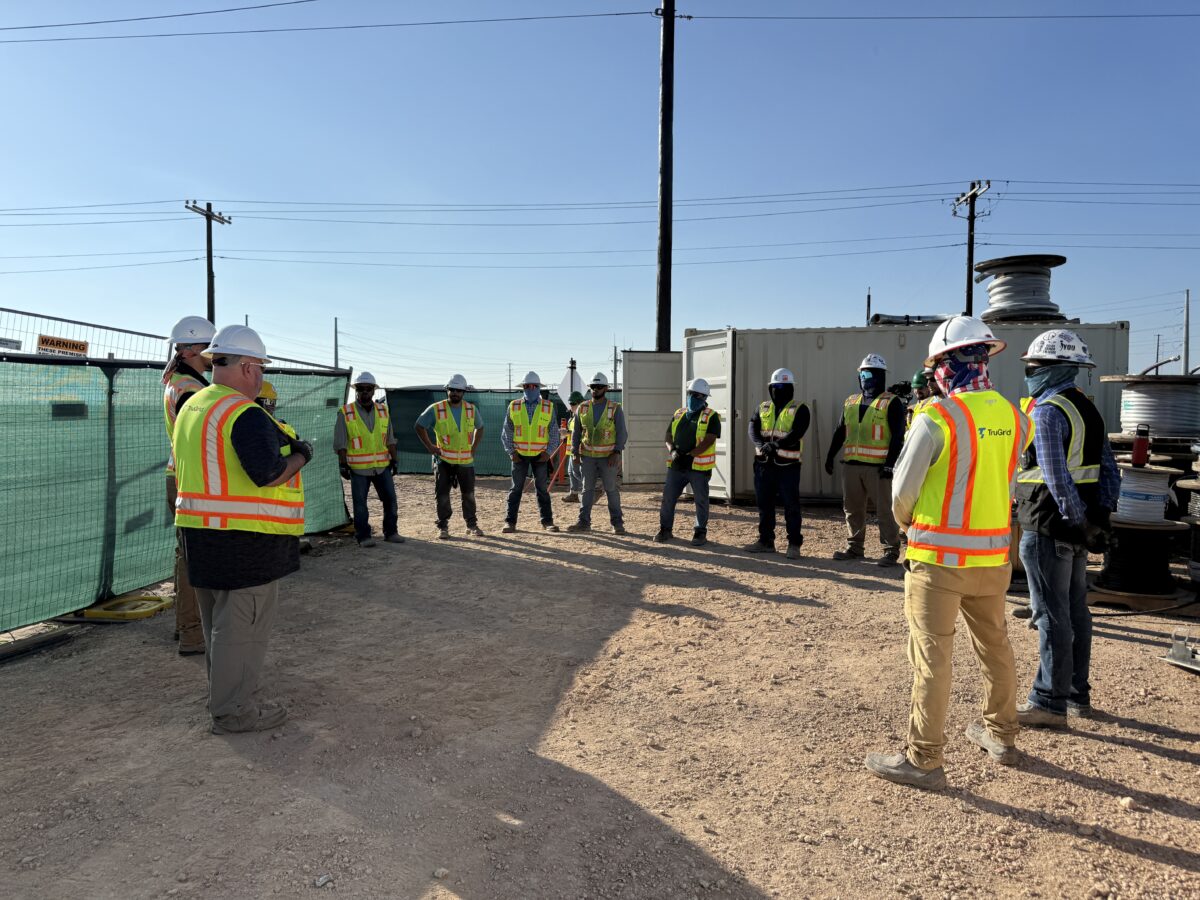





A utility-scale engineering, procurement, and construction (EPC) firm has done something not many EPCs can say they’ve done. For more than 12 straight months, TruGrid has maintained a 0.0 Total Recordable Incident Rate (TRIR).
During that time, the company completed five projects with no Occupational Safety and Health Administration (OSHA) recordable incidents. TruGrid outlines in a whitepaper how it achieved its safety milestone and outlines actionable steps for EPCs to avoid OSHA violations, mitigate risk, and ensure jobsite safety.
ISNetworld data displays Total Recordable Incident Rate (TRIR) and Days Away, Restricted, or Transferred (DART) for TruGrid, its subcontractors, and all companies within the ISNetworld platform that are identified as utilities or renewable industry companies.
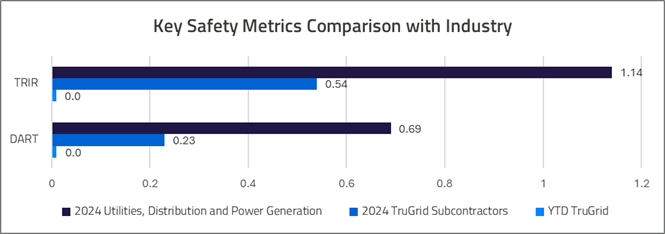
Based on the most recent data from the U.S. Bureau of Labor Statistics, the average TRIR for construction companies typically ranges from 1.5 to 2.3. Furthermore, proprietary data from ISNetworld shows an average of 1.14 for utilities and renewable industry companies within the platform. With TruGrid’s 0.0 TRIR, the company ranks among the safest organizations in the renewable energy industry. With TruGrid having a 0.0 TRIR, this puts the company among the safest organizations in the industry. The company has released a white paper detailing its safety practices to reach this safety score. Here’s a synopsis of how they did it:
1. Leadership alignment and strategic investment
As a foundational practice, the TruGrid executive team holds weekly health, safety, and environmental (HSE) dashboard reviews to create transparency and accountability. Leaders also participate in startup meetings, pre-mobilization risk reviews, and regular jobsite walks.
When leadership displays an authentic safety mindset, it becomes ingrained in the overall safety culture across the company. This is reinforced daily through open communication, peer accountability, and a mindset that safety is a collective responsibility. Crews actively look out for one another, raise concerns without hesitation, and treat safety discussions as a normal part of the workday. This level of engagement creates an environment where proactive decision-making thrives, and every individual, regardless of role, contributes to keeping the job site safe.
The TruGrid team also made significant financial investments in safety in 2025. The upgraded personal protective equipment (PPE), maintained digital reporting platforms such as ISNetworld, used safety workflow platforms such as SALUS on a consistent and structured basis, enhanced training, and ensured resources can rapidly respond at both corporate and project levels. Project managers also had access to safety contingency funds to address hazards immediately rather than waiting for administrative approval. The combination of leadership visibility and safety budgeting helped TruGrid maintain its A-grade contractor status in ISNetworld.
2. Integrated field management and subcontractor alignment
TruGrid’s HSE managers serve as hands-on, on-site partners to the field teams. Their regular presence on jobsites fosters a preventive mindset and helps crews anticipate hazards rather than respond to them.
Subcontractors are also fully integrated into the safety system. Through a rigorous prequalification process, TruGrid evaluates TRIR trends, safety programs, certifications, and leadership practices. The company then only awards work to subcontractors that have A or B ratings within ISNetworld, which is an indicator of a company’s safety record and ability to follow best practices.
Once on site, subcontractors participate in the same pre-task planning, coordination meetings, and stop-work authority expectations as TruGrid employees. This creates uniformity across trades and ensures that everyone operates under the same standards.
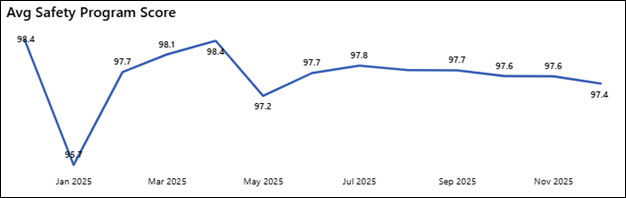
This chart shows the average safety program score in ISNetworld for all TruGrid subcontractors.
TruGrid’s safety goals and alignment with subcontractors are evident in TruGrid’s Average Safety Program Score, which is calculated by the ISN Review and Verification Team to grade subcontractor programs and safety manuals based on OSHA regulations. In 2025, TruGrid subcontractors averaged 97.6 out of 100% in their written program score in ISNetworld.
3. Training, continuous improvement, and risk-based decision support
TruGrid strengthens its employee competencies through multi-layered training. Every employee completes a comprehensive orientation that includes electrical safety, energy storage hazards, emergency response, weather hazards, and protocols that are specific to each site. Daily toolbox talks, weekly training topics, and annual refreshers are also incorporated. Additionally, the use of a digital learning platform proved to be highly successful, with TruGrid achieving completion rates above 98 percent across all required modules in 2025.
Continuous improvement and risk identification also played a central role in TruGrid’s success. Every near miss and hazard observation undergoes a thorough evaluation that uses structured root-cause analysis tools. Insights from these reviews led to improvements, including redesigned traffic flow plans, dedicated walkways, and more rigorous pre-task coordination with subcontractors.
Results
By using a unified safety framework that ensures strong leadership alignment, subcontractor integration into processes, strong training programs, and thoughtful pre-task planning, TruGrid completed more than an entire year without a single OSHA recordable incident. The company delivered more than 200,000 work hours safely and maintained a 0.0 TRIR.
With this type of safety culture displayed at TruGrid, field teams shared that they feel confident in hazard controls, communicate openly, and step in sooner with stop-work authority whenever something does not feel right. Leaders also note that employees are proactive in reporting near-misses and go above and beyond to ensure the safety of others.
Read the full safety whitepaper here.
The views and opinions expressed in this article are the author’s own, and do not necessarily reflect those held by pv magazine.
This content is protected by copyright and may not be reused. If you want to cooperate with us and would like to reuse some of our content, please contact: editors@pv-magazine.com.





By submitting this form you agree to pv magazine using your data for the purposes of publishing your comment.
Your personal data will only be disclosed or otherwise transmitted to third parties for the purposes of spam filtering or if this is necessary for technical maintenance of the website. Any other transfer to third parties will not take place unless this is justified on the basis of applicable data protection regulations or if pv magazine is legally obliged to do so.
You may revoke this consent at any time with effect for the future, in which case your personal data will be deleted immediately. Otherwise, your data will be deleted if pv magazine has processed your request or the purpose of data storage is fulfilled.
Further information on data privacy can be found in our Data Protection Policy.