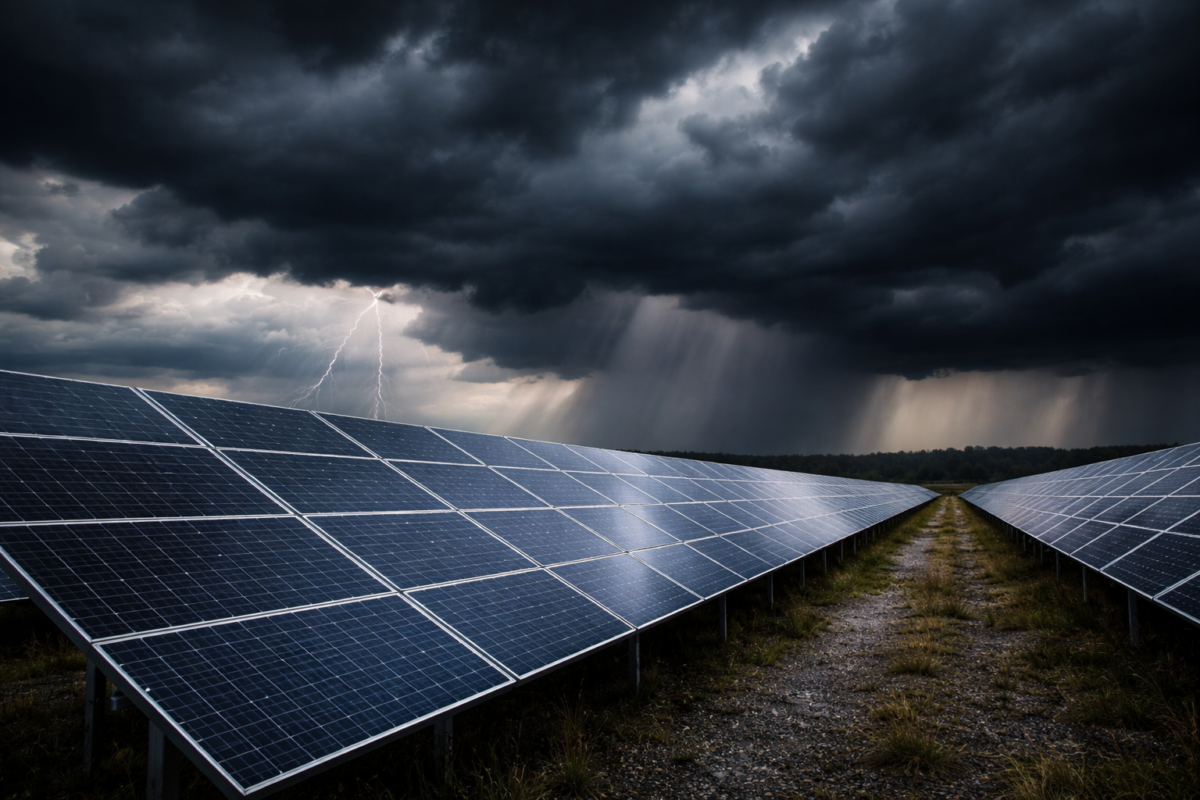





The solar industry’s explosive growth to 2TW in 2024 coincides with an unsettling trend: the uptick in record-breaking weather events and their potential impact on PV infrastructure worldwide. The Intergovernmental Panel on Climate Change (IPCC) has confirmed that human-induced climate change is increasing the intensity and frequency of most extreme weather categories, with widespread impacts beyond natural climate variability.
A newly released IEA PVPS Task 13 report, featuring the input of PV researchers across five continents, examines seven major weather threats, providing evidence-based guidance for designing more robust systems tailored to specific climatic risks. While the report states “most PV systems are robust, if appropriately sited, designed and maintained,” the failures described in the report, along with lessons learned, provide a roadmap to increased resilience.
Two categories of damage
Weather-related damage to PV systems falls into two distinct categories: catastrophic damage that involves visible destruction of modules, strings, or entire systems, such as parts torn from mounts, collapsed racks, and shattered glass; and sub-catastrophic damage, which is subtle and lacks visible indicators. The latter category matters because solar cells and internal module components exposed to extreme wind loads and intense humidity can experience accelerated degradation, resulting in a sooner-than-expected performance decline.
The hail threat: An insurance challenge
The weather event that captures the most attention in the solar community is the hail-producing convective storm, which is responsible for more economic damage than any other weather category. According to GCube Insurance data from 2018-2023, hail accounts for only 1.4% of solar claims by volume but represents 54.2% of total incurred losses. The four largest insurance claims, totalling over $224 million, were all caused by hail events.
For example, hail-producing thunderstorms in West Texas in May 2019 damaged more than 400,000 modules (two-thirds of a182MW solar plant), resulting in insured losses of $70-$80 million and an increase in regional insurance premiums by as much as 400%.
The 2022 Texas hail season was also damaging, with more than 1,700 MW across three counties impacted by tennis-ball-size hail and cumulative damages estimated at $300 million.
Meanwhile, In Switzerland during June and July 2021, widespread hailstorms caused some of the most expensive hail-related losses in recent decades. Approximately 15% of all PV systems in the country were in areas experiencing hailstones larger than 5 cm. EL imaging of roughly 6,000 modules from 411 affected systems revealed significant cell cracks in 57% of the modules.
Tropical cyclones: Wind and water
Tropical cyclones, including hurricanes and typhoons, occur along the coasts of North America and throughout Asia. While their frequency may decrease or remain unchanged, IPCC projections indicate their intensity is expected to increase, providing opportunities to harden PV systems currently being developed in high-growth regions, notably the coastal areas of North America and Asia.
Most damage is the result of poorly-designed-and-installed racking systems, with bolts and fasteners being the primary failure points. Fasteners that are inadequately torqued or not designed for high-stress conditions can loosen during wind events and, if wind loads are severe enough, fail completely and cause cascading effects ranging from collapsed racking to modules being ripped from their fasteners.
In tracking systems, strong winds can induce torsional galloping, escalating stress on modules and single-point fasteners, resulting in runaway-failure events. That can happen when end-of-row modules keep twisting until the fasteners fail, leading to a domino effect in which an entire row of modules may tear away.
The dual challenge of snow and ice
In northern latitudes, extreme snow events pose a dual threat: firstly, racks can collapse under the heavy snow load; and secondly, snow that covers the modules can block irradiance for extended periods. Fresh snow and ice have densities of 30-50 kg/m³ and 800-900 kg/m³, respectively, but as snow ages and temperatures rise, compaction reduces transmissivity and increases weight. The load intensifies when new snow arrives before older snow sheds.
In Japan, a study showed snow pressure was largest for 10° tilt arrays, with frontal loads along the leading edge reaching up to 6-8 kN/m. Loads increased significantly when the snow cover on modules was connected to ground snow.
Japan’s National Institute of Technology and Evaluation noted damage due to heavy snow for 43 PV systems in the Tohoku and Hokkaido regions during 2018-2021, affecting approximately 30 MW of combined capacity. A subsequent study from 2021-2023 covered 65 arrays, recommending budget allocation for snow removal, surveillance cameras for detection, and regular site visits.
Dust storms and heat waves
Dust and sandstorms (DSS) can reduce Global Horizontal Irradiance and Direct Normal Irradiance by as much as 40-50% and 80-90% respectively during events. Moreover, dust on module surfaces can persist after skies clear, with reported losses as high as 7% in Portugal and 20% in Saudi Arabia after DSS events.
In Qatar, the average daily PM₁₀ ranged from 115 to 339 μg/m³ on dust storm days compared to 89 μg/m³ on clear days. Soiling rates increased dramatically to 1.23%/day during DSS days versus 0.42%/day on clear days—more than a 20-fold increase in soiling losses attributable to dust storms.
Meanwhile, heat waves pose multiple threats. For every 1°C rise above 25°C, crystalline silicon cell efficiency is reduced by 0.2-0.5% in relative terms. Studies show degradation rates can reach up to 0.8%/year in the hottest areas of Europe and up to 1.4%/year in regions near the equator.
Floods and wildfires
Flood damage also falls into two categories: physical damage from fast-flowing waters and electrical failures caused by submergence of electrical components. In southern India, a fixed-tilt, south-facing plant experienced catastrophic damage from fast-flowing flood waters that uprooted foundations and destroyed modules, while a nearby canal-top system at just 6° inclination showed minimal structural damage because the low tilt-angle reduced resistance.
Wildfires are projected to increase globally by 14% by 2030 and by 50% by 2100. Fires generate more insurance claims than hail, although their damage losses are far less. Like snow, wildfire can impact PV plants in two ways: fire can be physically destructive; and smoke blocks irradiance, depressing generation. The 2019-2020 Australian bushfire season, for example, caused estimated total energy losses of 175 ± 35 GWh, with the observed mean power reduction rate at 13 ± 2% per 100 μg/m³ of PM₂.₅ concentration.
Designing and planning for resilience
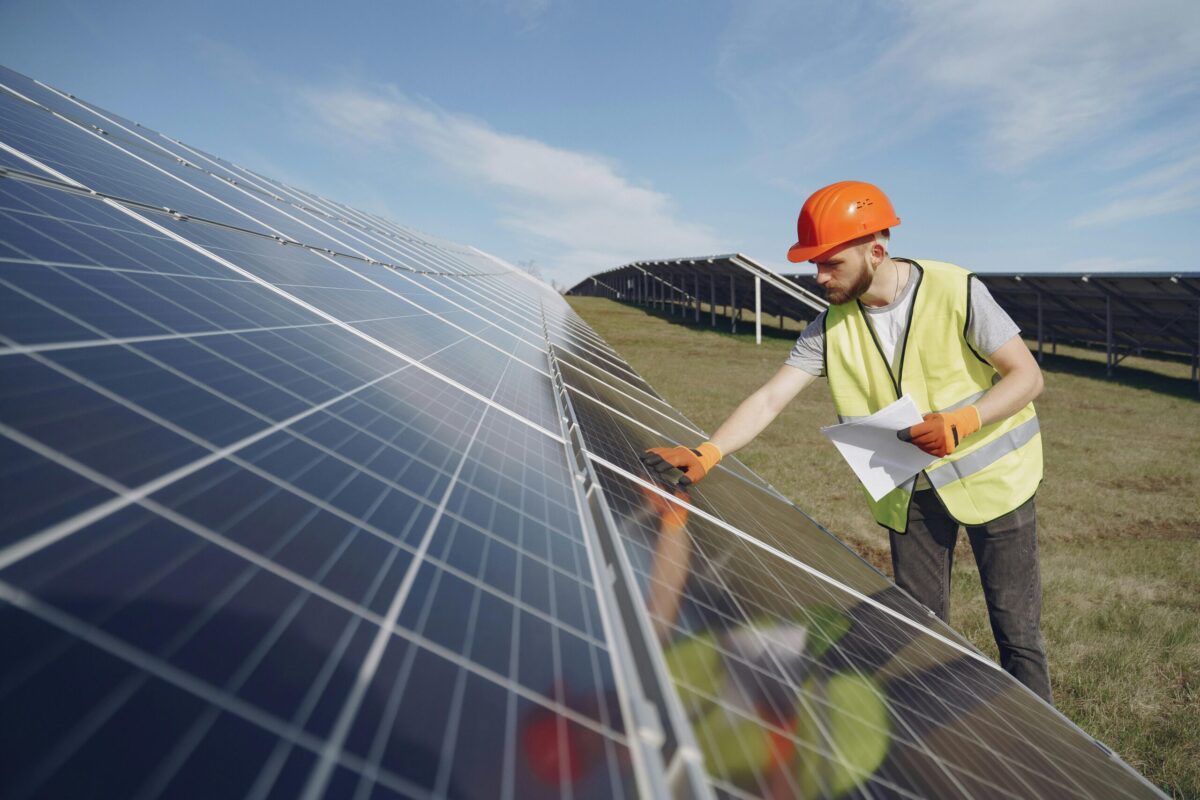
With appropriate planning and design decisions that are based on specific weather threats, most PV systems can survive high-intensity storms. A key first step is to integrate historical and predicted weather patterns into the site-selection process to determine the site’s suitability and allow risk calculations to inform procurement decisions. A next step is to design the system according to the risk at that location, considering the choice of well-engineered tracking systems that can withstand intense loading, modules with appropriate specifications (such as thicker front glass in hail-prone regions), fixed-tilt and tracker systems with adequate ground clearance (for snowy climates), and waterproof electrical enclosures (for regions at risk of flooding). A third step is to ensure that rapid and effective response protocols are in place, including pre- and post-event strategies, with field crews trained to execute them. And a fourth step is to have an O&M strategy that supports regular inspections of modules, fasteners and the electrical balance-of-system components to monitor for signs of accelerated degradation or likely failure (as in the case of overheated connectors or loose bolts).
Conclusion
The report’s message is clear: by adhering to proper site assessment, appropriate material selection, rigorous installation practices, and continuous monitoring, PV systems in most of the world can be made resilient to the majority of severe weather threats and remain a robust and reliable source of electricity generation.
Author: Ignacio Landivar
To access the full Operational and Economic Impacts of Extreme Weather on PV Power Plants, you can download it here.
IEA PVPS Task 13 focuses on international collaboration to improve the reliability of photovoltaic systems and subsystems. This is achieved by collecting, analyzing, and disseminating information about their technical performance and durability. This creates a basis for their technical evaluation and develops practical recommendations to increase their electrical and economic efficiency in various climate regions.
The views and opinions expressed in this article are the author’s own, and do not necessarily reflect those held by pv magazine.
This content is protected by copyright and may not be reused. If you want to cooperate with us and would like to reuse some of our content, please contact: editors@pv-magazine.com.

By submitting this form you agree to pv magazine using your data for the purposes of publishing your comment.
Your personal data will only be disclosed or otherwise transmitted to third parties for the purposes of spam filtering or if this is necessary for technical maintenance of the website. Any other transfer to third parties will not take place unless this is justified on the basis of applicable data protection regulations or if pv magazine is legally obliged to do so.
You may revoke this consent at any time with effect for the future, in which case your personal data will be deleted immediately. Otherwise, your data will be deleted if pv magazine has processed your request or the purpose of data storage is fulfilled.
Further information on data privacy can be found in our Data Protection Policy.