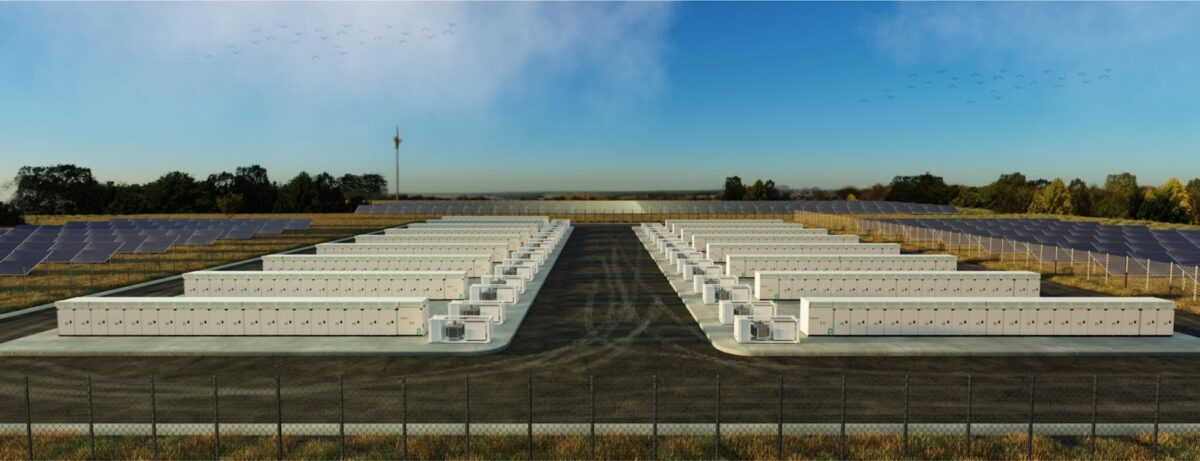





2025 was a tumultuous year for the energy storage industry, and it left market forces tugging the industry in different directions. AI and data center-driven energy demand is skyrocketing while electricity prices are hitting highs; battery costs are shifting unevenly, project economics are under strain and a suite of policies set to come into effect in the New Year will cause even more shake-up.
ESS News spoke with leaders from around the energy storage industry to learn more about what they expect for the year ahead.
Rising electricity prices will push storage further into the spotlight as a cost and reliability solution
“Everything is getting more expensive for families (groceries, household goods, gas) but electricity doesn’t have to be. We’re entering what I see as a twin crisis: the need for a more reliable electricity supply and relief for ratepayers facing rising costs. In 2026, the real test for the energy industry will be whether we can move fast enough to tackle both. Speed to market will be the single biggest driver of energy deployment next year, and energy storage can scale fast and cost effectively.” – Arvin Ganesan, CEO, Fourth Power
Battery prices will continue falling, even as tariffs and policy uncertainty reshape deployment timelines
“I see battery prices continuing to drop at the start of the year with more energy being stored in smaller containers. While the tariffs are delaying some new projects, existing wind, solar, and grid shortages will need significant quantities of batteries, so no energy is wasted, and customers can still buy low-cost electricity at off hours…[and], President Trump will be forced to allow renewable energy projects to start again as a way to help the sagging economy to get moving before the elections under the pressure from big business for low-cost electricity.” – Steve Feinberg, President, Bluewater Battery Logistics
“The biggest unknown for next year remains how we’ll keep pace with surging electricity demand…Renewables and storage will continue to do the bulk of the heavy lifting. Solar, wind, and batteries are the fastest, cheapest, most scalable way to add firm power. Anyone who thinks otherwise is clinging to an outdated narrative.” – Peter Davidson, CEO and co-founder, Aligned Climate Capital
Storage economics will look better on paper than in practice
“The combined impact of collapsing revenues and soaring costs has made battery storage economics unworkable for many developers. In Texas, the country’s largest battery storage market, revenues crashed in 2024 and 2025. In California, net annual revenues per kW of battery capacity decreased from $103/kW in 2022 to $78/kW in 2023 and just $53/kW in 2024 due to lower peak hour prices. On top of that, the cost and complexity of building battery storage is rising.” – Michael Thomas, CEO, Cleanview
It’s anyone’s guess whether 2026 will bring widespread cancellations or a late-year surge in battery demand
“Project cancellations will be a thing of the past. Late in the year, we will see a huge demand for batteries with longer lead times.” – Steve Feinberg, President, Bluewater Battery Logistics
“I think we’re likely to see a lot of battery storage projects canceled in 2026. Projects that penciled at $192/kW in revenue with $100/kWh battery costs in 2023 now face $55/kW in revenue with $130/kWh costs—a fundamental shift that has forced developers to cancel 79 GW of planned capacity nationwide in 2025 [according to Cleanview’s data].” – Michael Thomas, CEO, Cleanview
Workforce constraints may be the limiting factor for storage deployment
“It’s people, not just technologies, that have actively reshaped the energy storage industry this year. The heart of this shift is human. Communities demand safer options, utilities seek partners they can trust and teams across the country are working together to solve problems. Innovation is a people-first race to deliver storage that makes energy solutions more resilient for everyone. Looking ahead to 2026, the future of advanced battery energy storage will be defined by teams who lead with partnership, purpose and passion.” – Julie Royes, Vice President of Corporate Affairs, CMBlu Energy, Inc.
“As we look ahead to 2026, we will begin to see supply chain and workforce challenges easing for sectors tied to electrification or distribution level but continue to see long lead times for power transformers. The global shortage of skilled labor, especially in high-voltage, high-power transformers, is slowing production and driving up costs across the grid supply chain. We’re hearing from major manufacturers that the best training programs for this work are overseas, which creates real logistical and timeline hurdles for U.S. facilities.” – Charles Murray, CEO and Co-Founder, Switched Source
As the storage market fragments by use case, application-specific storage strategies will gain momentum.
“2026 won’t be the year EVs, grid storage, and data centers converge into a single battery roadmap, but instead, it will be the year each of those markets becomes large enough to justify its own optimized battery designs. What looks like convergence today is really just parallel scale. Automakers, utilities and data centers all care about cost, safety, and reliability, but each weighs those factors differently. Shared platforms will only win where cost reduction clearly outweighs performance tradeoffs. Outside of that, we’ll actually see more application-specific battery designs, not fewer.” – Joe Adiletta, CEO, Volexion
“[California’s] Assembly Bill (AB) 2514 proves early that purpose-driven storage procurement is both possible and effective, and the energy storage industry continues to build on that foundation with broader technology diversity and stronger bankability requirements.” – Giovanni Damato, President, CMBlu Energy, Inc.
Corporate buyers will cautiously diversify storage portfolios beyond lithium-ion.
“Currently, most corporate storage portfolios favor batteries due to their rapid deployment and established supply chains…however, market signals and investment trends indicate that diversification is gradually taking shape. Some sophisticated industrial users are piloting alternative technologies, but widespread portfolio diversity is unlikely to materialize until the 2030s, when these alternatives prove their economic viability at scale. In 2026, batteries are expected to remain the dominant technology in corporate portfolios, with gradual diversification as pilot projects expand, innovation accelerates and new business models emerge.
In the interim, hybrid solutions that combine batteries with other storage types may become more attractive for industries seeking both short-term flexibility and longer-term capacity.” – Matt Kennedy, Global Head of Client Transformation, IDA Ireland
Utilities and grid operators will push for innovation.
“I’d expect to see data centers and electrification drive many innovative strategies from big-name utilities. Looking across the major utilities, we’re seeing some of these strategies emerge. Some have a heavy emphasis on energy storage and utility-owned generation, while others emphasize capital-light measures leveraging more advanced controls and grid-enhancing technologies to make better use of the infrastructure that’s in place. Both have pros and cons and will take years to prove out. Still, it is good to see utility CEOs rising to the occasion with new ideas and cohesive strategies, even if they vary greatly based on regional challenges and regulatory structures.” – Charles Murray, CEO and Co-Founder, Switched Source
“The economics are compelling: capacity markets are recognizing the reliability value of batteries, and utilities are realizing that storage systems can defer or eliminate expensive transmission upgrades needed to serve these enormous loads.” – Jim Spencer, President and CEO, Exus Renewables
This content is protected by copyright and may not be reused. If you want to cooperate with us and would like to reuse some of our content, please contact: editors@pv-magazine.com.




By submitting this form you agree to pv magazine using your data for the purposes of publishing your comment.
Your personal data will only be disclosed or otherwise transmitted to third parties for the purposes of spam filtering or if this is necessary for technical maintenance of the website. Any other transfer to third parties will not take place unless this is justified on the basis of applicable data protection regulations or if pv magazine is legally obliged to do so.
You may revoke this consent at any time with effect for the future, in which case your personal data will be deleted immediately. Otherwise, your data will be deleted if pv magazine has processed your request or the purpose of data storage is fulfilled.
Further information on data privacy can be found in our Data Protection Policy.