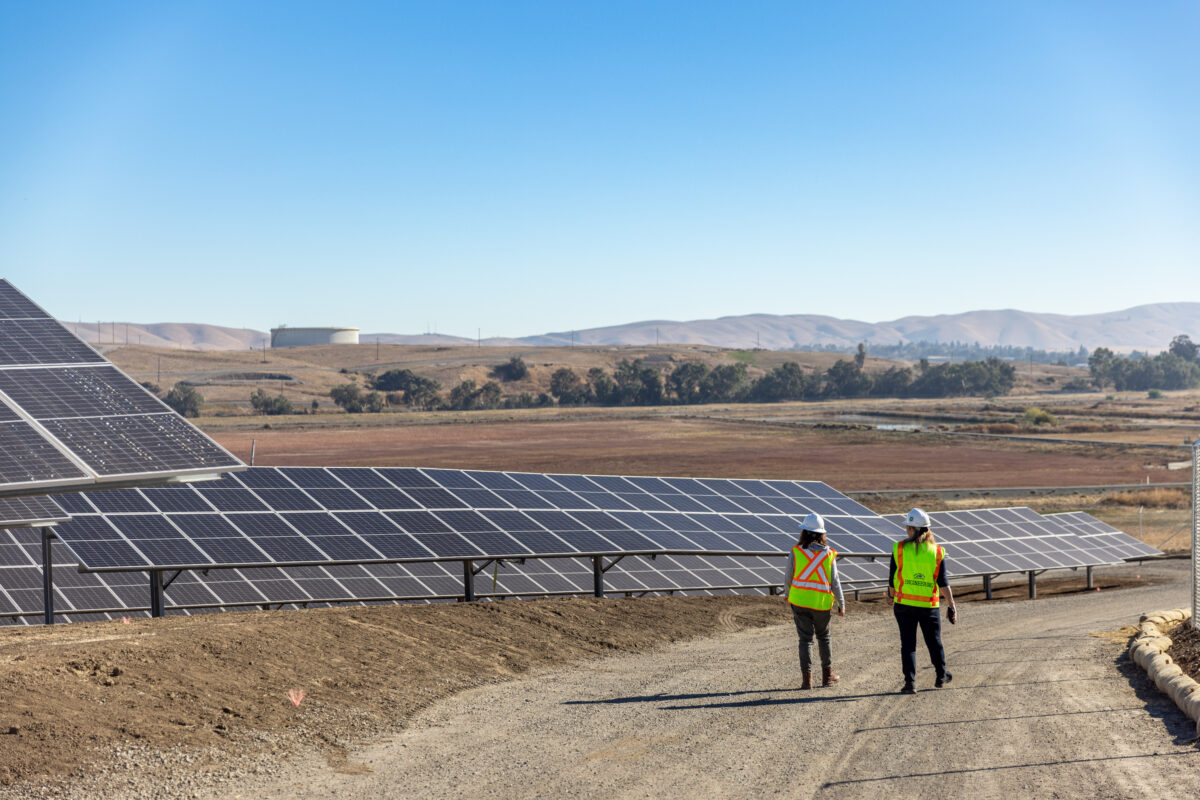





If there was a solar word of the year for 2025, it would be “repowering.” Manufacturers, project owners and power providers, and operations and maintenance companies all seem to be either thinking or talking about replacing components and systems to improve the power output of PV plants. Rather than being some new marketing meme, experts say repowering is a fact of life with so many pioneering large PV projects now approaching middle age.
Andy Sofranko, vice president of engineering at REC Solar, a veteran power producer in the commercial and utility solar sectors, says the need to go beyond preventive maintenance and outage repair is something owners and operators should have been preparing for. Sofranko talked with pv magazine USA about why repowering is such a big deal now and what’s involved in the process.
pv magazine: The idea of some kind of midlife refurbishment, replacing of major components, isn’t so extraordinary with other sources. If you had another kind of a generation system, you’d be replacing turbines or refueling a nuclear reactor. Why are people sort of surprised by midlife repowering in the solar sector?
Andy Sofranko: A lot of repowering issues are coming out en masse now just with the timing of the life cycle of so much PV in the U.S. Like you said, it’s not dissimilar from routine refueling or failure replacement that happens in other types of generation.
pv magazine: At REC Solar, you’re in that part of the industry as power providers where you’ve sort of seen this coming, right? But I would say maybe a lot of people that are in the ownership position are more like portfolio managers. Did they see this coming?
Andy Sofranko: I hope so. I would say routine maintenance is the expectation for the life of the system. But then at a point in your portfolio you start to see systems where the routine maintenance just isn’t cutting it anymore. And that’s where it moves on to this next stage, which is a more significant replacement of parts and a lot more effort than just rolling in a truck or replacing a single component. You’ve got to bring more expertise to the table, get the right skill sets involved in order to breathe new life into these systems so that they can stretch into their next phase.
pv magazine: In that early time for utility-scale solar now approaching middle age, about 15 years ago, one of the stated benefits of these large PV plants is that there’s not a lot of moving parts, and there’s a lot of solid-state aspects to them. I think people sort of get the impression, “Okay solid state. It sort of sits there it doesn’t break and it’ll last forever.” But really there’s a lot of components when you look at it in more granular detail.
Andy Sofranko: I completely agree that this “static state” notion exists. You get the feeling that like, “Hey, what could really be needed there?” But, you know, these systems, by nature, they’re out in the sun, they’re out in the elements, and they have to withstand that.
Which leads to my next point that just by implementing best practices for running PV plants we have learned a lot along the way. REC has been around for almost 30 years now, and we’ve partnered with a lot of expertise in the solar industry.
We get to gather all that knowledge and just apply it forward. So, when we’re entering a repower project, we’re looking to see where maybe some of those best practices weren’t implemented back then because they weren’t recognized as such. We want to implement them now: get stuff less exposed, secure stuff or use more robust material in order to give it a better chance of lasting longer going forward.
pv magazine: Now, we’ve reached the point now where a lot of these projects have created a track record of how things work over time in the elements under different conditions that didn’t exist before. Manufacturers have more real-world information about how their components work. Operators have more field experience with maintenance based on years of familiarity. What are the indications that repowering is required and not just more maintenance?
Andy Sofranko: I would say foremost is that a repower comes into play because the project has really fallen short of current expectations, and that could be for a number of reasons and the fixes can vary widely. But the first indicator is that returns have dropped off and are threatening to not meet obligations. We might then start with a desktop review of the data acquisition system [DAS] to try to learn what we can do there. But the best thing is really to get to get on site at that point and do a full audit. This might be what’s showing up in the data but this is what it looks like on site.
If you start to invest in a fix you’ve got to know what you’re getting into. There is a lot of effort at the beginning to understand what it is going to take in full. This is true whether you have had the asset for a while or are looking to take an existing one into your portfolio. You have to have the right expectations in the next years of the system.
pv magazine: In a general sense, what’s involved in a repowering audit? What do you do going forward to decide, this has to be done now, this should be done in two years, should be done within five years? Again, looking at the midlife toward the end-of-life part of the project. What do you look at in terms of what components are on your list and what systems are on your list?
Andy Sofranko: In a repower portfolio that we’re working on right now, we have it, we’ve gone through our diligence phase. The site was reviewed by an independent engineer. Our engineering team went through that whole effort with the independent engineer. We got our operations and maintenance team involved with site visits and talked with the current preventative maintenance providers. So, now we have a two or three phase plan of action.
We are focused on, one, restoring all the communications with the site. That was a big thing, just not having all the data that’s really important to us to be able to monitor it remotely. Second, we are doing a big replacement of all the inverters. It’s an older site and the inverter manufacturer is no longer in business. We had to find the right compatible central inverter that was going to fit into this system and work with both the DC and AC side. That was a bit complex, but we found the right fit.
And then the third phase is more like after those two primary pieces, getting the site back up to its fully capable availability and then being confident in the numbers that we’re seeing through the DAS components, then we can focus more on more of the nice to haves that are going to have the more incremental improvements. That’s looking at the tracker components, that’s doing more testing of the strings to see which modules we want to replace.
pv magazine: In terms of what you guys are involved in, again, as a power producer, you’ve got projects that you manage, that you own, that you operate. You can see from your own portfolio what you’d like to do in terms of repowering. Are you talking about doing repowering as a service for others or providing some sort of consulting so other outfits with their own portfolios can understand what they should be looking at as well?
Andy Sofranko: Right now, we’re looking to grow just our own portfolio and to find the right projects that we want to invest in. That fits with our current trend going forward. But, you know, we collaborate a lot in the industry, and that could potentially be something that we’re involved with in the future. Just right now, we’re focused on those sites that we want to repower and take under our wing for their next cycle.
pv magazine: It’s a different environment now politically, and the incentives for developing new large-scale projects are different than they used to be. There’s maybe more value in acquiring existing projects into a portfolio. Does that incentivize repowering and at least doing an audit on what might need to be done down the road to keep existing assets viable and valuable?
Andy Sofranko: Definitely. It’s been a buyer’s market for projects that are out there and who can afford them right now, but who also has the expertise to really take advantage of what’s existing and repowering that that efficiently. I think regardless of the overall politics that repowering has been a long time coming. It’s something that I’ve been thinking about ever since I started. For any array the day of decision is going to come.
This content is protected by copyright and may not be reused. If you want to cooperate with us and would like to reuse some of our content, please contact: editors@pv-magazine.com.





By submitting this form you agree to pv magazine using your data for the purposes of publishing your comment.
Your personal data will only be disclosed or otherwise transmitted to third parties for the purposes of spam filtering or if this is necessary for technical maintenance of the website. Any other transfer to third parties will not take place unless this is justified on the basis of applicable data protection regulations or if pv magazine is legally obliged to do so.
You may revoke this consent at any time with effect for the future, in which case your personal data will be deleted immediately. Otherwise, your data will be deleted if pv magazine has processed your request or the purpose of data storage is fulfilled.
Further information on data privacy can be found in our Data Protection Policy.