





A least-cost portfolio analysis for Kentucky, commissioned by Kentucky Resources Council (KRC), Metropolitan Housing Coalition, Mountain Association, and Earthjustice confirms that adopting renewable energy, energy storage, and demand-side resources is the most affordable and reliable path forward for the state’s electric utilities.
This portfolio, which transitions away from coal and avoids new gas-fired generation, is projected to result in billions of dollars in savings for Kentucky ratepayers. The study projects that replacing coal generation with clean energy resources like solar and energy storage could save Kentucky ratepayers more than $2.6 billion up to 2050.
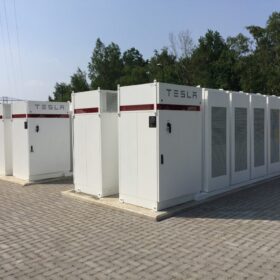
The study highlighted the role for energy storage in enhancing system flexibility and resilience. It found that expanding demand-side resources, such as energy efficiency and demand response programs, is shown to substantially reduce portfolio costs and mitigate risks associated with capital-intensive infrastructure investments, eliminating the need for new gas capacity.
The financial advantages of the Least-Cost Portfolio are dramatically amplified under future uncertainties. Under a hypothetical $50/ton carbon price starting in 2030, the cost gap between the least-cost portfolio and utilities’ current plans rises to $17 billion, while a high gas price scenario sees the gap rise to $7.4 billion (NPV, 2025–2050). The clean energy path thus serves as a hedge against policy and market risks, said the study.
The 2024 Integrated Resource Plans (IRP) from Kentucky’s two largest utilities LG&E and KU model a base case that prioritize two new natural gas combined-cycle units. However, the utilities presented an “enhanced solar plan” that would include 200 MW in 2028, another 200 MW in 2030, and 600 MW in 2032, but the plan is contingent on requests from customers with aggressive carbon goals, like datacenter developers, or if solar prices become more competitive.
Based on Lazard’s analysis of levelized cost of electricity (LCOE) and data from the Energy Information Administration, new-build utility-scale solar is far cheaper than new natural gas in Kentucky. Utility-scale solar LCOE is as low as $38 per MWh, while natural gas combined cycle LCOE is as low as $48 per MWh, while gas is also subject to global fuel price volatility.
Solar generation in Kentucky currently accounted for less than 1% of the state’s total electricity generation, according to 2023 data from the Interstate Renewable Energy Council. Kentucky has a significant pipeline of planned solar development, with 104 projects in development totaling over 13 GW of planned capacity as of late 2025, according to data from Cleanview.
The analysis directly confronts the state’s legislative measures of SB 4 and SB 349, which impose restrictions on coal retirements and implicitly steer utilities towards fossil-fuel-dependent futures. The study finds that these laws threaten to reduce potential savings and lock the state into a higher-risk, higher-cost power system.
This content is protected by copyright and may not be reused. If you want to cooperate with us and would like to reuse some of our content, please contact: editors@pv-magazine.com.







By submitting this form you agree to pv magazine using your data for the purposes of publishing your comment.
Your personal data will only be disclosed or otherwise transmitted to third parties for the purposes of spam filtering or if this is necessary for technical maintenance of the website. Any other transfer to third parties will not take place unless this is justified on the basis of applicable data protection regulations or if pv magazine is legally obliged to do so.
You may revoke this consent at any time with effect for the future, in which case your personal data will be deleted immediately. Otherwise, your data will be deleted if pv magazine has processed your request or the purpose of data storage is fulfilled.
Further information on data privacy can be found in our Data Protection Policy.