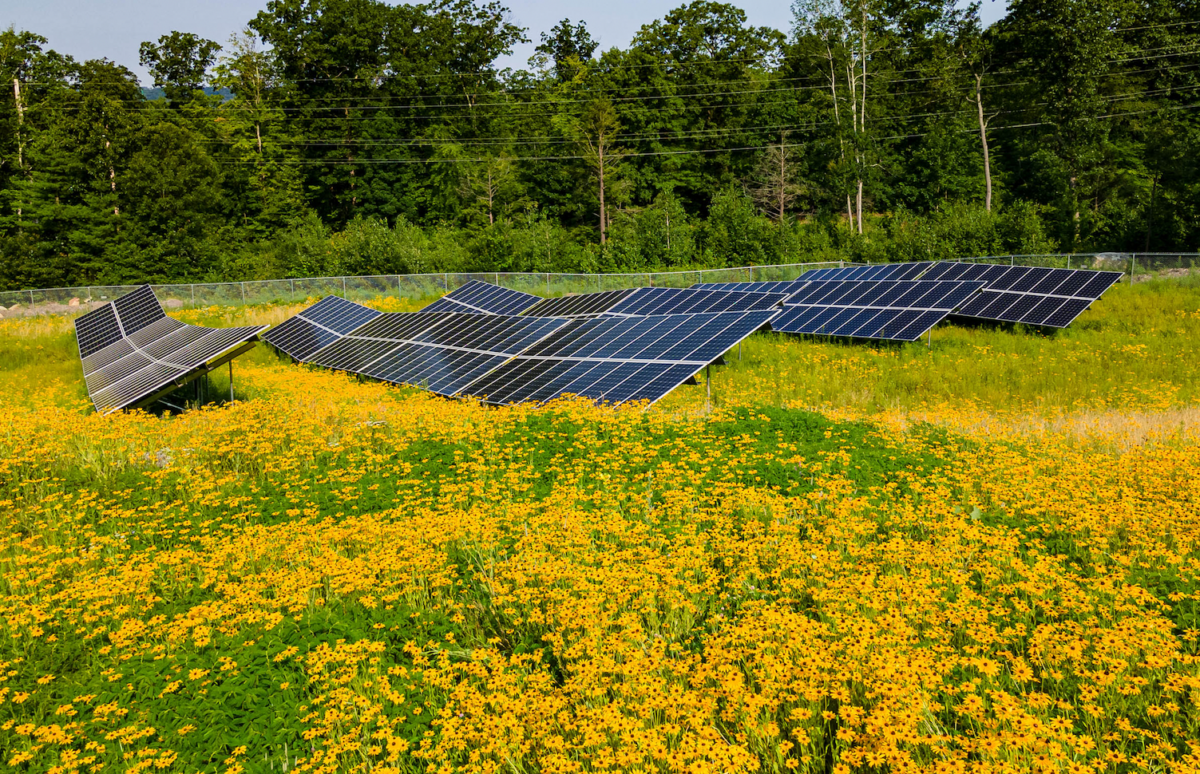





Virginia regulators have ordered the state’s largest electric utility to change its billing calculations for community solar customers in a way that will expand access for more customers.
Virginia requires customers who choose community solar and are above the low-to-moderate income threshold to pay at least a minimum bill amount. For a customer who receives bill credits for the amount of community solar purchased, the minimum bill aims to recover the utility’s remaining generation and transmission costs attributable to the customer.
Virginia regulators said in an order that the utility Dominion, in its proposed minimum bill calculations, referred to the minimum bill as the charges that are “added back to the balance remaining after deducting the bill credits.”
Under that approach, as explained in a statement from the Coalition for Community Solar Access, if a customer’s monthly bill was $100 and their minimum bill was $60, “the customer would have paid the $100 bill plus the $60 minimum bill, eliminating their savings entirely.”
Virginia’s State Corporation Commission ordered Dominion to instead use the minimum billing approach of Virginia utility Appalachian Power, which creates a floor below which a community solar subscriber’s bill cannot go. The SCC acknowledged, however, that Dominion’s proposal had followed the SCC’s order from its previous minimum bill case.
CCSA said that under the approach ordered by regulators, if a customer’s monthly bill is $100 and the minimum bill is $60, shared solar credits “can now reduce that bill to $60.”
The SCC reported “the absence of a market for customers subject to the minimum bill,” and said that absence is evidence that Dominion’s current methodology does not “reasonably allow for the creation of shared solar facilities,” as required by state law.
150 MW potential
Virginia’s 2024 shared solar law set an initial aggregate capacity of 200 MW of shared solar, with a potential increase of “up to 150 MW” of capacity once at least 90% of the initial capacity, or 180 MW, are operating, according to the SCC order.
Charlie Coggeshall, mid-Atlantic regional director for the Coalition for Community Solar Access, expects that at least 180 MW under the initial phase will begin operation sometime in 2026, opening up the possibility of expanding the program by another 150 MW.
CCSA and Appalachian Voices participated in the SCC case by filing testimony on Dominion’s application.
This content is protected by copyright and may not be reused. If you want to cooperate with us and would like to reuse some of our content, please contact: editors@pv-magazine.com.

By submitting this form you agree to pv magazine using your data for the purposes of publishing your comment.
Your personal data will only be disclosed or otherwise transmitted to third parties for the purposes of spam filtering or if this is necessary for technical maintenance of the website. Any other transfer to third parties will not take place unless this is justified on the basis of applicable data protection regulations or if pv magazine is legally obliged to do so.
You may revoke this consent at any time with effect for the future, in which case your personal data will be deleted immediately. Otherwise, your data will be deleted if pv magazine has processed your request or the purpose of data storage is fulfilled.
Further information on data privacy can be found in our Data Protection Policy.