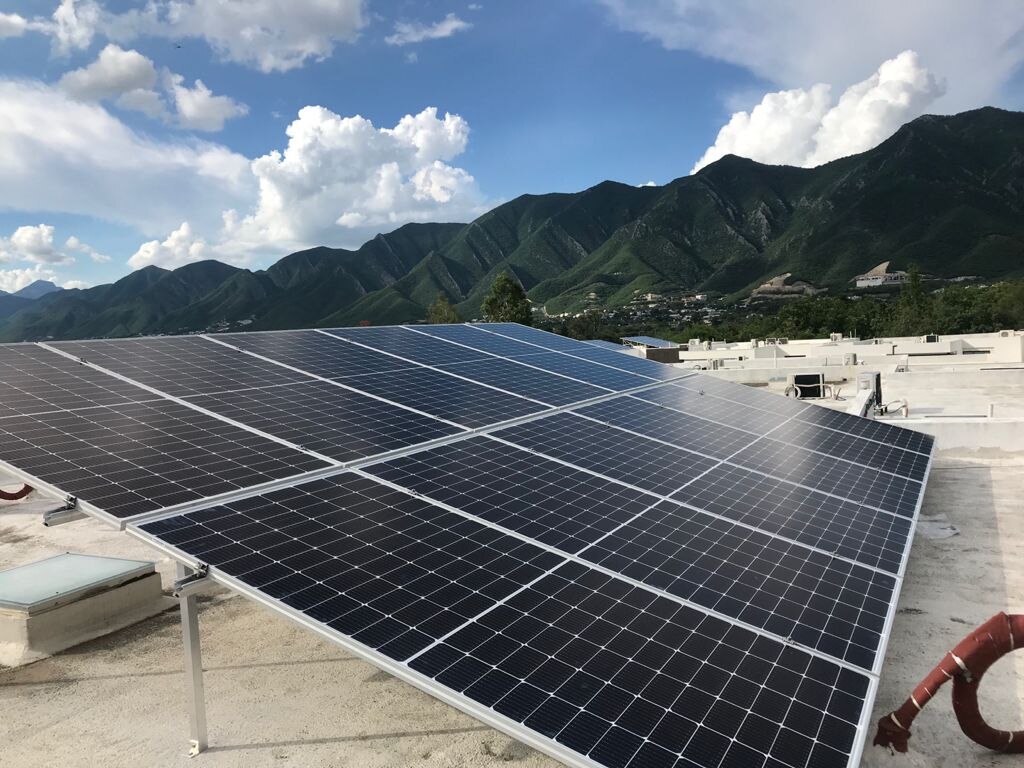





A tsunami is heading for the U.S. PV industry, but only time will tell when exactly the wave of mass solar panel retirements will crash. Modules from the early 2010s solar boom are approaching their end-of-life, with many expected to top out between 2027 and 2030.
An estimate from the newly christened National Laboratory of the Rockies (the former National Renewable Energy Laboratory) indicates that, by the end of the decade, decommissioned panels could cover the equivalent of approximately 3,000 American football fields. Solar recycling could be one solution, but whether the nation’s infrastructure will be prepared for such a rapid influx is another story.
“The U.S. has approximately 400 million solar modules currently installed, and that figure will grow to multiple billions by mid-century,” André Pujadas, the CEO of solar recycler OnePlanet, told pv magazine USA. He explained that, with a key inflection point approaching in the next few years, the country needs more recycling capacity as soon as possible. “Facility development timelines run 3-5 years from planning to commissioning…[as] building industrial-scale recycling infrastructure is complex, capital-intensive and requires expertise that few organizations possess.”
That’s why he’s pushing OnePlanet to commission their flagship River City recycling facility in Green Cove Springs, Florida, by early 2027. That’s just two years after the company received nearly $15 million from the 48C tax credit last January. While the company noted the plant will have an initial processing capacity of about two million panels annually, River City will eventually be able to process up to six million every year.
A key part of the scale-up approach? Automation.
Pujadas pointed out that panel disassembly and material sorting processes currently in use are slow and labor-intensive and can create unnecessary safety risks. Coupled with fully loaded labor costs ranging from $15-25 per hour, relying on human labor becomes unsustainable at scale.
Instead, River City will take another tack and draw on vision-guided robotics, which use sensors, cameras and image processing software to give a robot “eyes.” The systems will handle deframing, conveyance and processing; AI-optimized parameters will adapt specific processes in real-time depending on a panel’s characteristics.
“Labor will focus on system operation, maintenance and quality control, not manual sorting,” Pujadas said, noting that this significantly reduces labor cost per panel compared to most current operations and dramatically improves throughput. He noted that the steel industry proved that scrap-based manufacturing can match or exceed virgin material production economically, which is OnePlanet’s goal. Improved process technology should also help the company recover larger quantities of valuable materials (like silicon, copper, silver and aluminum) that are more pure.
“We’re essentially creating a domestic mine from decommissioned solar assets,” he explained, which reduces reliance on volatile international markets and politically unstable supply chains. That’s a pivotal strategy for building domestic energy independence, he pointed out.
China produces approximately 80% of the world’s polysilicon, which is a key ingredient to crafting PV panels. The U.S. has panels reaching end-of-life that contain substantial quantities of polysilicon, so in Pujadas’ eyes, the opportunity is clear: harness that embedded value rather than shipping it to landfills.
“Recycling creates supply chain resilience and price stability in ways that pure import dependence never can,” he added. “[It’s] complementary today, increasingly substantive tomorrow and potentially transformational in the decades ahead as installed capacity compounds.”
This content is protected by copyright and may not be reused. If you want to cooperate with us and would like to reuse some of our content, please contact: editors@pv-magazine.com.




By submitting this form you agree to pv magazine using your data for the purposes of publishing your comment.
Your personal data will only be disclosed or otherwise transmitted to third parties for the purposes of spam filtering or if this is necessary for technical maintenance of the website. Any other transfer to third parties will not take place unless this is justified on the basis of applicable data protection regulations or if pv magazine is legally obliged to do so.
You may revoke this consent at any time with effect for the future, in which case your personal data will be deleted immediately. Otherwise, your data will be deleted if pv magazine has processed your request or the purpose of data storage is fulfilled.
Further information on data privacy can be found in our Data Protection Policy.