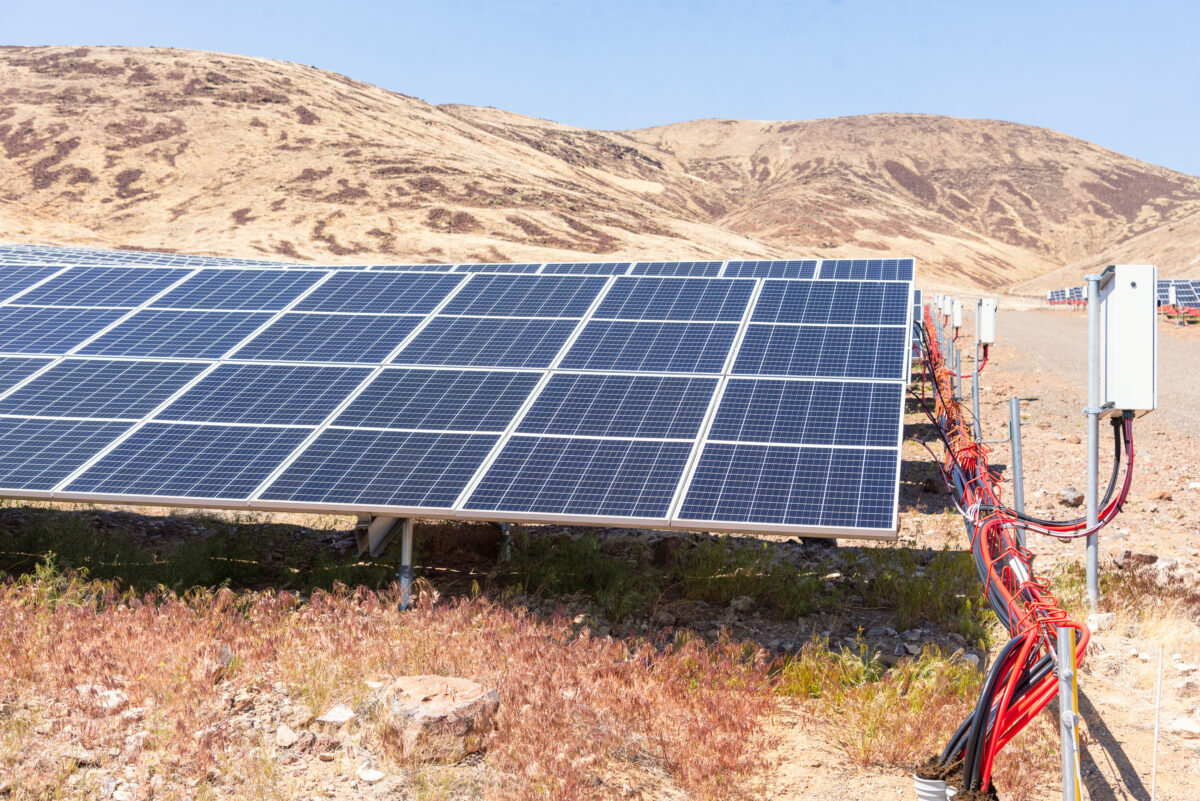





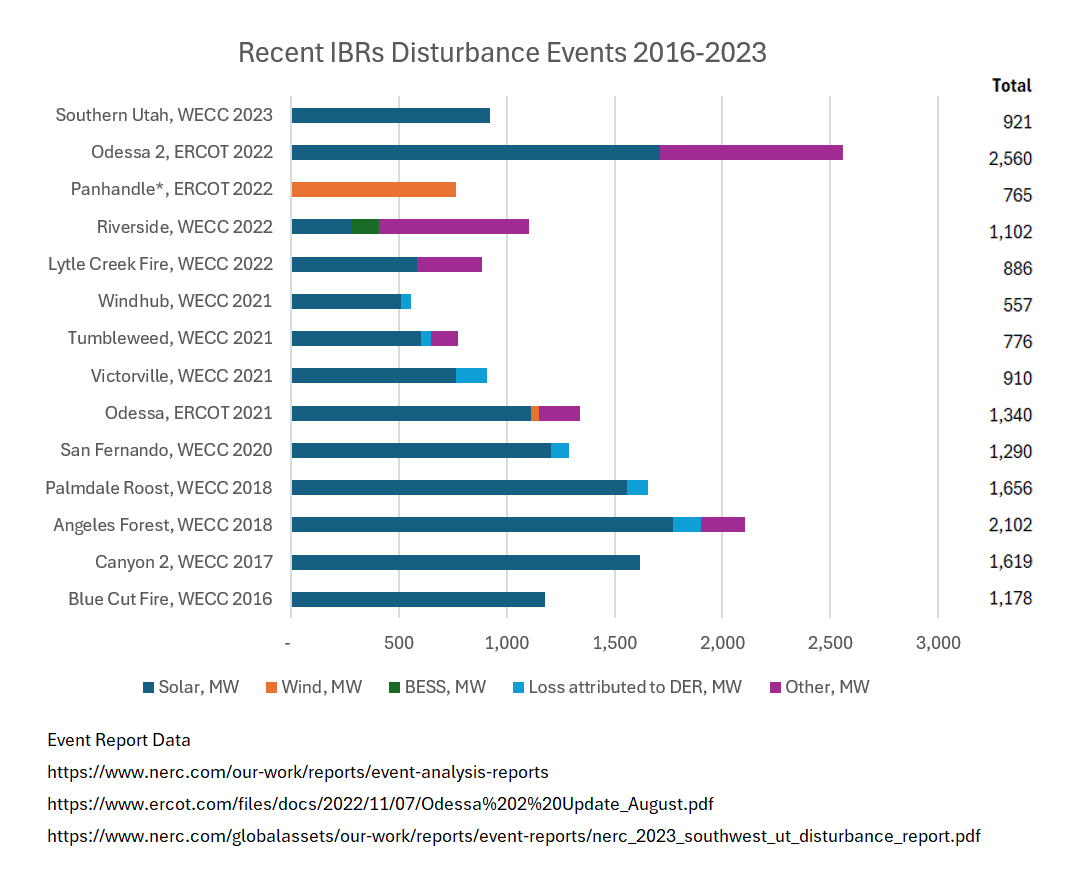
For several years, the North American Reliability Corporation (NERC) has been investigating inverter-based resource (IBR) related output reduction/forced outage events which have grown in impact to the reliability of the Bulk Power System (BPS).
Notable among these events is the 2022 Odessa event, which resulted in the unexpected loss of 2,555 MW of solar and synchronous generation following a routine fault on the 345 kV system in West Texas.
The disturbance was traced back to the IBRs’ inadequate “ride-through” performance, which resulted in the Electric Reliability Council of Texas (ERCOT) system frequency dropping to 59.7 Hz.
The abnormal response to this routine fault by a sizable number of solar PV resources resulted in a significant system event. This analysis of the situation supported the need for change.
Recommendations and actions
These events catalyzed stricter requirements for inverter settings to prevent premature tripping/output reductions during system disturbances. It was also clear there was a need for better modeling of IBRs in system studies to predict how IBRs behave during faults.
The findings triggered development of improved registration and compliance standards for smaller, previously unregulated IBRs that, in the aggregate, have a material impact on the BPS.
Three new NERC standards — PRC-028, 029 and 030 — were created to improve BPS reliability.
PRC-028-1 – Disturbance Monitoring and Reporting Requirements for IBRs
NERC standard PRC-028-1 mandates improved disturbance monitoring, recording, and reporting obligations. The purpose of this Standard is to have adequate data available from IBRs to evaluate IBRs ride-through performance during System Disturbances and to provide data for IBR model validation.
Key attributes include mandatory data capturing for IBRs with high-fidelity recording, strict UTC time synchronization, and required data submission within 90 days of an event.
The PRC-028 implementation plan takes into consideration the time needed for scheduling outages to install sequence of events recording, fault recording, and dynamic disturbance recording capability.
Depending on the size of your facility and its operational status, this will determine how long your registered entity will have to be compliant to these new requirements.
PRC-028-1 solves a lack of adequate/granular data challenge to fully investigate facility operations prior to, during and after system disturbance events.
Technical Requirements of PRC-028-1:
- Scope and Applicability: Applies to BES and certain non-BES IBRs (solar, wind, storage) with an aggregate nameplate capacity greater than or equal to 20 MVA interconnected at greater than or equal to 60 kV.
- Data Recording Requirements:
- Fault Recording (FR): Minimum 64 samples/cycle, with 2-second total record length.
- Dynamic Disturbance Recording (DDR): Up to 960 samples/cycle, capturing facility control system commands and reference values.
- Sequence of Events Recording (SER): Capturing status of circuit breakers and other equipment.
- Time Synchronization: All data must be UTC-aligned with plus/minus 1 ms accuracy for SER/FR and plus/minus 100 ms for IBR dynamic data.
- Reporting and Analysis: Generator Owners must analyze events, identify root causes, and report data within 90 days.
- Data Retention: Evidence of compliance must be retained for three years.
PRC-029-1 – Frequency and Voltage Ride-through Requirements for IBRs
Utilizing the IEE-2800 performance curves, which are more stringent than previous PRC-024 requirements, PRC-029-1 establishes minimum performance ride-through criteria for frequency and voltage excursions, thereby requiring solar, wind and storage to remain connected during grid disturbances.
The purpose of this Standard is to ensure that IBRs Ride-through to support the BPS during and after defined frequency and voltage excursions.
This new standard should minimize IBR facility generation output reductions/outages during system disturbances, improving BPS reliability through reduced event perturbation magnitude.
IBR inadequate ride-through was determined to be caused by a lack of proper facility control logic within facility inverters and site protection relay equipment. The impact was further exacerbated by insufficient facility post commercial operation modeling verification and OEM-specific EMT models and testing.
Affected entities should look to partner with experienced industry engineering firms to assist in facilitating accurate model development and testing, which could require inverter OEM collaboration for equipment setting changes, configuration updates and protection system coordination.
Technical Requirements of PRC-029-1:
- Voltage and Frequency Ride-through: Must meet criteria of IEEE-2800 curves.
- Phase Angle Jumps: Must handle instantaneous phase angle jumps of up to 25 degrees.
- Frequency Rate of Change (RoCoF): Withstand a rate of change of at least 5Hz/second.
- Dynamic Voltage Performance: Must maintain voltage performance throughout disturbances.
- Document hardware limitations: The entity must document any hardware limitations for R4 exemption eligibility (this applies only to legacy equipment).
Timeline:
BES IBRs have an October 1, 2026, deadline, while non-BES IBRs must be compliant by January 1, 2027. The clock is ticking, so don’t delay.
PRC-030-1 – Unexpected IBR Event Mitigation
Now that facilities have been mandated to collect applicable site level data in PRC-028-1 and meet the new more stringent voltage and frequency ride-through requirements of PRC-029-1, this new standard establishes a structured process for identifying, analyzing, and correcting IBR performance issues.
The purpose of Standard PRC-030-1 is to Identify, analyze, and mitigate unexpected Inverter-Based Resource (IBR) change of power output.
Technical Requirements:
- Event Performance: Identify events where a facility experiences a complete loss of output or a large change in output (Greater than 20 MW or more and at least 10% of the plant’s gross nameplate within four seconds).
- Event Analysis: Analyze applicable events to determine causes and contributing factors.
- Corrective Actions: Develop Corrective Action Plans (CAPs) or provide technical justification if no corrective action is required or planned.
- Corrective Action Completion: Document implementation of the corrective action provisions to mitigate future performance issues.
Timeline:
Compliance for BES IBR facilities starts October 1, 2026, and Non-BES is January 1, 2027.
The Bottom Line
As the BPS continues to integrate large quantities of IBR assets, it is paramount that entities incorporate a focused approach to ensuring existing and future IBR facilities have the ability to capture site specific data for analysis, meet the new ride-through criteria, properly model facility performance to system disturbances and monitor for system event performance so corrective action can be taken to mitigate future risks.
The quickest way to add electrons to the grid is through renewables. If we are to meet the growing demand for electricity, grid reliability and security need to be an integral focus for owners and operators of IBR assets.

Joel Firestone is the NERC Principal Consultant at Radian Generation. He supports NERC compliance program services with over 35 years of experience in power generation, system operation and regulatory compliance experience. Joel has developed numerous compliance programs, overseeing 50 + NERC audits, and utilizes a pragmatic perspective to compliance.
The views and opinions expressed in this article are the author’s own, and do not necessarily reflect those held by pv magazine.
This content is protected by copyright and may not be reused. If you want to cooperate with us and would like to reuse some of our content, please contact: editors@pv-magazine.com.






By submitting this form you agree to pv magazine using your data for the purposes of publishing your comment.
Your personal data will only be disclosed or otherwise transmitted to third parties for the purposes of spam filtering or if this is necessary for technical maintenance of the website. Any other transfer to third parties will not take place unless this is justified on the basis of applicable data protection regulations or if pv magazine is legally obliged to do so.
You may revoke this consent at any time with effect for the future, in which case your personal data will be deleted immediately. Otherwise, your data will be deleted if pv magazine has processed your request or the purpose of data storage is fulfilled.
Further information on data privacy can be found in our Data Protection Policy.