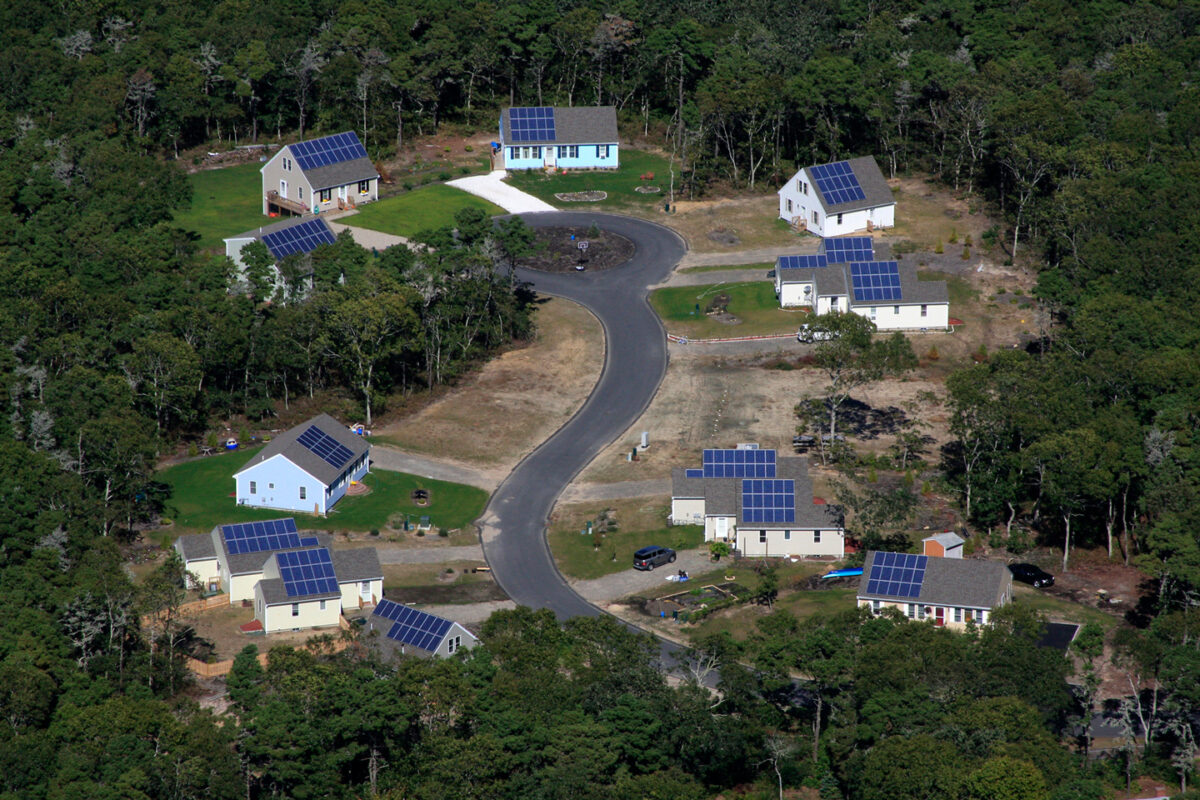





A new three-part report series from Lawrence Berkeley National Laboratory seeks to help community leaders and decision-makers better understand the feasibility of a microgrid in their community, based on an analysis of regulatory and legal barriers affecting microgrid deployments.
The series, “A Community Guide to Regulatory Barriers Affecting Microgrids,” covers foundational concepts in microgrid design along with an overview of different microgrid models and an examination of ways the current regulatory structure lags behind the technology to develop microgrids.
The papers describe microgrids as “a type of localized energy system capable of operating independently from the main power grid,” and say they provide critical benefits of resilience, local coordination of generation resources, and economic independence.
Despite these advantages, the papers point out that existing legal and regulatory frameworks are often poorly suited to handle microgrid systems.
Defining the challenges
The first report of the series points to several policy barriers that affect all microgrids, including a regulatory adoption gap in utility interconnection processes, local permitting complexities, and financial hurdles tied to utility rate structures such as standby charges, departing load charges and transmission and network access charges to recover fixed system costs.
The second and third reports in the series examine challenges and recommendations unique to single-property and multi-property microgrids, respectively. Each contains a case study of a specific project to explain how the concepts involved have been applied in real-world situations.
Single property microgrids, such as those confined to a hospital or university campus, face unique challenges related to asset ownership and property boundaries, and points out that complications can arise from the fact that rules for these factors differ on a state-by-state basis.
In contrast, multi-property microgrids face the complex institutional barriers of property rights, utility franchise rights and local zoning and permitting standards. When private energy infrastructure must cross public streets or easements to connect multiple properties, developers encounter public right-of-way conflicts and master metering regulations that single property systems do not typically face.
Recommendations for project development
To overcome the identified barriers, the reports recommend phased frameworks for development of both categories of microgrid projects and point out that microgrid development within existing regulatory environments requires a multi-year process that includes systematic planning, stakeholder collaboration, and disciplined financial management.
For single-property systems, the authors advise project developers to carefully structure agreements for ownership and management of microgrid assets and establish clear property boundaries without crossing public rights-of-way to bypass classification as a public utility and avoid some of the associated regulatory oversight.
For multi-property systems navigating, the reports compare utility-centric and municipal-led models to help communities manage right-of-way conflicts. Using the example of a microgrid project in Coventry, Connecticut, the authors point out how leveraging a specific, pre-existing legislative carve-out that allowed municipalities to build, own, or operate microgrids was necessary to overcome objections to the system’s construction from the local utility.
In all cases, the Berkeley Lab researchers advise developers to plan for proactive engagements with local utilities and other authorities having jurisdiction — ensuring that legal and regulatory strategies are integrated with the physical configuration of the microgrid from the start.
The full series of reports can be accessed from the Berkeley Lab website.
This content is protected by copyright and may not be reused. If you want to cooperate with us and would like to reuse some of our content, please contact: editors@pv-magazine.com.






By submitting this form you agree to pv magazine using your data for the purposes of publishing your comment.
Your personal data will only be disclosed or otherwise transmitted to third parties for the purposes of spam filtering or if this is necessary for technical maintenance of the website. Any other transfer to third parties will not take place unless this is justified on the basis of applicable data protection regulations or if pv magazine is legally obliged to do so.
You may revoke this consent at any time with effect for the future, in which case your personal data will be deleted immediately. Otherwise, your data will be deleted if pv magazine has processed your request or the purpose of data storage is fulfilled.
Further information on data privacy can be found in our Data Protection Policy.