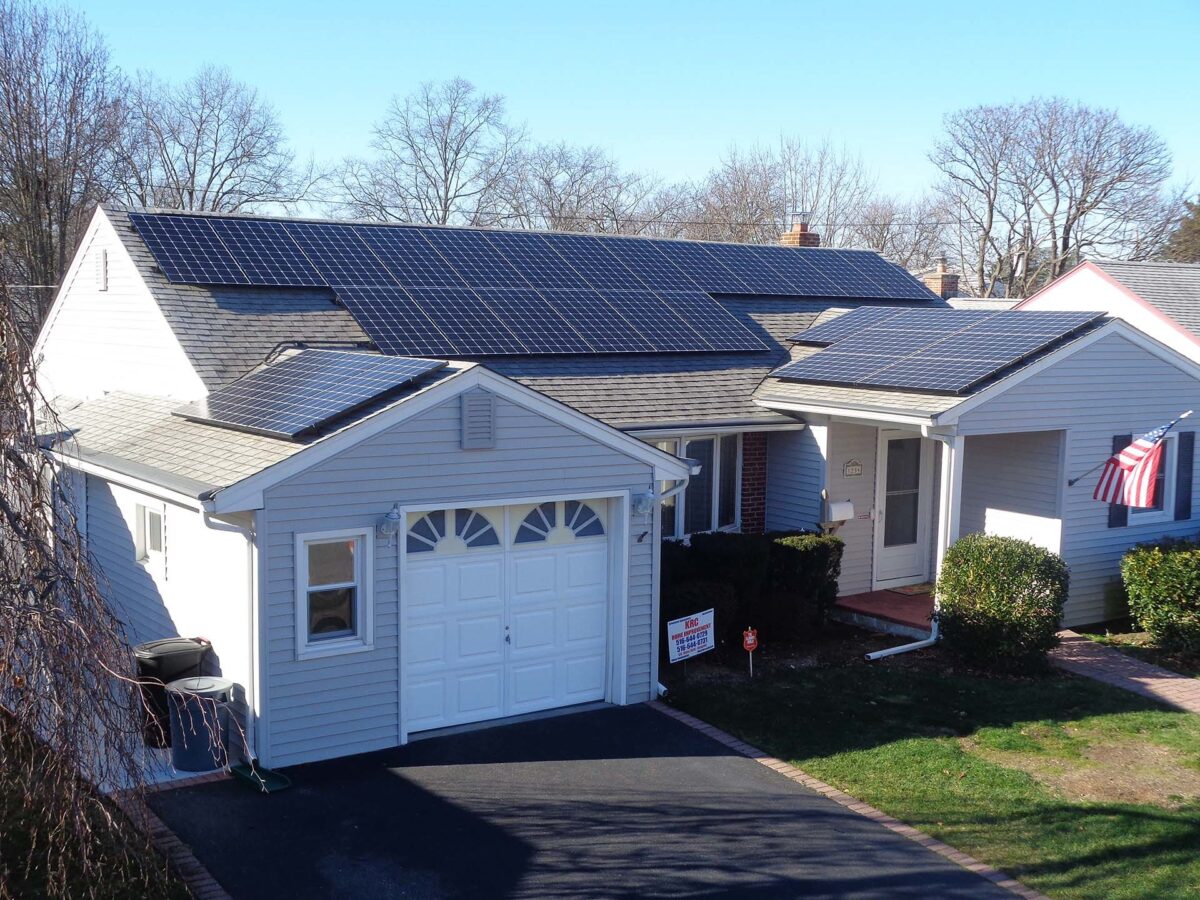





A new report from Permit Power, Environment America Research & Policy Center, and Frontier Group assigns grades to all 50 states based on their policies for permitting and inspecting residential solar and battery storage systems.
In all cases, the report authors find that states “can do more to simplify and streamline the permitting and inspection process for households that wish to install rooftop solar energy systems and batteries.”
Only two states — California and Texas — have made what the report authors consider “significant efforts” to eliminate unnecessary barriers that limit solar adoption. These states each received a grade of “B,” with scores of 75 and 62 out of 100 possible points, respectively.
Two other states — New Jersey (58 points) and Colorado (48 points) — received C grades, with the report authors noting they had “begun to streamline the permitting process for rooftop solar and home batteries and to eliminate some red tape.”
Of the remaining states, 24 earned a “D” and 22 received an “F.”
Recommendations for a streamlined process
To create an ideal permitting environment, the authors recommend that states begin by mandating the use of instant permitting software, such as SolarAPP+, which can reduce approval timelines from seven days to nearly zero.
However, the authors note even places that have adopted legislation to require such software — like Maryland — leave loopholes or do not require jurisdictions to deliver permits instantly
Other recommended policies include standardizing building codes statewide to eliminate variations between jurisdictions that force installers to design identical projects differently, disallow HOAs from restricting projects for any reason, limiting permit reviews strictly to health and safety criteria, allowing remote or third-party inspections, and placing firm caps on permitting fees.
“Millions of Americans want to power their homes with plentiful, reliable, solar energy; most states have done little to adopt common-sense permitting practices that reduce costs and delays,” said Emily Rusch, senior director of state offices for Environment America Research & Policy Center. “Unreasonable red tape burdens residents, installers and local authorities. States should make ‘going solar’ as quick and smooth as possible, without compromising health and safety. Opportunities to do that abound.”
The report’s recommendations are grouped under several graded categories, with a maximum of 100 points available across all criteria. Partial points were available for states that met some, but not all, of the ideal outcomes in a given category.
The list of categories and the maximum possible points in each is as follows:
- Instant solar permitting OR other efforts to streamline permitting – 30 points
- Building codes – 8 points
- Limits on review by HOAs – 10 points
- Review criteria limited to health and safety – 10 points
- Third-party and remote inspections – 10 points
- Single inspections – 8 points
- Permitting fees – 10 points
- Third-party owned systems – 14 points
Importantly, no state received full marks for adhering to limits on review by HOAs or limiting AHJs to a single inspection.
The high cost of bureaucracy
The report notes that “soft costs” — which include permitting, financing, and labor — still account for approximately 78% of the total cost of a residential solar energy system.
The report authors estimate the cost of navigating these bureaucratic barriers adds between $6,000 and $7,000 to the price of a home solar installation and cite permitting delays as the largest source of project cancellation.
Another recent report from Permit Power estimated that cutting permitting costs to the same level as countries such as Germany and Australia could result in solar adoption by more than 18 million additional households over the base case between now and 2040.
The full version of new Solar Permitting Scorecard can be found on the permit Power website.
This content is protected by copyright and may not be reused. If you want to cooperate with us and would like to reuse some of our content, please contact: editors@pv-magazine.com.




By submitting this form you agree to pv magazine using your data for the purposes of publishing your comment.
Your personal data will only be disclosed or otherwise transmitted to third parties for the purposes of spam filtering or if this is necessary for technical maintenance of the website. Any other transfer to third parties will not take place unless this is justified on the basis of applicable data protection regulations or if pv magazine is legally obliged to do so.
You may revoke this consent at any time with effect for the future, in which case your personal data will be deleted immediately. Otherwise, your data will be deleted if pv magazine has processed your request or the purpose of data storage is fulfilled.
Further information on data privacy can be found in our Data Protection Policy.