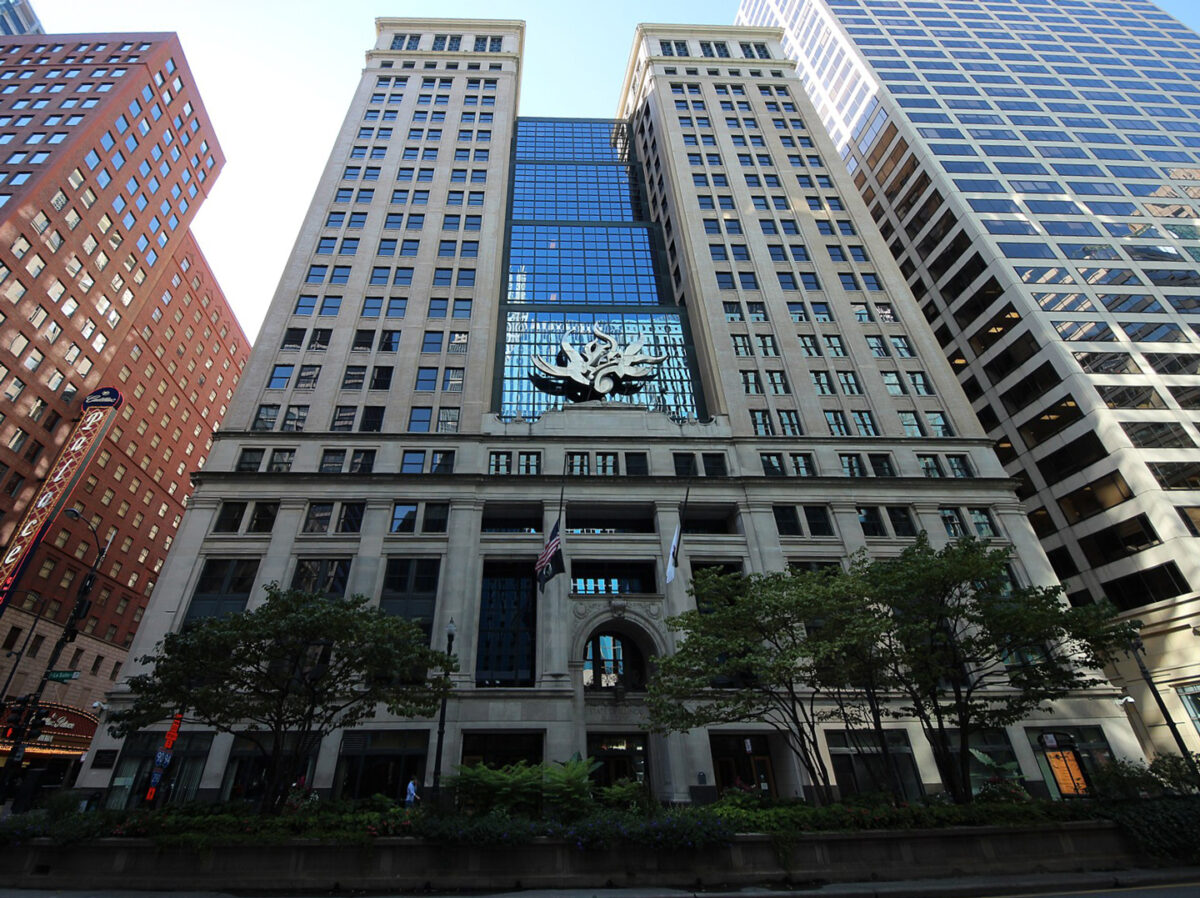





The Illinois Commerce Commission (ICC) has ordered its staff to open an investigation by April 23, 2026 into methods that will protect consumers from undue cost burdens related to distribution system improvements necessary to connect proposed data centers to the grid.
The investigation was ordered by the ICC in a recent proceeding that approved an updated version of Commonwealth Edison’s (ComEd) tariffs regarding data centers, now defined within the tariffs as “large demand project applicants or customers” (LDPACs).
The new provisions would increase the refundable deposits LDPAC developers must make when applying to interconnect new facilities of 50 MW or more to the grid.
In its arguments for the new deposit structure, ComEd revealed it has received applications for 28 GW of maximum power demand from a pipeline of 75 prospective large customers — a figure which is roughly 1.2 times the company’s all-time peak demand of 24 GW.
The new security deposits will be $1 million for facilities with maximum power needs of between 50 and 200 MW, with an additional $500,000 for each additional 100 MW of demand.
Facilities whose required deposit would exceed $2 million must also provide a letter of credit from a U.S. financial institution. This allows ComEd to demand payment from the lending institution if specific criteria of non-performance are met.
The provisions in the tariff are designed to protect the utility and its ratepayers from incurring expenses related to large projects that are never completed.
In the event an LDPAC project is cancelled or abandoned, the utility will use the deposit balance to cover all costs for interconnection studies and grid improvements already incurred, before returning any unused portion to the depositor.
Investigation follows consumer protection arguments
During the proceeding, representatives of several consumer advocacy and environmental groups pushed for changes to ComEd’s practices to ensure impacts to ratepayers would be minimized that went further than the utility’s initial proposal.
Comments made by the state Attorney General’s office and a group of non-governmental organizations (NGOs) that included the Environmental Law and Policy Center, Natural Resource Defense Council, Vote Solar, and the Union of Concerned Scientists pushed for data center developers to be made responsible for paying all costs for their facilities to be connected to the grid upfront, or to be required to bring their own clean energy to provide power for the facilities.
During the proceeding, ICC staff commented that the proposed changes to the ComEd tariffs were ‘only a first step in a process of addressing the provision of service to LDPACs,” and advocated for a new investigation to “provide the Commission a clear, defined opportunity to review ComEd’s existing tariffs and determine whether certain modifications, exceptions, or exemptions to certain tariff requirements are prudent and reasonable.”
The group of NGOs also pushed for a new ICC proceeding “to establish transparent interconnection standards grounded in best practices.”
These arguments prompted the ICC to open the new investigation, which it said would “identify, examine, and adopt appropriate ratepayer protections and cost recovery mechanisms beyond the financial assurances approved” in the ComEd tariff order.
This content is protected by copyright and may not be reused. If you want to cooperate with us and would like to reuse some of our content, please contact: editors@pv-magazine.com.



By submitting this form you agree to pv magazine using your data for the purposes of publishing your comment.
Your personal data will only be disclosed or otherwise transmitted to third parties for the purposes of spam filtering or if this is necessary for technical maintenance of the website. Any other transfer to third parties will not take place unless this is justified on the basis of applicable data protection regulations or if pv magazine is legally obliged to do so.
You may revoke this consent at any time with effect for the future, in which case your personal data will be deleted immediately. Otherwise, your data will be deleted if pv magazine has processed your request or the purpose of data storage is fulfilled.
Further information on data privacy can be found in our Data Protection Policy.