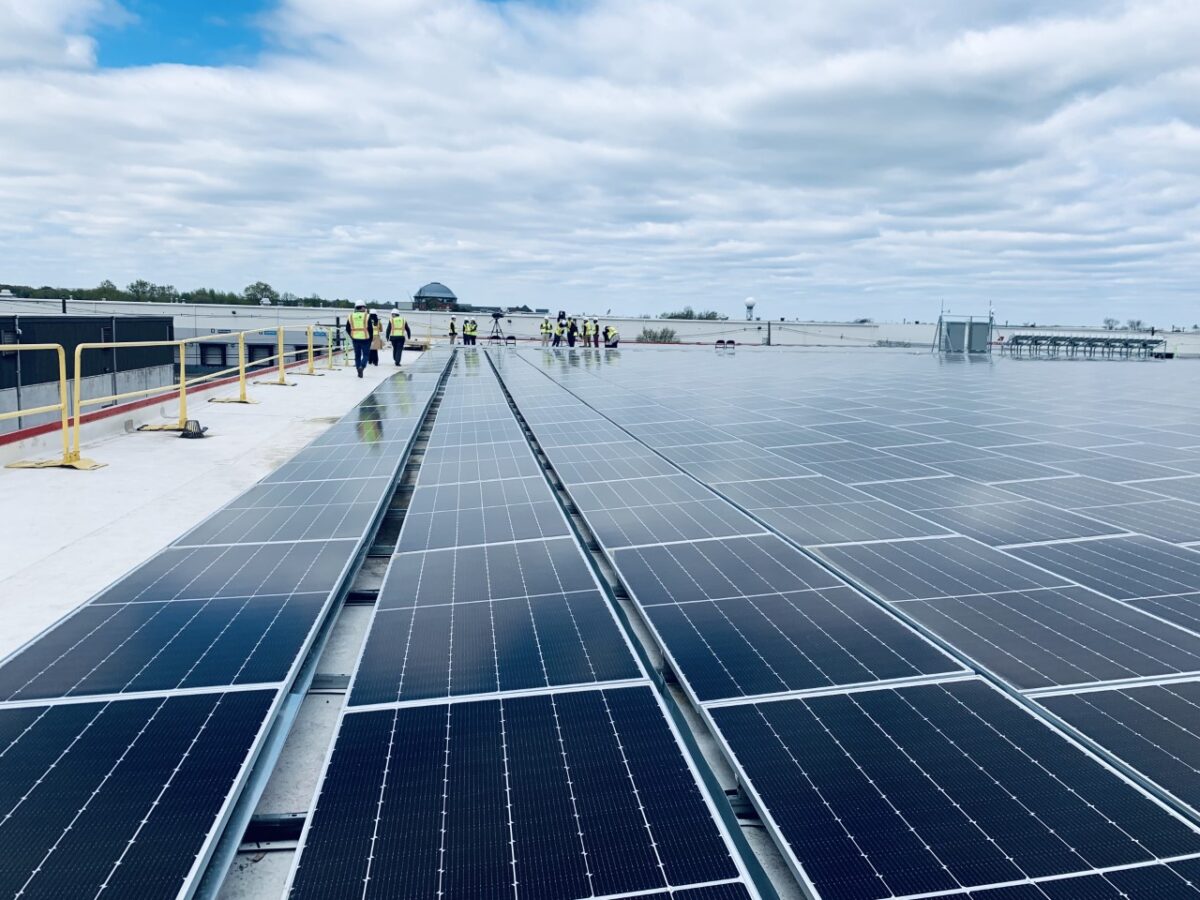





The New Jersey Board of Public Utilities (NJBPU) approved an unprecedented 3 GW scale-up of the Community Solar Energy Program (CSEP) and awarded incentives for the first tranche of the Garden State Energy Storage Program (GSESP).
The actions follow a 45-day sprint triggered by Governor Mikie Sherrill’s Day One executive orders aimed at decoupling state energy prices from a volatile PJM wholesale market.
The Board’s March 4 session marks a fundamental pivot toward “speed to market” as the state grapples with a $16 billion surge in PJM capacity costs and escalating load growth from the data center sector.
The NJBPU awarded incentives to three large-scale battery projects under GSESP Phase 1, Tranche 1. The awards represent 355 MW of nameplate capacity, surpassing the 350 MW minimum set by state mandate.
The winning projects include:
- Woods Landing Storage LLC: 200 MW (Sayreville, Middlesex County)
- Two Rivers Energy Storage LLC: 150 MW (Ridgefield, Bergen County)
- North America Energy Storage Corp: 5 MW (Bordentown, Burlington County)
Simultaneously, the Board launched Tranche 2 of the program, seeking an additional 645 MW of storage capacity. Pre-qualification materials are due by June 10, 2026. This second tranche is specifically designed to bridge the gap between stand-alone assets and solar-plus-storage configurations that may not fit the existing Successor Solar Incentive (SuSI) framework.
Perhaps the most significant development for distributed energy resource advocates is the formal opening of a 3 GW block for community solar. This capacity is designed to reach approximately 450,000 subscribers, with a mandatory 51% allocation for low-to-moderate income households.
The board distributed the capacity across the state’s four major investor-owned utilities based on retail sales:
- PSE&G: 1,555 MW
- JCP&L: 787 MW
- Atlantic City Electric: 324 MW
- Rockland Electric: 51 MW
- Landfill Reserve: 300 MW (Carved out for brownfield redevelopment)
The Board also opened the Fourth Solicitation of the Competitive Solar Incentive (CSI) program. A notable shift in this round is the creation of Tranche 1A, a dedicated competitive bucket for basic grid-supply projects exceeding 20 MW. The solicitation also introduces a paired storage “adder” for large net-metered facilities, signaling the BPU’s intent to make every new MW of generation as flexible as possible to mitigate peak demand.
While the BPU has greenlit the capacity, the industry remains focused on how to implement it while facing interconnection bottlenecks. The Board concurrently issued a Request for Information to the state’s utilities, demanding data on circuit-level constraints and asking for specific recommendations on how to waive or modify existing regulations to speed up interconnection.
“Solar and battery storage are the fastest and most cost-effective ways to build new electricity generation,” said NJBPU President Christine Guhl-Sadovy.
With pre-qualification for the next round of utility-scale bids opening March 11, the state’s developers are now in a race to secure equipment and interconnection spots before the July 4, 2026, safe-harbor deadlines for federal tax credits.
This content is protected by copyright and may not be reused. If you want to cooperate with us and would like to reuse some of our content, please contact: editors@pv-magazine.com.






By submitting this form you agree to pv magazine using your data for the purposes of publishing your comment.
Your personal data will only be disclosed or otherwise transmitted to third parties for the purposes of spam filtering or if this is necessary for technical maintenance of the website. Any other transfer to third parties will not take place unless this is justified on the basis of applicable data protection regulations or if pv magazine is legally obliged to do so.
You may revoke this consent at any time with effect for the future, in which case your personal data will be deleted immediately. Otherwise, your data will be deleted if pv magazine has processed your request or the purpose of data storage is fulfilled.
Further information on data privacy can be found in our Data Protection Policy.