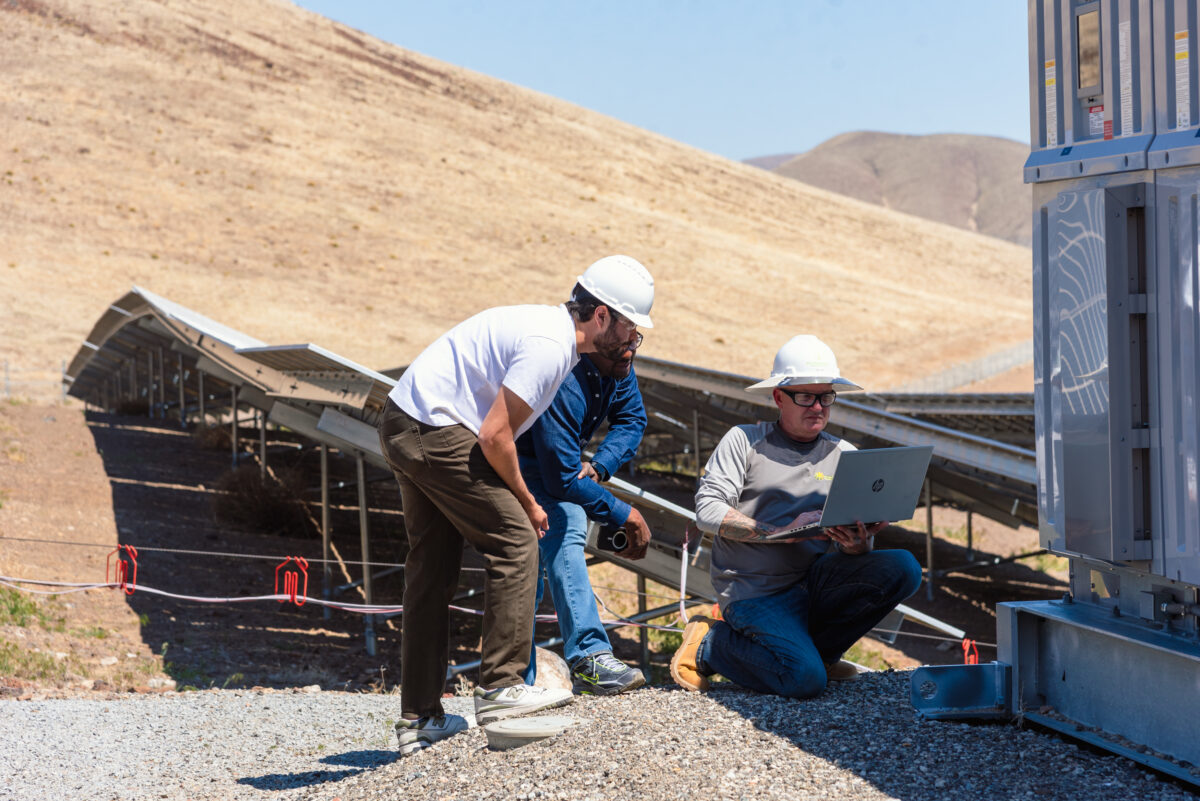





While many dismiss “million-dollar-a-day” NERC penalties as an exaggerated scare tactic, the risk is not a myth for newly regulated entities. For owners of Category 2 (Cat 2) inverter-based resources, these warnings have shifted from industry “crying wolf” to a serious compliance reality that demands immediate attention.
By May 15, 2026, all Generator Owners (GO) and Generator Operators (GOP) with inverter-based resource power plants rated at 20 MVA or greater and connected at 60 kV or higher must register with NERC. This isn’t a suggestion. It’s not a best practice. It’s a mandatory regulatory requirement with enforcement mechanisms that can devastate your business. and the consequences extend far beyond fines.
The Cat 2 shift
NERC Cat 2 represents a fundamental change in how the power grid is regulated. Historically, NERC focused exclusively on large power plants under Category 1 classification – the backbone of the Bulk Electric System (BES). Smaller renewable facilities operated largely outside this regulatory framework, classified as “non-BES” resources that didn’t warrant the same level of oversight. That era is over.
As solar farms, wind installations, and battery storage facilities proliferated across the grid, regulators recognized that while facilities might be relatively small, their collective impact became impossible to ignore. When multiple renewable sites trip offline simultaneously during a disturbance, the cumulative effect can destabilize entire regions of the grid. The 2021 Odessa Disturbance in Texas demonstrated this collective vulnerability when a minor 192 MW fault triggered a disproportionate 1,100 MW solar power loss across facilities as far as 200 miles away.
Cat 2 was created to prevent this, and the registration comes with the full weight of NERC compliance obligations.
Cost of non-compliance
NERC can assess penalties up to $1.54 million per day, per violation, but fixating on that maximum figure misses the point. The real damage from non-compliance starts accumulating long before any fine is assessed.
When an issue gets classified as a high-risk violation, your organization enters “the enforcement cycle.” This means years of engagement with regulators, legal teams, executives, and subject matter experts. The sustained administrative burden pulls your most valuable people away from improving operations and processes. You’re stuck explaining failures from two or three years ago instead of building for the future.
This uncertainty becomes a genuine business risk. The time costs can rival the monetary penalties themselves, and the drag persists even in cases that never result in a financial settlement. Once you’re in the enforcement cycle, extracting yourself without losing operational momentum is not easy.
Non-compliant facilities may also be denied interconnection rights or be forced to disconnect from the grid entirely if deemed a reliability risk. These disconnections can last for months if issues aren’t resolved quickly.
Market participation can also be restricted. Compliance failures can bar you from selling power into energy markets, effectively rendering your asset worthless regardless of how well it performs mechanically.
Magnitude
The concerning reality is that significant portions of the renewable industry don’t appear to grasp the magnitude of this transition. Grid operators and regulators are watching closely. They’re emphasizing reliability and grid performance with increasing urgency, and there’s a real possibility that enforcement against renewable facilities will be more aggressive than this industry has historically experienced. The goodwill that renewables have enjoyed as “clean energy” solutions won’t provide protection from compliance requirements designed to maintain grid stability.
The industry has fought hard for its place in the energy ecosystem. Squandering that progress through compliance failures would be tragic and preventable.
No cookie-cutter compliance
For operators who haven’t started preparing, the path forward is clear but urgent because there is a lot of time-consuming work required for compliance. If you do not have the in-house resources or compliance expertise, consider a third-party service to get you set up. Registration must occur through the CORES (Centralized Organization Registration ERO System) portal, which identifies your entity to NERC and your Regional Entity.
You’ll need to implement the “Initial 8” standards that apply to Category 2 facilities immediately. These include MOD-032-1 for power system modeling data, IRO-010-5 for data sharing with Reliability Coordinators, VAR-001-5 and VAR-002-4.1 for voltage and reactive power control, PRC-012-2 and PRC-017-1 for protection system coordination, BAL-001-TRE for frequency control in Texas, and TOP-003-6.1 for operational data sharing.
Beyond these existing standards, you must prepare for the “PRC Trio,” specifically designed for inverter-based resources: PRC-028 for disturbance monitoring, PRC-029 for frequency and voltage ride-through capability, and PRC-030 for unexpected islanding detection.
Creating the required models and simulations takes significant time. If you’re part of a group of systems that collectively affect the bulk power system, you’re caught in this requirement even if your individual facility seems borderline.
You’ll also need to develop Reliability Standard Audit Worksheets. These evidence packages need to include logs, settings, emails, and reports that prove you’re actually doing what the standards require. This isn’t checkbox compliance; it’s a 24/7 data obligation that demands robust compliance systems with sufficient fidelity to survive regulatory audits.
Bottom line
Grid reliability and security should be reason enough to embrace these requirements. Renewable energy facilities are now critical components of the power system, and with that role comes responsibility for maintaining reliability that millions of people depend on.
But even if that broader obligation doesn’t resonate, the business case is undeniable. If you operate an asset that falls into Category 2 criteria and haven’t started actively preparing for compliance, you’re already behind. The May 15, 2026, deadline isn’t approaching; it’s effectively here in order to meet compliance in time. There are compliance providers that specialize in Cat-2. Get help now if this is beyond your team’s capacity.
This isn’t about scare tactics or theoretical maximum penalties. It’s about the practical reality that once enforcement mechanisms engage, the cost in time, resources, and lost opportunity can cripple operations regardless of whether a dollar fine is ever assessed.
Author: Kellie Macpherson – Executive Vice President Compliance & Risk Management, Radian Generation. Kellie oversees NERC compliance and managed security services. For over 15 years, she has been a noteworthy leader in the renewable asset space and has implemented 200+ compliance programs and completed 40+ NERC audits in all six NERC regions.
The views and opinions expressed in this article are the author’s own, and do not necessarily reflect those held by pv magazine.
This content is protected by copyright and may not be reused. If you want to cooperate with us and would like to reuse some of our content, please contact: editors@pv-magazine.com.



By submitting this form you agree to pv magazine using your data for the purposes of publishing your comment.
Your personal data will only be disclosed or otherwise transmitted to third parties for the purposes of spam filtering or if this is necessary for technical maintenance of the website. Any other transfer to third parties will not take place unless this is justified on the basis of applicable data protection regulations or if pv magazine is legally obliged to do so.
You may revoke this consent at any time with effect for the future, in which case your personal data will be deleted immediately. Otherwise, your data will be deleted if pv magazine has processed your request or the purpose of data storage is fulfilled.
Further information on data privacy can be found in our Data Protection Policy.