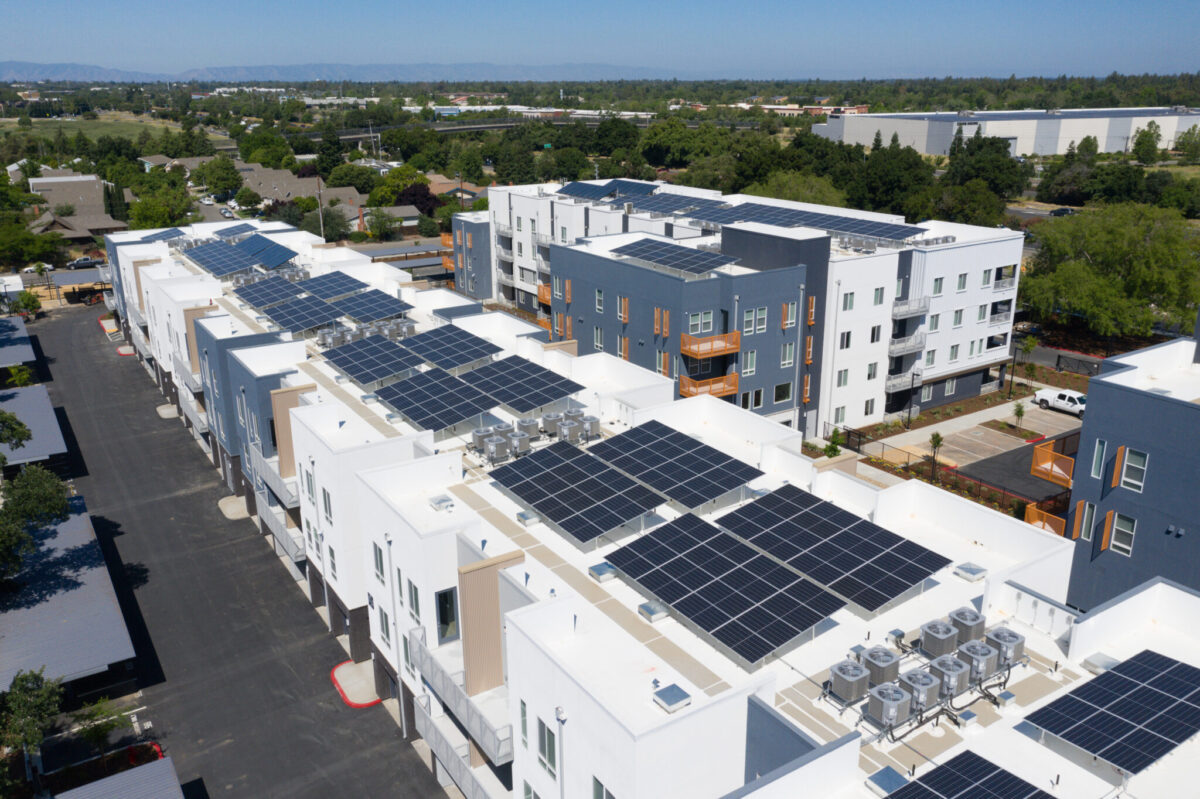





The U.S. solar market is entering a new phase of transition. After years of rapid expansion fueled by favorable policy and abundant capital, the industry is adapting to rapid rise in energy demand and a decline in federal tax credits.
In 2026, growth will continue, but it will favor developers that execute with discipline, transparency, and a clear understanding of real-world limitations. Here’s a closer look at the key trends shaping the future of renewable energy and what they mean for our industry.
Capital discipline
Investors are no longer rewarding scale alone; they are rewarding execution. Projects must pencil under realistic assumptions, hit milestones, and deliver predictable outcomes.
Developers that succeed in 2026 will be those that operate with institutional rigor. That means clear capital structures, transparent reporting, and a repeatable approach to development and operations.
Reliability and localized energy
Electricity demand is accelerating faster than grid infrastructure can keep up. AI, data centers, and electrification are driving increases that traditional generation and transmission upgrades cannot address quickly. In some regions, this imbalance raises the risk of reliability challenges, including outages during peak demand.
Distributed generation offers a solution. Community solar, commercial solar, and localized solar-plus-storage projects can be deployed far faster than large transmission upgrades that can take years. By generating power closer to where it is consumed, distributed energy resources relieve grid congestion, improve resilience, and deliver reliability quickly. As demand continues to rise, the case for distributed generation will become even more clear.
Tax credits
Under HR1solar tax credits are set to phase out, narrowing the window for full credit eligibility.
To secure current tax credit levels, developers must either begin construction by July 4, 2026, or place projects in service by December 31, 2027. At the same time, the expiration of tariff pauses and potential new trade actions could increase equipment costs later in the decade.
These dynamics are already pushing developers to accelerate projects through 2026. The likely result is a wave of near-term activity followed by market consolidation, favoring platforms with strong balance sheets, supply-chain access, and execution depth.
State policy
With federal uncertainty growing, states are increasingly shaping the future of distributed solar and storage.
A growing number of states are shifting toward longer-term, scalable frameworks built around predictable compensation, streamlined rules, and alignment with wholesale market fundamentals. These approaches offer developers the certainty needed to invest, scale, and deliver projects efficiently. In 2026 and beyond, state leadership will play a decisive role in determining where distributed generation thrives.
Execution is the constraint
Solar technology continues to improve, but it is not the limiting factor. Interconnection remains the single largest bottleneck to deployment across much of the country. Long queue timelines, inconsistent utility processes, and transmission constraints are slowing projects regardless of how advanced the underlying technology may be.
The winners in this environment will be developers that understand how to navigate interconnection efficiently, work proactively with utilities, and prioritize projects that can move through the system without years of delay.
Storage inflection point
Energy storage is no longer a future concept. Battery capacity in the U.S. grew by nearly 60 percent year over year, adding 13.8 gigawatts in the past year alone. Another 22 gigawatts are expected to come online in the next 12 months.
While storage economics are still evolving, the direction is clear. Falling battery costs, supportive policy, and growing demand for dispatchable clean energy are making solar-plus-storage increasingly viable. Pairing solar with storage improves resilience, reduces peak demand strain, and enhances overall project value.
As storage scales, solar strengthens its value as a reliable, economical component of the grid.

Jorge Vargas is chief executive officer and co-founder of Aspen Power.
The views and opinions expressed in this article are the author’s own, and do not necessarily reflect those held by pv magazine.
This content is protected by copyright and may not be reused. If you want to cooperate with us and would like to reuse some of our content, please contact: editors@pv-magazine.com.





By submitting this form you agree to pv magazine using your data for the purposes of publishing your comment.
Your personal data will only be disclosed or otherwise transmitted to third parties for the purposes of spam filtering or if this is necessary for technical maintenance of the website. Any other transfer to third parties will not take place unless this is justified on the basis of applicable data protection regulations or if pv magazine is legally obliged to do so.
You may revoke this consent at any time with effect for the future, in which case your personal data will be deleted immediately. Otherwise, your data will be deleted if pv magazine has processed your request or the purpose of data storage is fulfilled.
Further information on data privacy can be found in our Data Protection Policy.