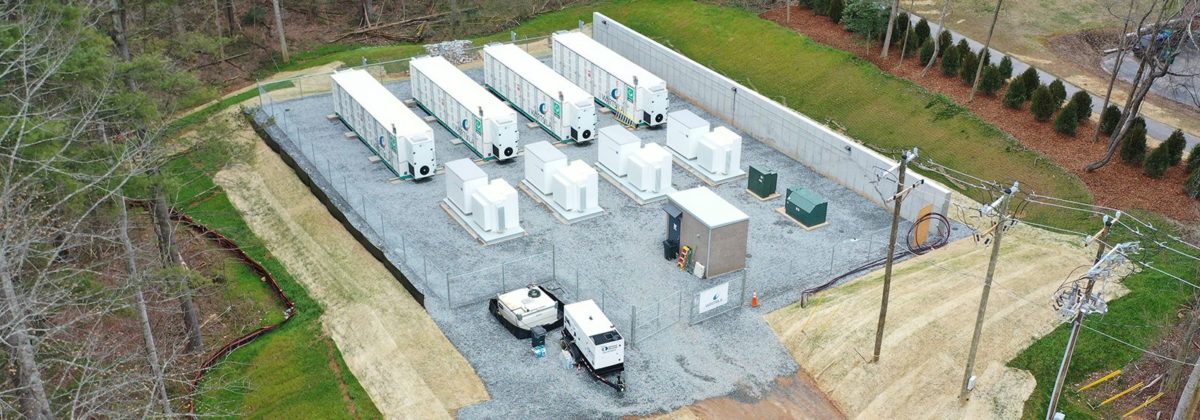





Duke Energy brought a 50 MW battery energy storage system online this month at the location of the former Allen coal plant in North Carolina. This facility represents the first of several planned storage deployments at the site where the utility retired its legacy coal units. The project utilizes existing transmission infrastructure on Lake Wylie to store electricity for use during peak demand periods on the regional grid.
The four-hour battery system consists of lithium-ion units designed to provide 200 MWH of energy. Duke Energy said it completed the installation ahead of schedule and under budget with an investment of approximately $100 million.
The project qualifies for federal tax credits under the Inflation Reduction Act including a 10% bonus for reinvesting in a community formerly dependent on coal production, said the utility.
Storage capacity at this location will help Duke balance the intermittent nature of solar generation, which has seen significant growth in North Carolina. Based on current deployment rates, it is likely that solar will surpass wind as the third-largest source of electricity. And solar may soon topple coal as the second-largest source of electricity generation in the United States.
The batteries can charge using surplus energy from nearby solar farms or the Catawba Nuclear Station during low demand hours. This stored energy is then dispatched to the grid in the morning or evening when residential and commercial usage reaches its daily peaks.
Construction on a second and larger battery project is slated to begin at the same site in May with a capacity of 167 MW. Duke Energy also proposed a third battery installation and a regional operations center for renewable energy at the former Allen plant. These efforts form part of a broader utility plan to deploy over 6,000 MW of energy storage by 2035 to replace retiring fossil fuel capacity.
This content is protected by copyright and may not be reused. If you want to cooperate with us and would like to reuse some of our content, please contact: editors@pv-magazine.com.




By submitting this form you agree to pv magazine using your data for the purposes of publishing your comment.
Your personal data will only be disclosed or otherwise transmitted to third parties for the purposes of spam filtering or if this is necessary for technical maintenance of the website. Any other transfer to third parties will not take place unless this is justified on the basis of applicable data protection regulations or if pv magazine is legally obliged to do so.
You may revoke this consent at any time with effect for the future, in which case your personal data will be deleted immediately. Otherwise, your data will be deleted if pv magazine has processed your request or the purpose of data storage is fulfilled.
Further information on data privacy can be found in our Data Protection Policy.