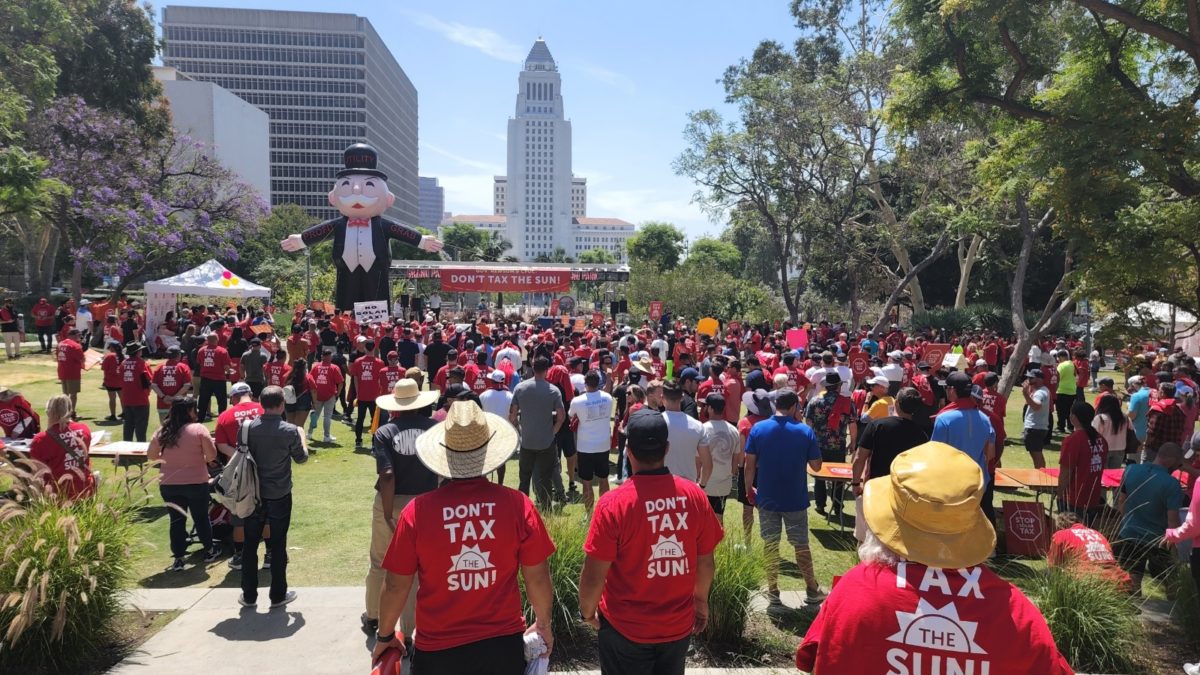





With the Federal Government renaming and redefining the mission of the National Renewable Energy Lab (NREL) to the “National Laboratory of the Rockies,” it’s time for the solar, wind, and renewable energy industries to declare the quiet part out loud: The U.S. government is waging a financial and regulatory war against the development and deployment of renewable energy.
You might think that a “war on solar” is aggressive language. But this war is far from a secret. The President, his cabinet, and many conservative lawmakers publicly attack renewables as “the green new scam” and spread misinformation about its cost and reliability. Sadly, their aggressive actions speak even louder than their words.
Not only has the Trump administration redefined NREL, but they’ve also taken numerous actions to defund and aggressively regulate the development and deployment of renewable energy, including:
- Leading the repeal of the IRA’s clean energy subsidies.
- Using presidential executive orders to add hurdles to renewable energy development and favor more expensive fossil fuels.
- Cancelling approved permits for renewable energy and transmission projects that are already under construction.
- Clawing back hundreds of millions in grants for community solar and grants for low-income people.
- Proposing that fossil fuel pollution isn’t harmful to our health.
- Laying off thousands of Federal environmental, pollution, and renewable energy researchers, lawyers, and administrators.
In short, the Trump administration has weaponized the government to do everything in its power—no pun intended—to slow down renewable energy’s growth. There is no longer a level playing field or an “all-the-above” U.S. energy strategy. For this administration, U.S. “energy dominance” refers mainly to fossil fuels and expensive nuclear power.
If they win, the casualties will be good-paying jobs, small and large renewable energy businesses, cleaner air, and climate action. America will also become less competitive with China. Worst of all for everyone, electricity prices are going to continue to rise.
But here’s the good news: I know that we can and will win this war. Why? Follow the money: Despite all these challenges, solar and energy storage are still the cheapest to and fastest way to build new capacity for the grid. Nuclear, gas, and coal can’t compete for speed or cost.
But economics and technology can’t win this war alone. For renewables to truly win, we need to win the hearts and minds of local and national policymakers and consumers.
Like any war, we need strong public support. The public—especially voters—must be aware and care that solar, wind, battery, and other new energy and “electrotech” companies are unfairly being attacked.
Likewise, the same people must understand that these industries are directly affecting their lives by:
- Decreasing electricity bills.
- Supporting self-reliance and energy independence.
- Inexpensively powering new AI data centers.
- Creating new jobs today and for the future.
- Helping farmers preserve their land and earn extra income.
- Contributing local tax revenue where we build projects.
- Earning a return for energy investors.
- Helping America innovate and compete against China and other global tech competitors.
- Decreasing pollution and its health, environmental, and financial costs.
- And did I mention decreasing electricity bills? That’s worth repeating.
Beyond lawsuits and lobbying, the way to defend our valuable industries is through consistent, positive, accurate, creative communications that flood social media, influencers, and front-page headlines. This will generate social media conflicts, but that conflict will inspire conversations that will eventually neutralize anti-renewable energy propaganda.
This war of words playbook isn’t new. It’s pretty much a copy of the oil and gas industry’s tactics. What could be new is that the renewable energy industry finally steps up to fund and deploy our own clean energy messaging and lobbying dollars with the same media weapons.
If we don’t act now and make consumers and policymakers care about the benefits of solar, storage, and other renewables, we run the risk of being unfairly blamed or used as a scapegoat for the most important topic in everyone’s minds right now – energy affordability. While the facts are clear that solar and storage are the cheapest forms of new energy additions onto the existing grid, the misinformation campaign that the other side is waging is louder and being heard over ours. Energy economics will always win in the long run, but the long run will take some time, and I am concerned about the consistent black eye that the industry will receive in between now and then.
So far, our industry response has been muted or preaching to the solar choir. We must be more aggressive. It’s up to every renewable energy company to engage our workers, the media, family, and friends. When they casually ask how we’re doing, we must take the opportunity to say that there’s an aggressive and pointless government war against solar businesses and solar jobs. We must explain how this war is directly affecting their health, their children’s future, and their electric bills.
2026 can be renewable energy’s year to fight back. A word-of-mouth grass-roots effort can be cost-effective for the entire industry if we continually volunteer our attention, voices, and social media accounts.
This is a moment for everyone who believes in clean energy, innovation, and truth to step up. If you’re interested in organizing, contributing funds or time to a fresh fight-back campaign, join this campaign list. Let’s come together and share our ideas, dollars, and mindshare to beat this thing. By donating to support a broad public-education campaign, you can help stop misinformation in its tracks and make sure voters and communities hear the facts—not the fearmongering.
In short, the war on solar is real, and the general public doesn’t care. If we’re not pushing back on X, TikTok, and the news, we lose.
Aaron Halimi is the founder of Renewable Properties, a developer of small-scale utility, community solar, energy storage, and electric vehicle infrastructure projects in 17 states throughout the US.
The views and opinions expressed in this article are the author’s own, and do not necessarily reflect those held by pv magazine.
This content is protected by copyright and may not be reused. If you want to cooperate with us and would like to reuse some of our content, please contact: editors@pv-magazine.com.

By submitting this form you agree to pv magazine using your data for the purposes of publishing your comment.
Your personal data will only be disclosed or otherwise transmitted to third parties for the purposes of spam filtering or if this is necessary for technical maintenance of the website. Any other transfer to third parties will not take place unless this is justified on the basis of applicable data protection regulations or if pv magazine is legally obliged to do so.
You may revoke this consent at any time with effect for the future, in which case your personal data will be deleted immediately. Otherwise, your data will be deleted if pv magazine has processed your request or the purpose of data storage is fulfilled.
Further information on data privacy can be found in our Data Protection Policy.