





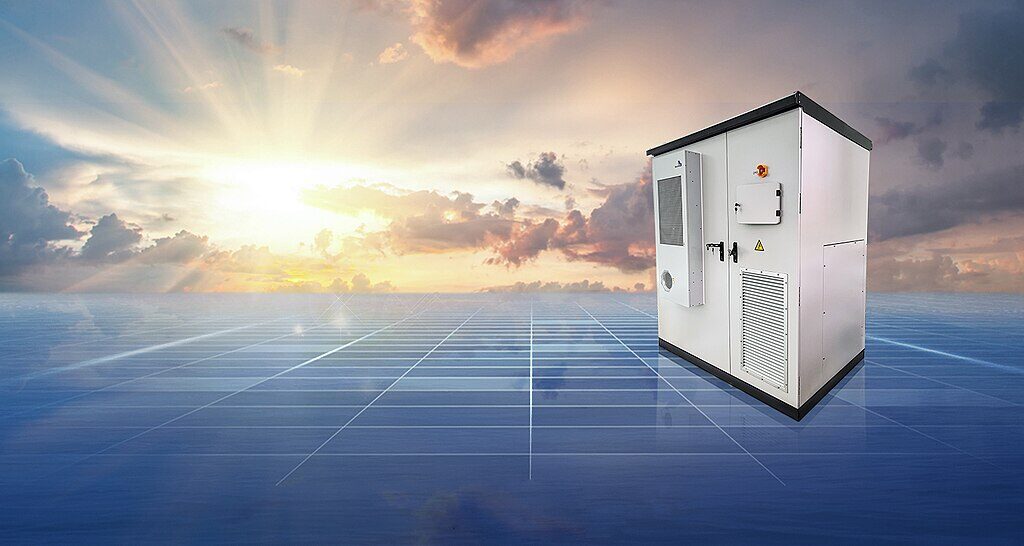
California-based renewable energy company SolarMax will deliver full-scope engineering, procurement and construction (EPC) services to a combined 400 MWh of BESS in Puerto Rico.
SolarMax said its subsidiary, SolarMax Renewable Energy Provider Inc., has entered into two agreements for two separate BESS projects in Puerto Rico with Yabucoa BESS LLC and Naguabo BESS LLC.
The two EPC contracts are expected to generate total revenues of approximately $158.3 million. SolarMax will also purchase a 9% equity interest in each project entity.
The BESS will have a combined storage capacity of 400 MWh and will be in Puerto Rico’s Humacao and Ceiba regions.
“Securing projects of this size highlights SolarMax’s growing position in the utility-scale energy storage market,” said David Hsu, CEO of SolarMax. “We believe these new agreements will significantly strengthen our forward revenue visibility, adding a substantial multi-year revenue stream through 2027.”
“Demand for large-scale energy storage solutions continues to grow,” he added. “As we enter into contracts for projects of increasing size and complexity, we are strengthening our competitive position, driving operating leverage, and scaling SolarMax into a meaningful participant in a multi-billion-dollar market. At the same time, our selective equity participation further aligns us with project success and reinforces our commitment to build durable, long-term shareholder value.”
SolarMax will provide full EPC services for the two Puerto Rican BESS projects including design, engineering, procurement, installation, construction, testing, startup, and commissioning.
Founded in 2008 as a local solar installer, the NASDAQ-listed company operates across residential, commercial and utility-scale renewable energy sectors. On the utility-scale BESS side, it provides support across projects’ entire lifecycle. Services include custom system design, containerized or modular deployment, integration services for energy management and remote diagnostics capabilities for safety.
Hawaii
Moving north from Puerto Rico, the island state of Hawaii is beginning construction on what will be its first large standalone load-shifting BESS. Electric utility Hawaiian Electric sees the 40 MW/160 MWh Waena BESS as a key player in its wider strategy to generate 100% of its electricity from renewables by 2045. The Waena BESS will be in Central Maui, said the company, which announced its construction start date in December 2025. Currently, 41% of Maui County’s electricity comes from renewables.
Having received approval from the Public Utilities Commission in December 2023, the battery is set to come online in 2027. It will enable the planned retirement of four generating units at Hawaiian Electric’s Kahalui Power Plant and it will be tied into Hawaiian Electric’s Waena Switchyard to serve as an energy-shifting resource to store and dispatch large-scale renewable sources as needed.
Hawaiian Electric is also working to procure replacement generation resources through more large-scale renewable and battery projects on Maui. Currently, four contracts for variable and firm renewable energy and associated battery projects on Maui have been approved and are in various stages of negotiation with Hawaiian Electric, according to the company.
In March 2025, Hawaiian Electric’s SVP of Planning & Technology, Colton Ching, welcomed the start of commercial operations at the island state’s second solar plus battery storage project. Owned by Innergex, the Hale Kuawehi project combines solar with 120 MWh of battery storage with enough energy to power 13,500 homes.
This content is protected by copyright and may not be reused. If you want to cooperate with us and would like to reuse some of our content, please contact: editors@pv-magazine.com.




By submitting this form you agree to pv magazine using your data for the purposes of publishing your comment.
Your personal data will only be disclosed or otherwise transmitted to third parties for the purposes of spam filtering or if this is necessary for technical maintenance of the website. Any other transfer to third parties will not take place unless this is justified on the basis of applicable data protection regulations or if pv magazine is legally obliged to do so.
You may revoke this consent at any time with effect for the future, in which case your personal data will be deleted immediately. Otherwise, your data will be deleted if pv magazine has processed your request or the purpose of data storage is fulfilled.
Further information on data privacy can be found in our Data Protection Policy.