The pipeline for new U.S. solar and energy storage surges as wind dies down: report

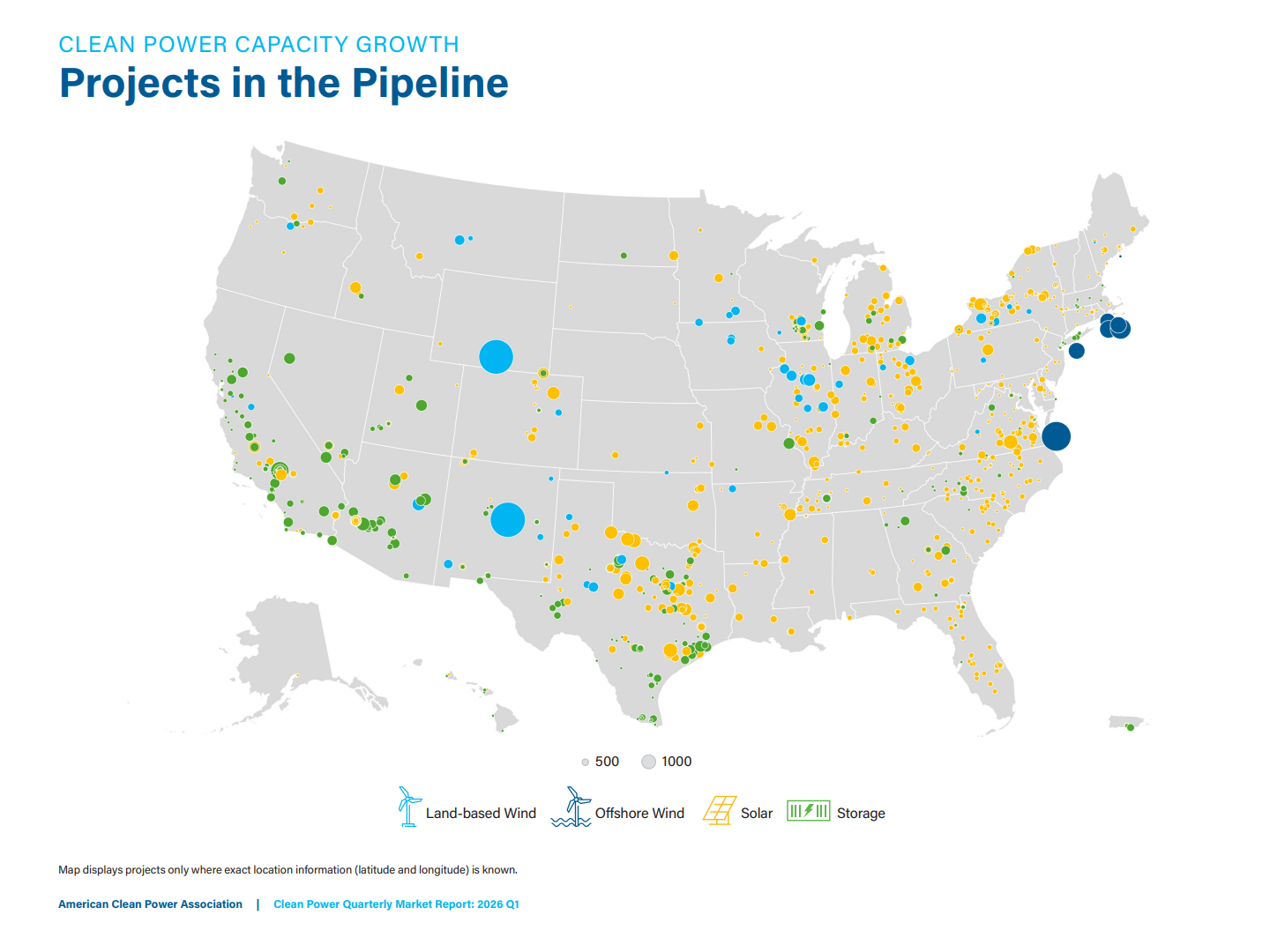
A new report from the American Clean Power Association (ACP) shows that U.S. developers brought a total of 6.4 gigawatts (GW) of new utility-scale solar, wind, and energy storage capacity online in Q1 2026 — bringing total domestic clean power capacity to over 370 GW.
According to the Q1 2026 Clean Power Quarterly Market Report, capacity additions in the first three months of 2026 represented 3.625 GW of utility-scale solar, 2.382 GW of energy storage and 415 MW of wind. The additions meant the capacity of utility-scale solar has now exceeded that of wind as the largest source of clean power generation capacity in the country.
The state of Texas now accounts for over one quarter of all installed clean energy capacity at 96.4 GW, placing it on the verge of becoming the first state to install 100 GW. California comes in second, with nearly 46.4 GW, with Oklahoma in third place at just over 15 GW.
Despite clean energy reaching ever higher heights, the report revealed that capacity additions were down by 17% compared to the nearly 7.7 GW energized in the Q1 of 2025. That decrease can be explained by the 6.4 GW of clean power capacity originally expected to be operational by the end of Q1, which is now delayed.
The ACP report tracks a total of 59.5 GW of projects that are now delayed due to lengthy permitting processes, backlogged interconnection queues and fluctuating equipment prices.
The changing face of the clean power pipeline
At the end of Q1 2026, the report’s authors listed a pipeline of over 195 GW of capacity in development around the country. According to the report, that figure was 6% higher than in Q1 of 2025, and driven largely by increases in the planned capacity of solar, which rose by 13% year-over-year, and battery storage, which rose by 8%.
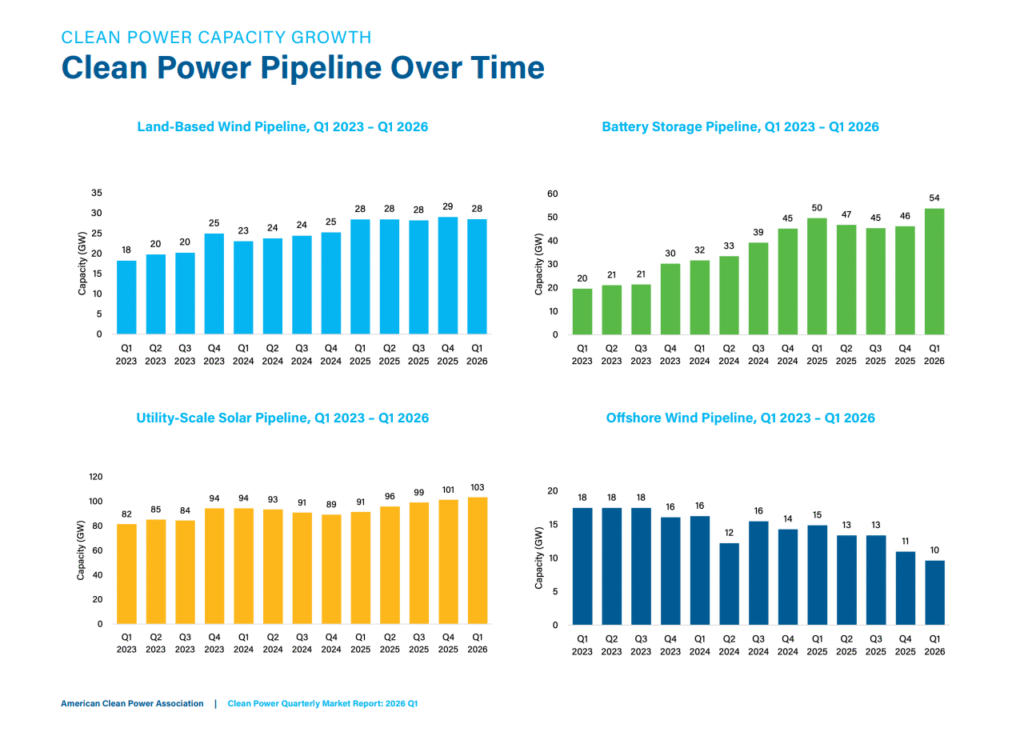
Unlike the pipelines for solar and battery storage projects, land-based wind power remained stagnant at 28 GW of planned capacity, and offshore wind decreased to 10 GW, a decrease of 33.3% compared to Q1 2025.The report says a significant portion of that planned capacity should be energized late in 2026 as a number of large projects reach their expected commercial operation dates (CODs). These include the 3.5 GW SunZia project in New Mexico, which combines wind power generation and a 550-mile high voltage direct current transmission line.

Please login to comment